


Nanotherapeutic and Stem Cell Therapeutic Strategies in Neurodegenerative Diseases: A Promising Therapeutic Approach
- PMID: 36760756
- PMCID: PMC9904216
- DOI: 10.2147/IJN.S395010
Nanotherapeutic and Stem Cell Therapeutic Strategies in Neurodegenerative Diseases: A Promising Therapeutic Approach
Abstract
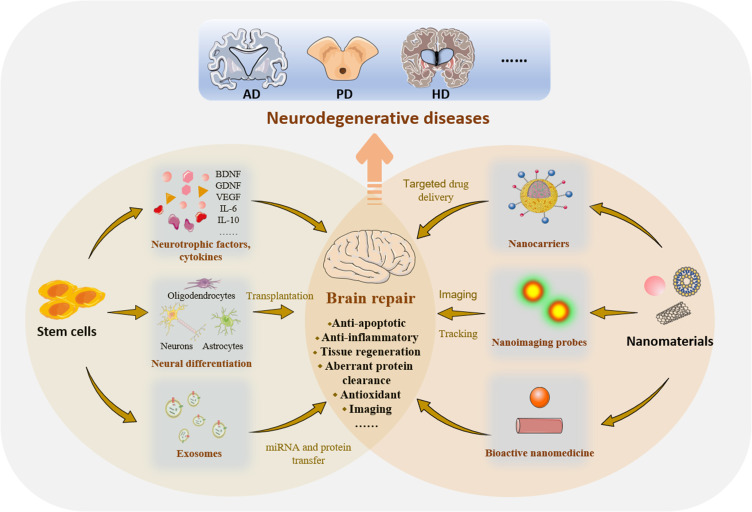
Neurodegeneration is characterized by progressive, disabling, and incurable neurological disorders with the massive loss of specific neurons. As one of the most promising potential therapeutic strategies for neurodegenerative diseases, stem cell therapy exerts beneficial effects through different mechanisms, such as direct replacement of damaged or lost cells, secretion of neurotrophic and growth factors, decreased neuroinflammation, and activation of endogenous stem cells. However, poor survival and differentiation rates of transplanted stem cells, insufficient homing ability, and difficulty tracking after transplantation limit their further clinical use. The rapid development of nanotechnology provides many promising nanomaterials for biomedical applications, which already have many applications in neurodegenerative disease treatment and seem to be able to compensate for some of the deficiencies in stem cell therapy, such as transport of stem cells/genes/drugs, regulating stem cell differentiation, and real-time tracking in stem cell therapy. Therefore, nanotherapeutic strategies combined with stem cell therapy is a promising therapeutic approach to treating neurodegenerative diseases. The present review systematically summarizes recent advances in stem cell therapeutics and nanotherapeutic strategies and highlights how they can be combined to improve therapeutic efficacy for the treatment of neurodegenerative diseases.
Keywords: nanomaterials; nanotherapeutic; neurodegenerative diseases; stem cell therapy.
© 2023 Wei et al.
Conflict of interest statement
The authors declare no conflict of interest.
Figures
References
-
- Karabiyik CFR, Park S, Pavel M, Rubinsztein D. Autophagy in ageing and ageing-related neurodegenerative diseases. Ageing Neur Dis. 2021;1(1):2.
Publication types
MeSH terms
LinkOut - more resources
Full Text Sources
Medical
Research Materials
