


Two new species of Calonectria (Hypocreales, Nectriaceae) causing Eucalyptus leaf blight in Brazil
- PMID: 36760892
- PMCID: PMC9849068
- DOI: 10.3897/mycokeys.91.84896
Two new species of Calonectria (Hypocreales, Nectriaceae) causing Eucalyptus leaf blight in Brazil
Abstract
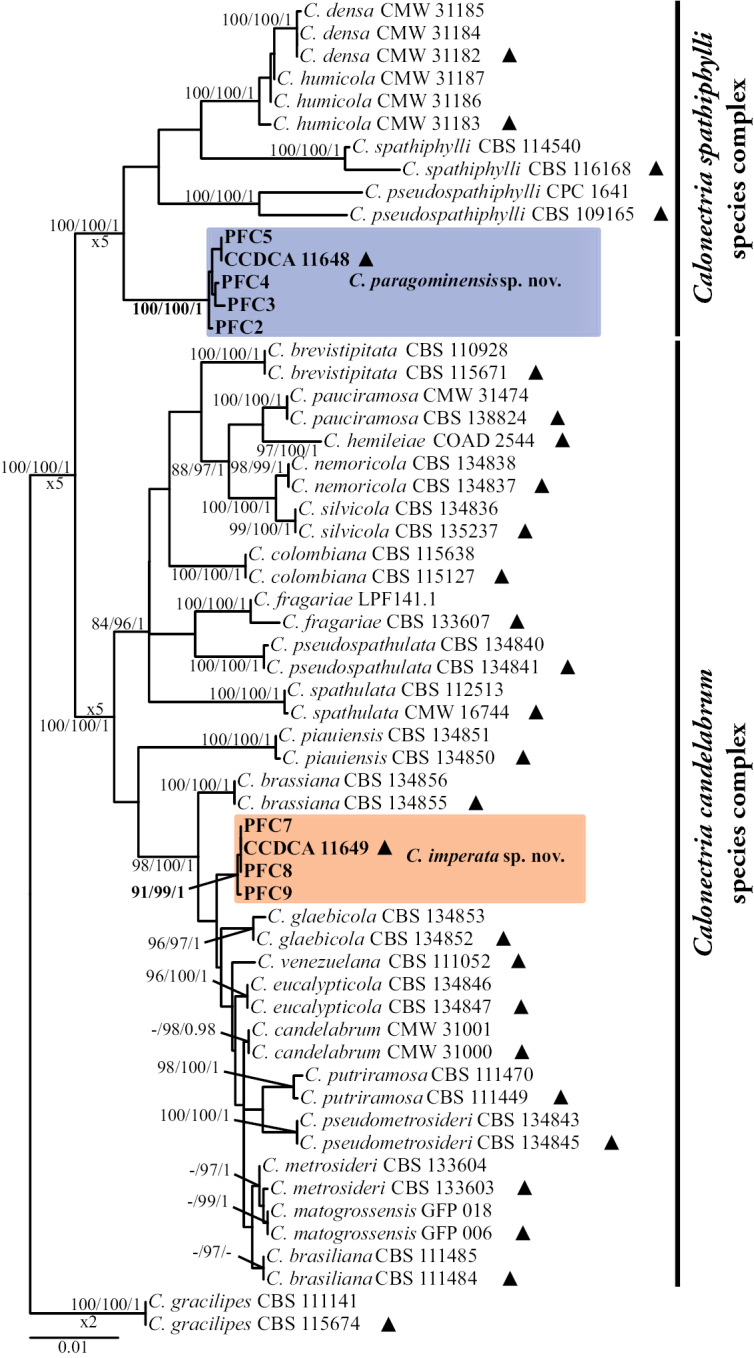
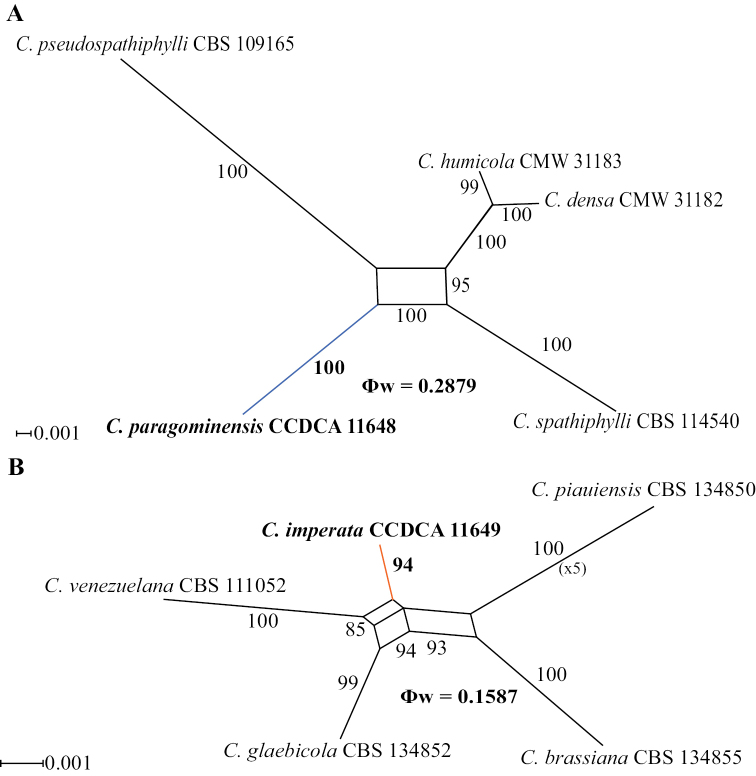
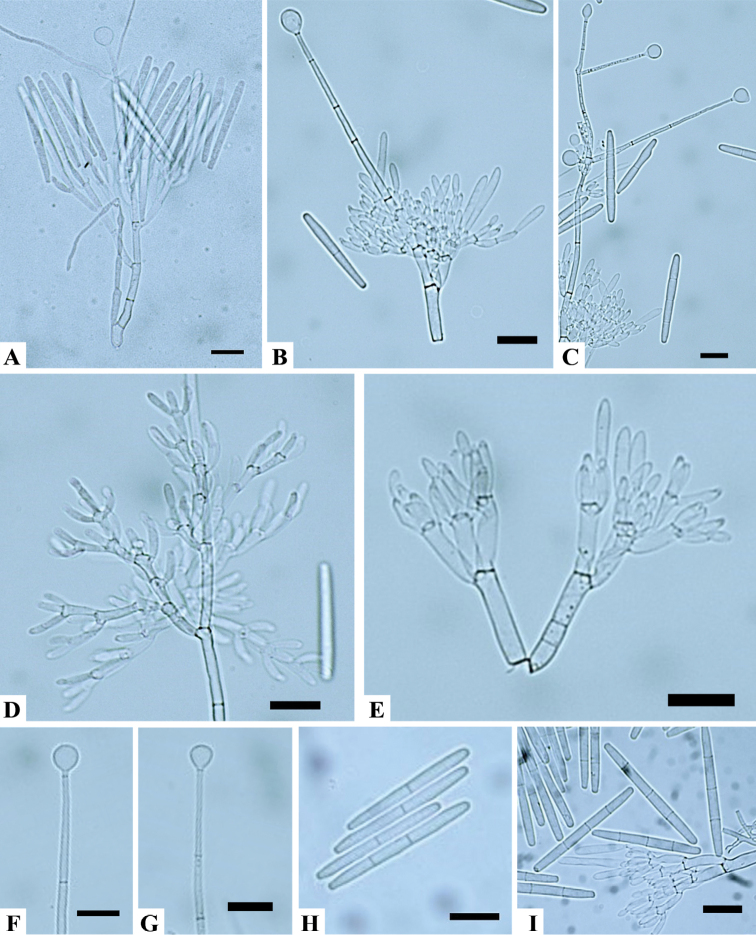
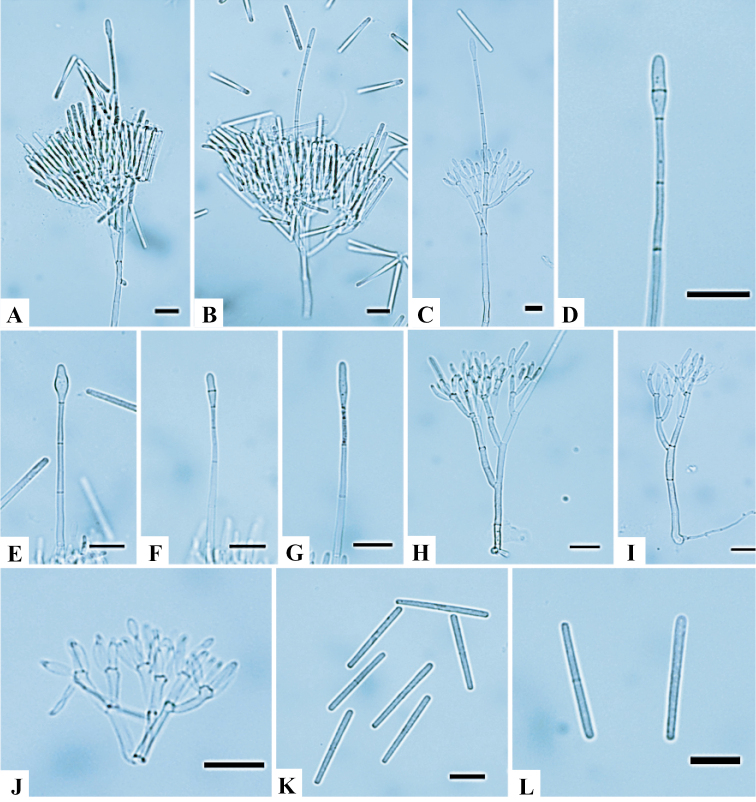
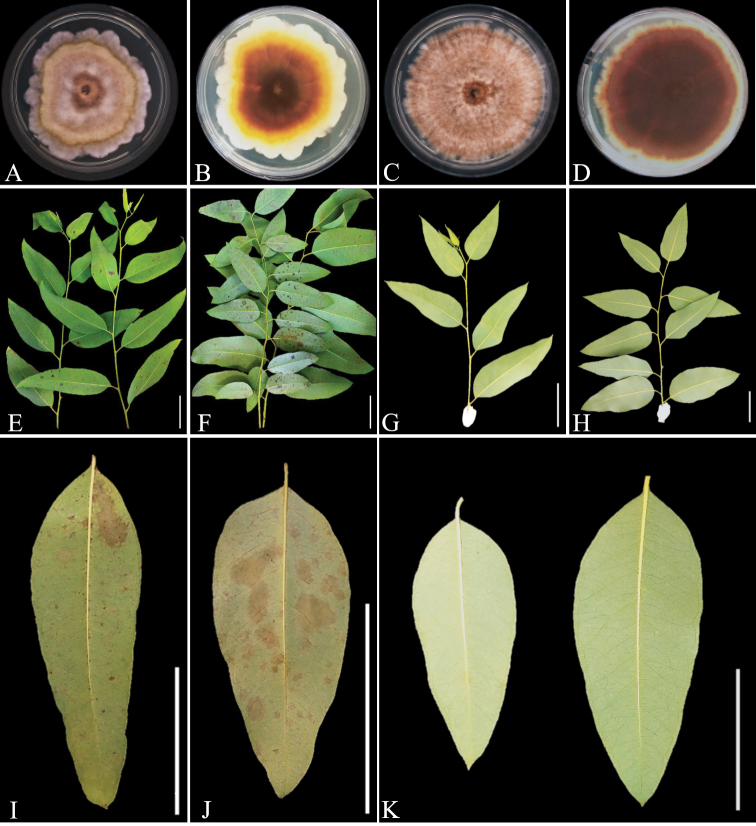
In recent decades, commercial Eucalyptus plantations have expanded toward the warm and humid regions of northern and northeastern Brazil, where Calonectria leaf blight (CLB) has become the primary fungal leaf disease of this crop. CLB can be caused by different Calonectria species, and previous studies have indicated that Calonectria might have high species diversity in Brazil. During a disease survey conducted in three commercial plantations of Eucalyptus in northeastern Brazil, diseased leaves from Eucalyptus trees with typical symptoms of CLB were collected, and Calonectria fungi were isolated. Based on phylogenetic analyses of six gene regions (act, cmdA, his3, rpb2, tef1, and tub2) and morphological characteristics, two new species of Calonectria were identified. Five isolates were named as C.paragominensis sp. nov. and four were named as C.imperata sp. nov. The pathogenicity to Eucalyptus of both species was confirmed by fulfilling the Koch's postulates.
Keywords: Cylindrocladium; GCPSR; phylogenetic network analysis; phylogeny.
Enrique I. Sanchez-Gonzalez, Thaissa de Paula Farias Soares, Talyta Galafassi Zarpelon, Edival Angelo Valverde Zauza, Reginaldo Gonçalves Mafia, Maria Alves Ferreira.
Figures
References
-
- Alfenas AC, Zauza EAV, Mafia RG, de Assis TF. (2009) Clonagem e doenças do eucalipto. 2nd ed. , Editora UFV, Viçosa, MG, Brazil, 500 pp.
-
- Alfenas RF, Pereira OL, Freitas RG, Freitas CS, Dita MA, Alfenas AC. (2013) Mass spore production and inoculation of Calonectriapteridis on Eucalyptus spp. under different environmental conditions. Tropical Plant Pathology 38(5): 406–413. 10.1590/S1982-56762013000500005 - DOI
-
- Carbone I, Kohn LM. (1999) A method for designing primer sets for speciation studies in filamentous ascomycetes. Mycologia 91(3): 553–556. 10.1080/00275514.1999.12061051 - DOI
LinkOut - more resources
Full Text Sources