


Evaluation of the Diagnostic and Prognostic Accuracy of Artificial Intelligence in Endodontic Dentistry: A Comprehensive Review of Literature
- PMID: 36761829
- PMCID: PMC9904932
- DOI: 10.1155/2023/7049360
Evaluation of the Diagnostic and Prognostic Accuracy of Artificial Intelligence in Endodontic Dentistry: A Comprehensive Review of Literature
Abstract
Aim: This comprehensive review is aimed at evaluating the diagnostic and prognostic accuracy of artificial intelligence in endodontic dentistry.
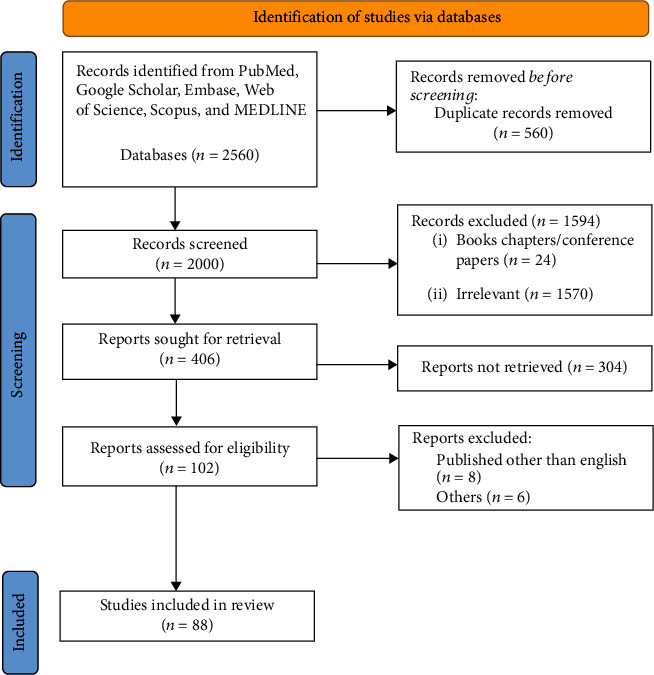
Introduction: Artificial intelligence (AI) is a relatively new technology that has widespread use in dentistry. The AI technologies have primarily been used in dentistry to diagnose dental diseases, plan treatment, make clinical decisions, and predict the prognosis. AI models like convolutional neural networks (CNN) and artificial neural networks (ANN) have been used in endodontics to study root canal system anatomy, determine working length measurements, detect periapical lesions and root fractures, predict the success of retreatment procedures, and predict the viability of dental pulp stem cells. Methodology. The literature was searched in electronic databases such as Google Scholar, Medline, PubMed, Embase, Web of Science, and Scopus, published over the last four decades (January 1980 to September 15, 2021) by using keywords such as artificial intelligence, machine learning, deep learning, application, endodontics, and dentistry.
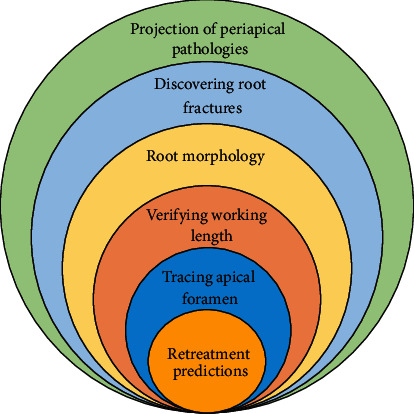
Results: The preliminary search yielded 2560 articles relevant enough to the paper's purpose. A total of 88 articles met the eligibility criteria. The majority of research on AI application in endodontics has concentrated on tracing apical foramen, verifying the working length, projection of periapical pathologies, root morphologies, and retreatment predictions and discovering the vertical root fractures.
Conclusion: In endodontics, AI displayed accuracy in terms of diagnostic and prognostic evaluations. The use of AI can help enhance the treatment plan, which in turn can lead to an increase in the success rate of endodontic treatment outcomes. The AI is used extensively in endodontics and could help in clinical applications, such as detecting root fractures, periapical pathologies, determining working length, tracing apical foramen, the morphology of root, and disease prediction.
Copyright © 2023 Mohmed Isaqali Karobari et al.
Conflict of interest statement
With the publishing of this paper, the authors confirm no conflicting interests.
Figures
References
-
- Barr A., Feigenbaum E. A. The Handbook of Artificial Intelligence . Los Altos, CA: William Kaufmann. Inc; 1981.
-
- Rajaraman V. JohnMcCarthy—father of artificial intelligence. Resonance . 2014;19(3):198–207. doi: 10.1007/s12045-014-0027-9. - DOI
Publication types
MeSH terms
LinkOut - more resources
Full Text Sources
Medical
Miscellaneous
