Assessment of the activity of secondary caries lesions with short-wavelength infrared, thermal, and optical coherence tomographic imaging
- PMID: 36761935
- PMCID: PMC9830003
- DOI: 10.1117/1.JBO.28.9.094801
Assessment of the activity of secondary caries lesions with short-wavelength infrared, thermal, and optical coherence tomographic imaging
Abstract
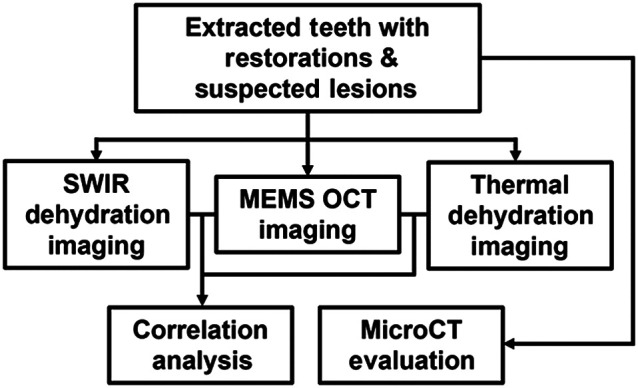
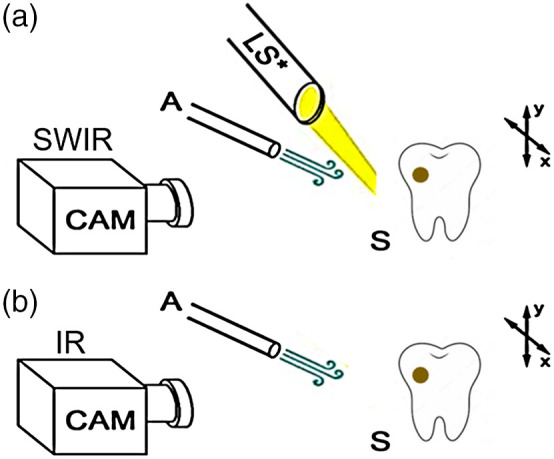
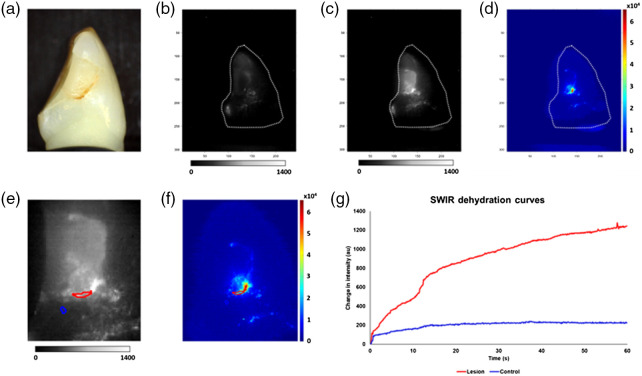
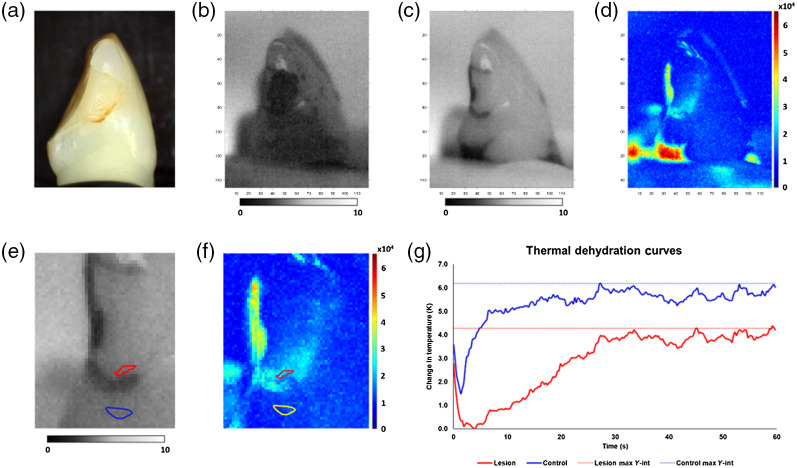
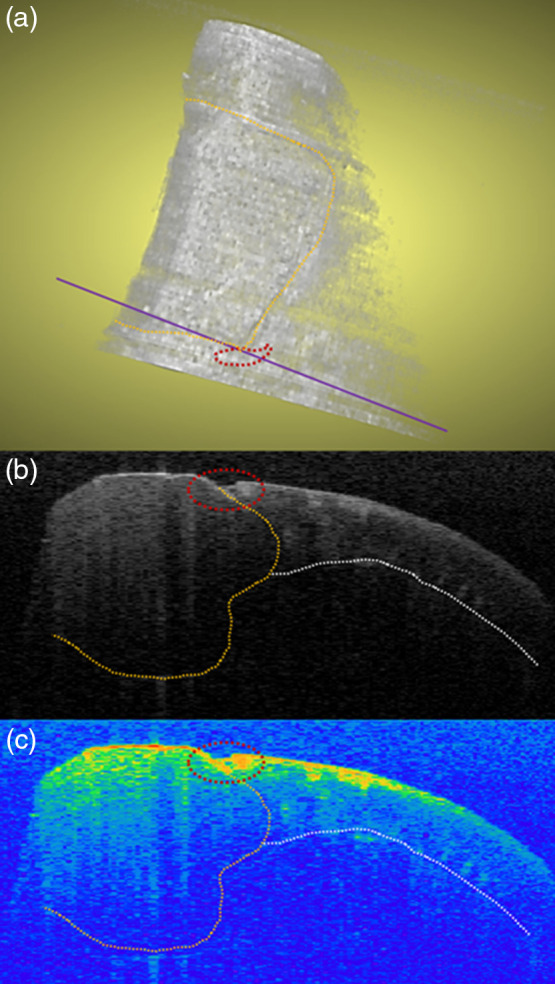
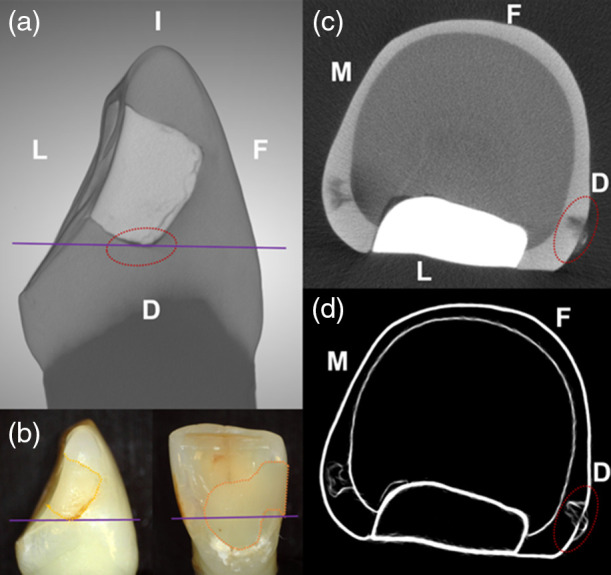
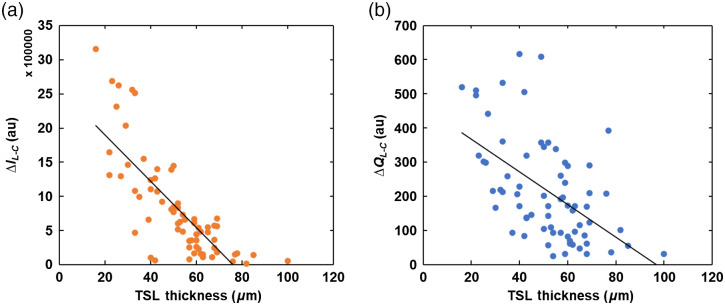
Significance: Leakage in the interfaces between restorative materials and tooth structure allows for fluid and bacterial acid infiltration, causing restoration failure due to secondary caries. Dentists spend more time replacing composite restorations than placing new ones. Previous in vitro and in vivo studies on enamel and root surfaces using shortwave-infrared (SWIR) and thermal imaging during dehydration with forced air have been promising for assessing lesion activity. Aim: We hypothesized that SWIR reflectance and thermal imaging methods can be used to monitor the activity of secondary caries lesions around composite restorations. The objective of this study was to employ these methods to measure the rate of fluid loss from lesions during dehydration with forced air to assess lesion activity. Approach: Sixty-three extracted human teeth with total of 109 suspected secondary lesions were examined using SWIR and thermal imaging during dehydration. The thickness of the highly mineralized transparent surface layer (TSL) at lesion interfaces indicative of lesion activity was measured by optical coherence tomography (OCT). Micro-computed tomography (MicroCT) was used to further confirm lesion severity and structure. OCT and MicroCT measurements of lesion structure, depth, and severity were correlated with fluid loss rates measured with SWIR reflectance and thermal imaging. Results: TSL thickness measured with OCT correlated with both SWIR reflectance and thermal measurements of rates of fluid loss ( ). Increasing TSL thickness led to decreased permeability of lesions, potentially indicating full lesion arrest at . SWIR performed better than thermal imaging for secondary lesion activity assessment, although both methods performed best on smooth surface lesions. Conclusions: Nondestructive SWIR reflectance and OCT imaging methods are promising for clinically monitoring the activity of secondary caries lesions.
Keywords: lesion activity; micro-computed tomography; optical coherence tomography; secondary caries lesions; shortwave-infrared imaging; thermal imaging.
© 2023 The Authors.
Figures


References
-
- Fejerskov O., Kidd E., Dental Caries: The Disease and Its Clinical Management, Blackwell, Oxford: (2003).
-
- Pitts N., Detection, Assessment, Diagnosis and Monitoring of Caries, Karger Medical and Scientific Publishers; (2009).