Gene expression profiling of circulating tumor cells captured by MicroCavity Array is superior to enumeration in demonstrating therapy response in patients with newly diagnosed advanced and locally advanced non-small cell lung cancer
- PMID: 36762061
- PMCID: PMC9903084
- DOI: 10.21037/tlcr-22-314
Gene expression profiling of circulating tumor cells captured by MicroCavity Array is superior to enumeration in demonstrating therapy response in patients with newly diagnosed advanced and locally advanced non-small cell lung cancer
Abstract
Background: Circulating tumor cells (CTCs) are a promising non-invasive tool for monitoring therapy response. The only Food and Drug Administration (FDA)-approved test is limited to enumeration of epithelial CTC without further characterization and is not approved for the management of non-small cell lung cancer (NSCLC). Here we use a MicroCavity Array (MCA) system to capture CTC agnostic of epithelial markers for further molecular testing in NSCLC.
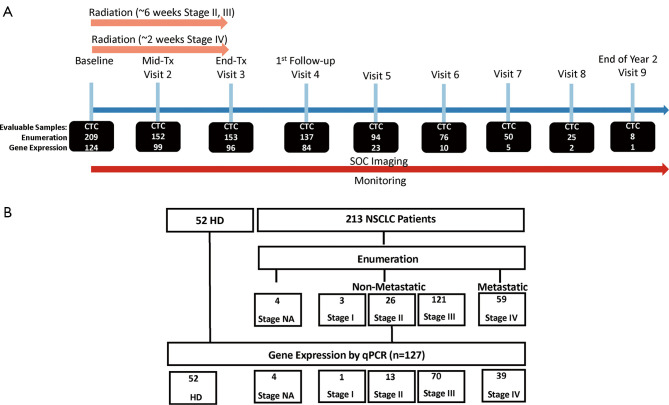
Methods: CTCs were enumerated by fluorescent microscopy as longitudinal sampling throughout disease management from 213 NSCLC patients. CTC-enriched samples from a subset of 127 patients were interrogated for gene expression by reverse transcription polymerase chain reaction (RT-PCR) using a customized pre-selected panel of 20 genes.
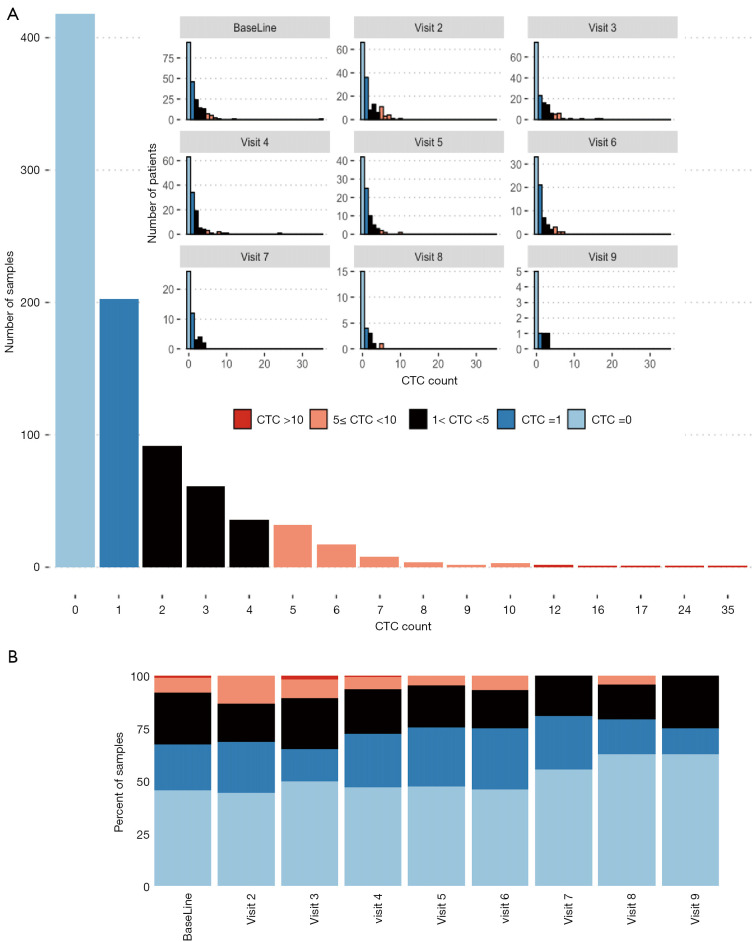
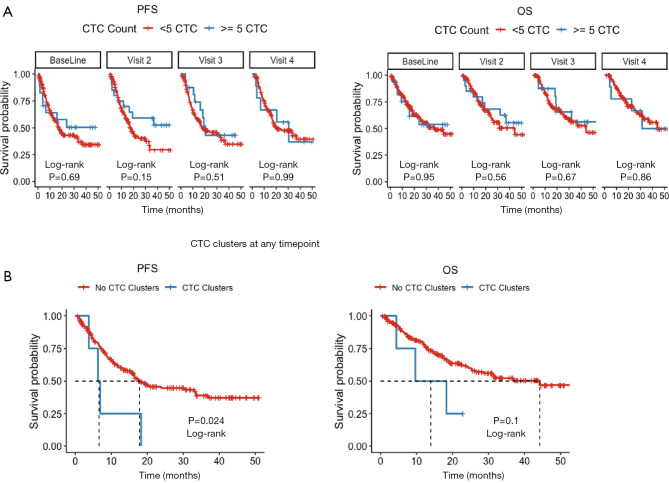
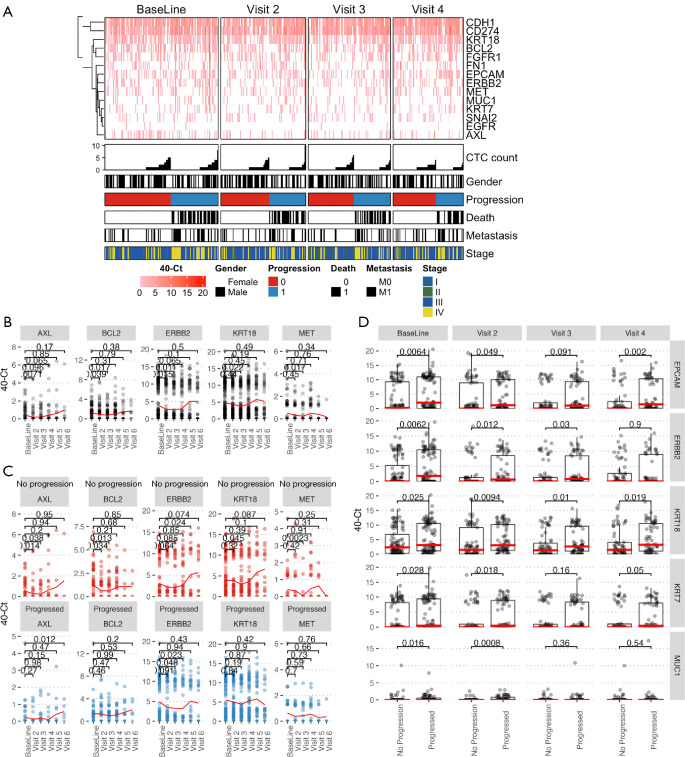
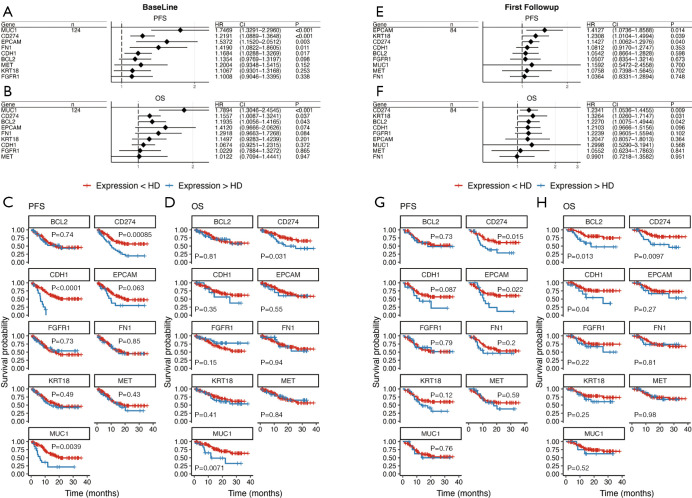
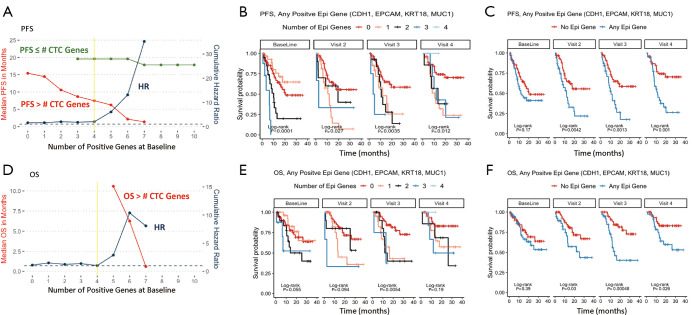
Results: At least 1 CTC was detected by enumeration in 53.8% of samples. Most patients had fewer than 5 CTCs (91%) and the highest observed count was 35 CTCs. Enumeration of single CTCs was not prognostic, although detection of CTC clusters at any time point was associated with increased risk of progression [hazard ratio (HR) 3.00, 95% confidence interval (CI): 1.1-8.2, P=0.0318]. In contrast, 124 (97.6%) patients with samples interrogated for gene expression had at least 1 gene detectable in at least 1 sample, and 101 (79.5%) had at least one elevated epithelial gene in at least one timepoint. High expression of BCL2, CD274 [programmed death-ligand 1 (PD-L1)], CDH1, EPCAM, FGFR1, FN1, KRT18, MET and MUC1 were associated with poor prognosis. Patients with CTCs positive for at least 3 epithelial genes at baseline all progressed within 10 months (HR 8.2, P<0.001, 95% CI: 3.2-21.1). BCL2, CD274 (PD-L1), EPCAM and MUC1 remained significant independent prognostic factors in multivariate, time-dependent analyses of progression and death.
Conclusions: The selective profile of CTC genes and identification of CTC clusters better correlated with prognosis than enumeration of enriched CTC in NSCLC patients in this study.
Keywords: Blood; biomarkers, tumor; liquid biopsy; neoplastic cells, circulating.
2023 Translational Lung Cancer Research. All rights reserved.
Conflict of interest statement
Conflicts of Interest: All authors have completed the ICMJE uniform disclosure form (available at https://tlcr.amegroups.com/article/view/10.21037/tlcr-22-314/coif). SHL serves as an unpaid editorial board member of Translational Lung Cancer Research from October 2021 to September 2023. All authors report that Hitachi Chemical Company of Tokyo Japan (currently Showa Denko Materials Co., Ltd.) and The University of Texas MD Anderson Cancer Center entered into a Strategic Alliance Agreement to develop the MCA instrument and conduct the clinical trial that produced data reported in this manuscript. JMR serves as a member of the Scientific Advisory Board for Angle plc. SHL reports grants from STCube Pharmaceuticals, Beyond Spring Pharmaceuticals, Nektar Therapeutics, other support from Creatv Microtech, AstraZeneca Inc., XRAD Therapeutics, non-financial support from Scenexo, Inc., outside the submitted work. The authors have no other conflicts of interest to declare.
Figures
References
-
- Facts & Figures 2022. In: American Cancer Society. Bethesda, MD. 2022. Available online: https://seer.cancer.gov/statfacts/html/lungb.html. Accessed 4/21/2022.
LinkOut - more resources
Full Text Sources
Research Materials
Miscellaneous