


Research progress of ophthalmic preparations of immunosuppressants
- PMID: 36762580
- PMCID: PMC10187490
- DOI: 10.1080/10717544.2023.2175925
Research progress of ophthalmic preparations of immunosuppressants
Abstract
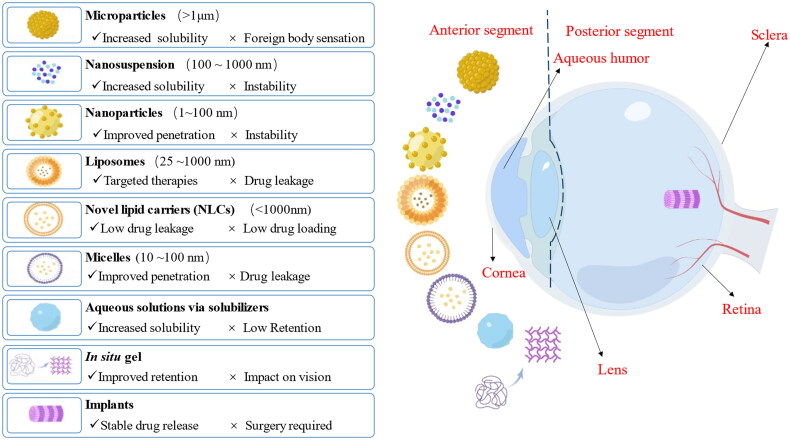
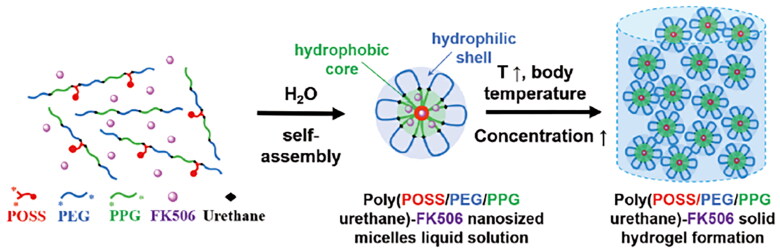
Immune ophthalmopathy is a collection of autoimmune eye diseases. Immunosuppressants are drugs that can inhibit the body's immune response. Considering drug side effects such as hepatorenal toxicity and the unique structure of the eye, incorporating immunosuppressants into ophthalmic nanodrug delivery systems, such as microparticles, nanoparticles, liposomes, micelles, implants, and in situ gels, has the advantages of improving solubility, increasing bioavailability, high eye-target specificity, and reducing side effects. This study reviews recent research and applications of this aspect to provide a reference for the development of an ophthalmic drug delivery system.
Keywords: Immunosuppressant; immune eye disease; nano-delivery system; ophthalmic.
Conflict of interest statement
The authors declare no conflict of interest.
Figures

References
-
- Abdulreda MH, C, Martin A, Gans, et al. (2014). Prolonged Survival of Pancreatic Islet Allografts in the Immune Privileged Anterior Chamber of the Eye. San Francisco, CA: ADA 74th Scientific Sessions.
-
- Agarwal P, Scherer D, Günther B, et al. (2018). Semifluorinated alkane based systems for enhanced corneal penetration of poorly soluble drugs. Int J Pharm 538:119–29. - PubMed
-
- Aksungur P, Demirbilek M, Denkbaş EB, et al. (2012). Comparative evaluation of cyclosporine A/HPβCD-incorporated PLGA nanoparticles for development of effective ocular preparations. J Microencapsul 29:605–13. - PubMed
-
- Alvarez-Trabado J, López-García A, Martín-Pastor M, et al. (2018). Sorbitan ester nanoparticles (SENS) as a novel topical ocular drug delivery system: Design, optimization, and in vitro/ex vivo evaluation. Int J Pharm 546:20–30. - PubMed
Publication types
MeSH terms
Substances
LinkOut - more resources
Full Text Sources
Medical
