Blink Rate Measured In Situ Decreases While Reading From Printed Text or Digital Devices, Regardless of Task Duration, Difficulty, or Viewing Distance
- PMID: 36763349
- PMCID: PMC9927758
- DOI: 10.1167/iovs.64.2.14
Blink Rate Measured In Situ Decreases While Reading From Printed Text or Digital Devices, Regardless of Task Duration, Difficulty, or Viewing Distance
Abstract
Purpose: To compare blinking measured in situ during various tasks and examine relationships with ocular surface symptoms. The day-to-day repeatability of the blink rate and interblink interval was assessed.
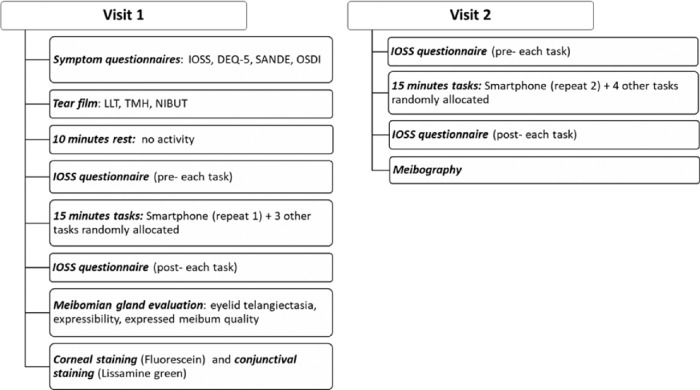
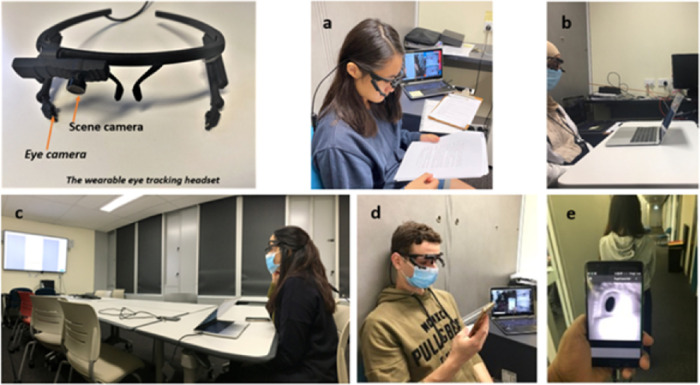
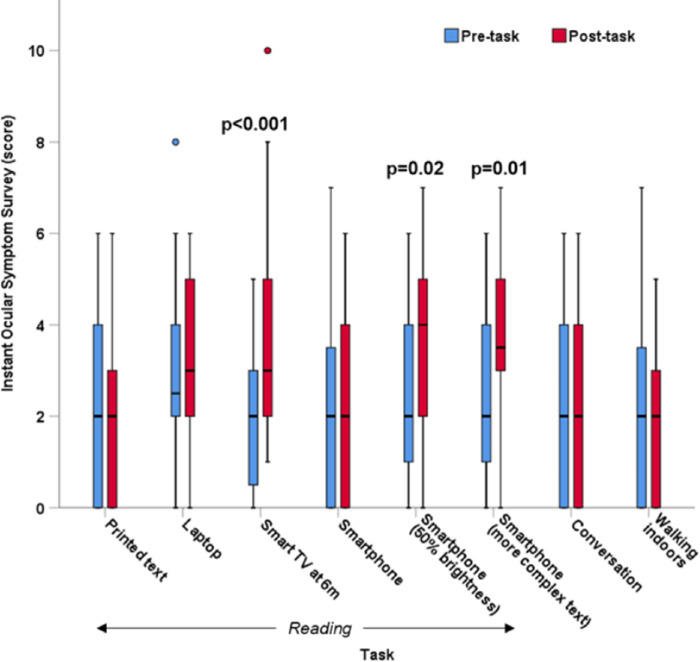
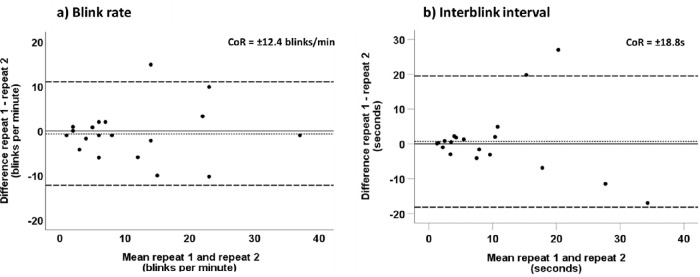
Methods: Twenty-four students (28.6 ± 6.3 years; 8 male and 16 female) completed six reading tasks (printed text, laptop, TV, smartphone, smartphone at 50% brightness, smartphone with complex text), and two nonreading tasks (conversation, walking) in a randomized cross-over study. Ocular surface symptoms and clinical signs were assessed. The blink rate and interblink interval were measured using a wearable eye tracking headset. Blink parameters were compared across tasks and time (linear mixed model and post hoc comparisons with Bonferroni correction). Associations between blinking, symptoms, ocular surface, and clinical signs were assessed (Spearman's correlation). The smartphone reading task was completed twice to determine the coefficient of repeatability.
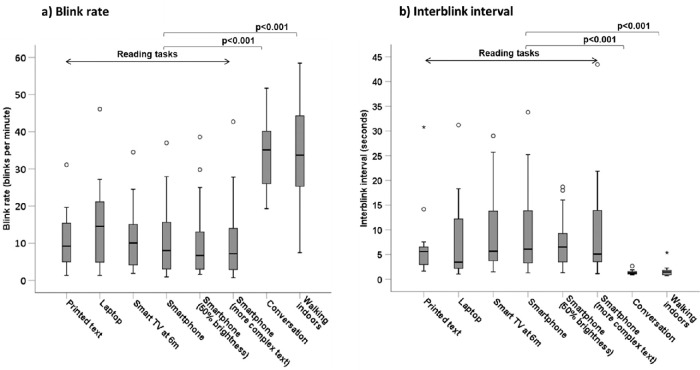
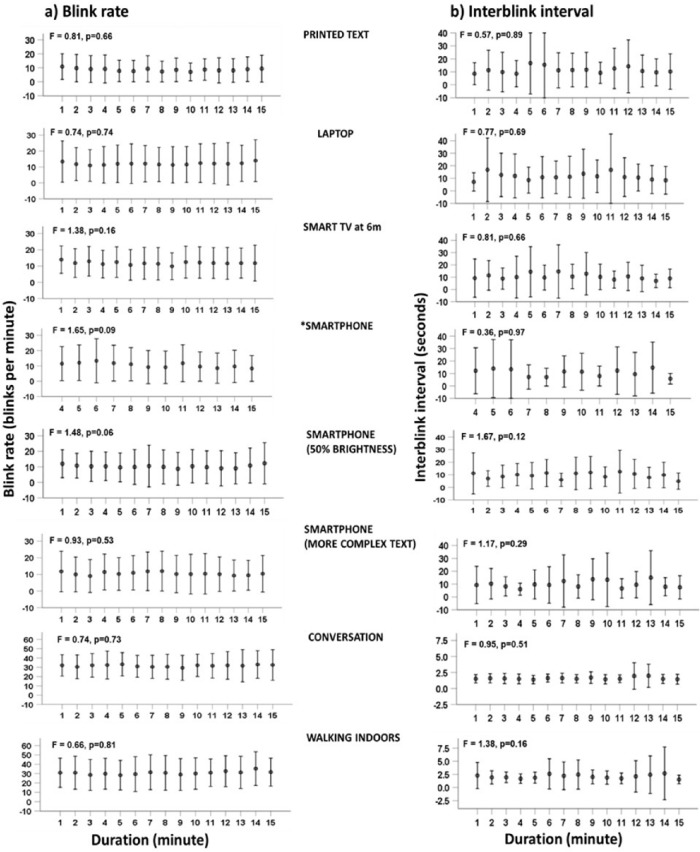
Results: The blink rate was lower (mean 10.7 ± 9.7 blinks/min) and the interblink interval longer (mean 9.6 ± 8.7 seconds) during all reading tasks compared with conversation (mean 32.4 ± 12.4 blinks/min; 1.5 ± 0.6 seconds) and walking (mean 31.3 ± 15.5 blinks/min; 1.9 ± 1.3s) (P < 0.001). There were no significant differences in blink parameters between any of the reading tasks or between conversation and walking. Changes in blinking occurred within 1 minute of starting the task. No associations were evident between blink rate or interblink interval and ocular surface symptoms or signs. The coefficient of repeatability was ±12.4 blinks/min for blink rate and ±18.8 seconds for interblink interval.
Conclusions: Spontaneous blinking can be measured reliably in situ. The blink rate was decreased and the interblink interval increased during reading compared with conversation and walking. Changes in blinking were immediate, sustained, and not associated with ocular surface symptoms or signs.
Conflict of interest statement
Disclosure:
Figures
References
-
- Nakamori K, Odawara M, Nakajima T, Mizutani T, Tsubota K. Blinking is controlled primarily by ocular surface conditions. Am J Ophthalmol. 1997; 124: 24–30. - PubMed
-
- Dumery B, Van Toi V. Relationship between blink rate, ocular discomfort, and visual tasks. Invest Ophthalmol Vis Sci. 1997; 38: 326.
-
- Doughty MJ. Consideration of three types of spontaneous eyeblink activity in normal humans: during reading and video display terminal use, in primary gaze, and while in conversation. Optom Vis Sci. 2001; 78: 712–725. - PubMed
-
- Jaiswal S, Asper L, Long J, Lee A, Harrison K, Golebiowski B. Ocular and visual discomfort associated with smartphones, tablets and computers: what we do and do not know. Clin Exp Optom. 2019; 102: 463–477. - PubMed
Publication types
MeSH terms
LinkOut - more resources
Full Text Sources