Meta-Analysis
. 2023 Jun;65(6):e691-e713.
doi: 10.1016/j.jpainsymman.2023.02.001. Epub 2023 Feb 9.

Palliative Care Interventions Effects on Psychological Distress: A Systematic Review & Meta-Analysis

Affiliations
Meta-Analysis

Palliative Care Interventions Effects on Psychological Distress: A Systematic Review & Meta-Analysis

Molly A Nowels et al. J Pain Symptom Manage. 2023 Jun.

Abstract

Background: Managing psychological distress is an objective of palliative care. No meta-analysis has evaluated whether palliative care reduces psychological distress.

Objectives: Examine the effects of palliative care on depression, anxiety, and general psychological distress for adults with life-limiting illnesses and their caregivers.

Design: We searched PubMed, PsycInfo, Embase, and CINAHL for randomized clinical trials (RCTs) of palliative care interventions. RCTs were included if they enrolled adults with life-limiting illnesses or their caregivers, reported data on psychological distress at 3 months after study intake, and if authors had described the intervention as "palliative care."

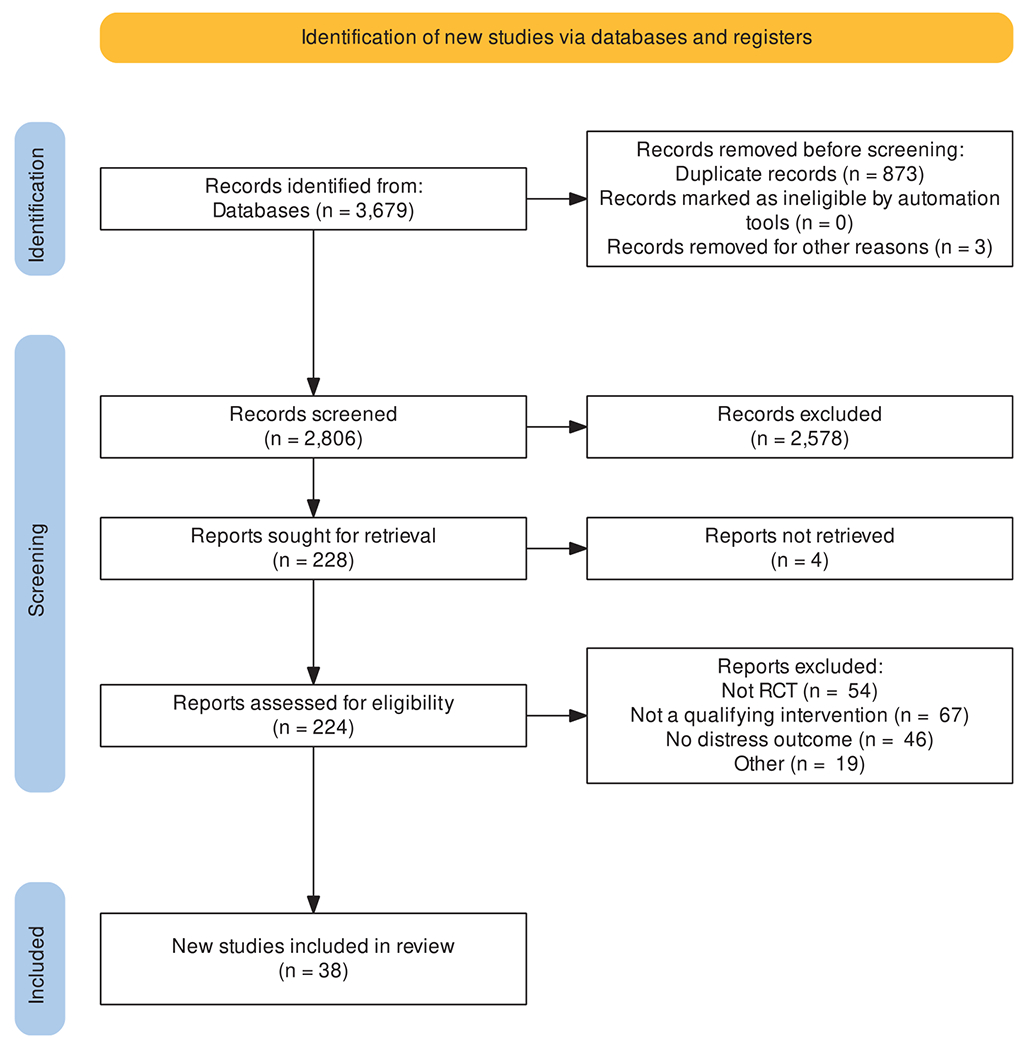
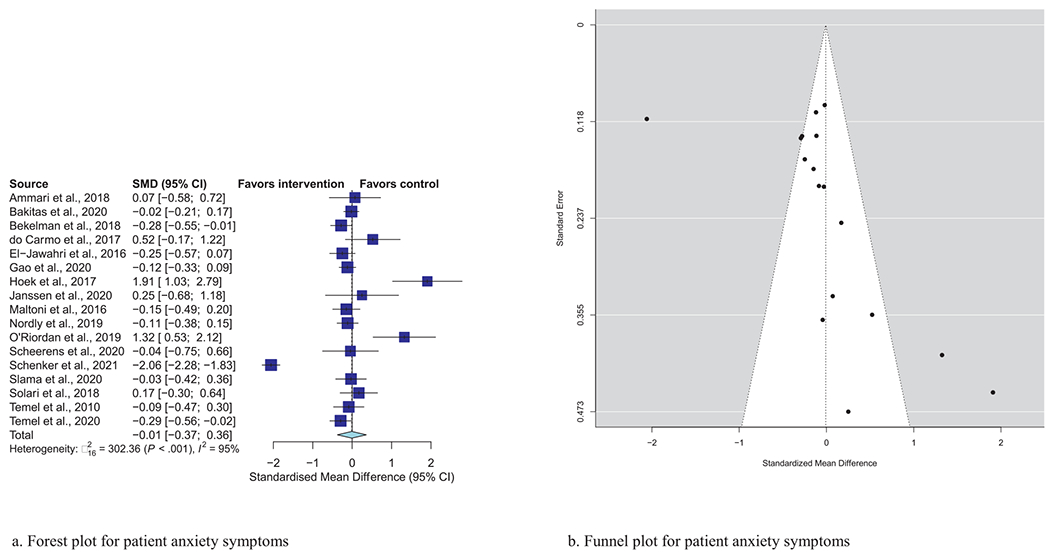
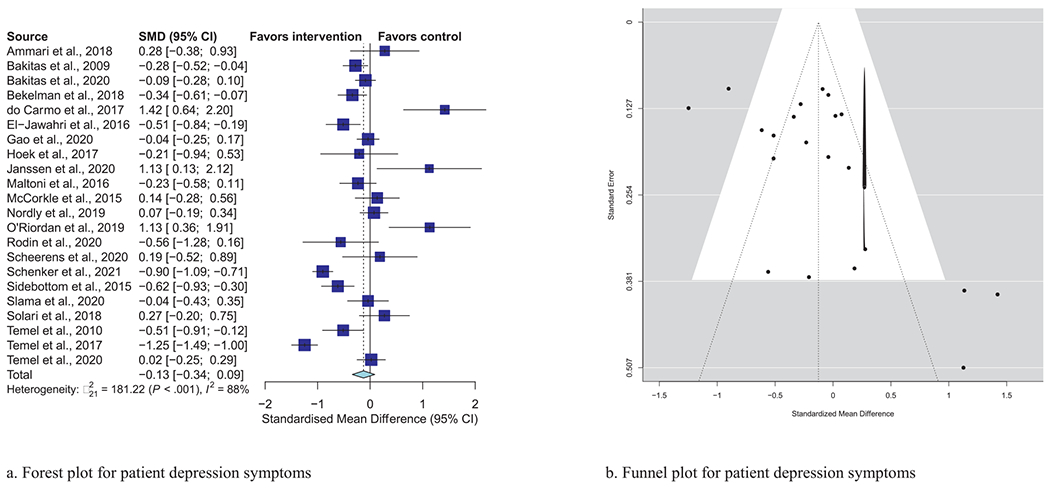
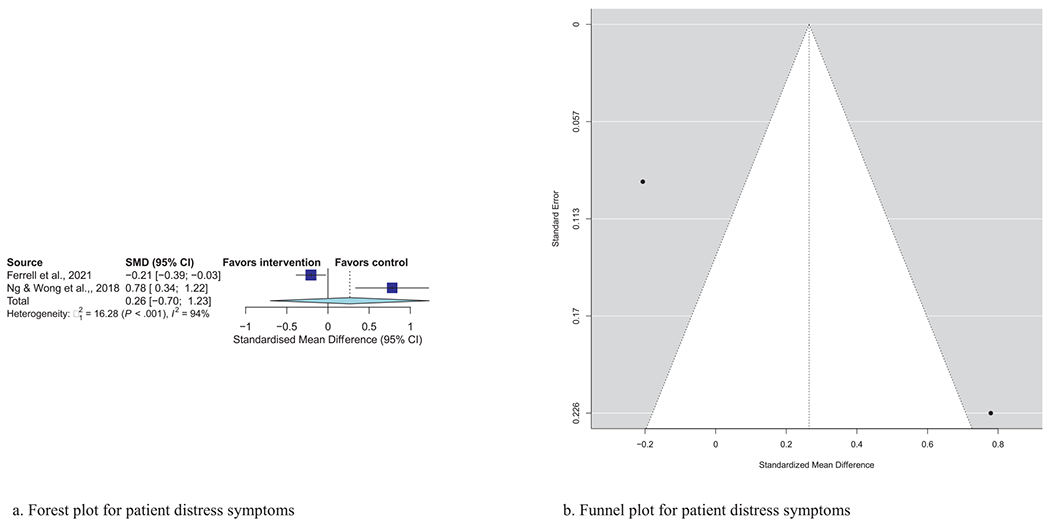
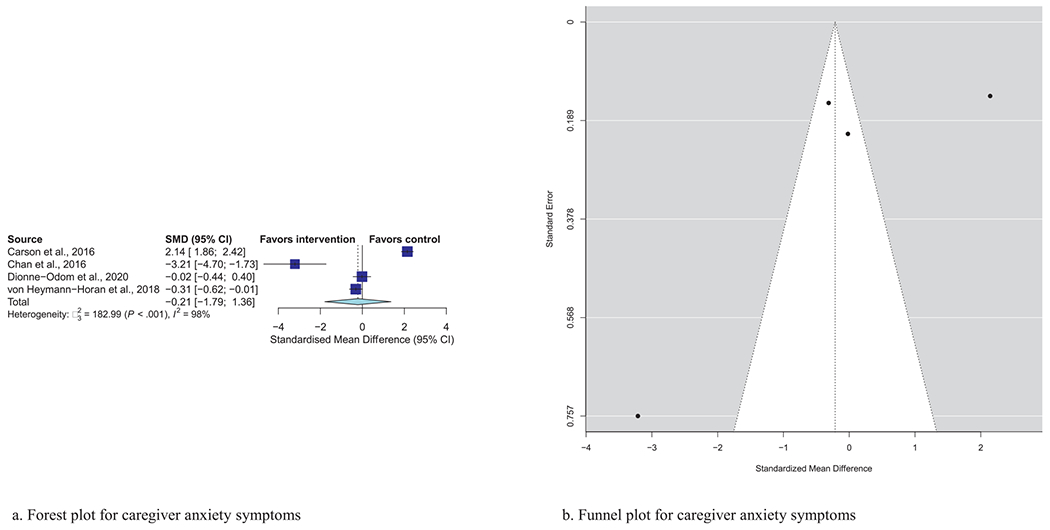
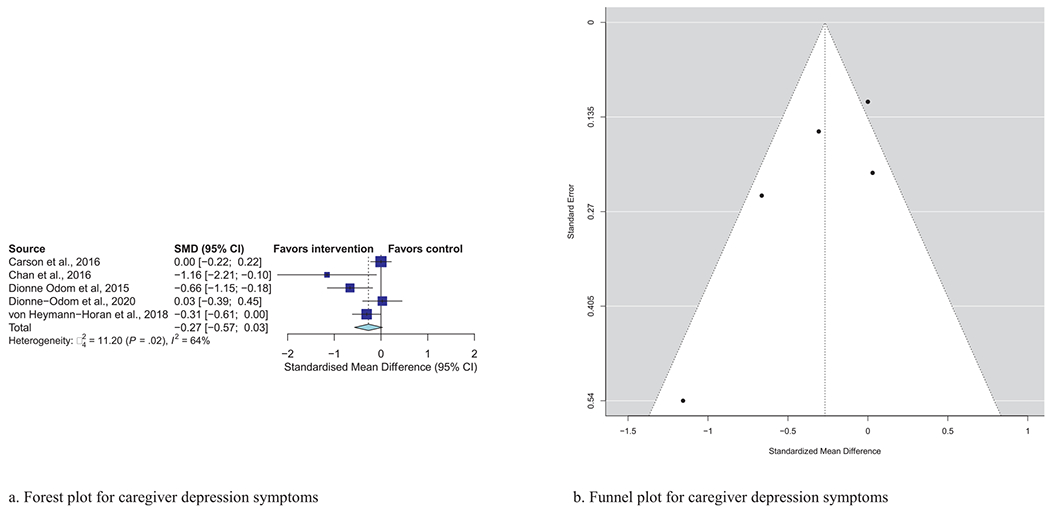
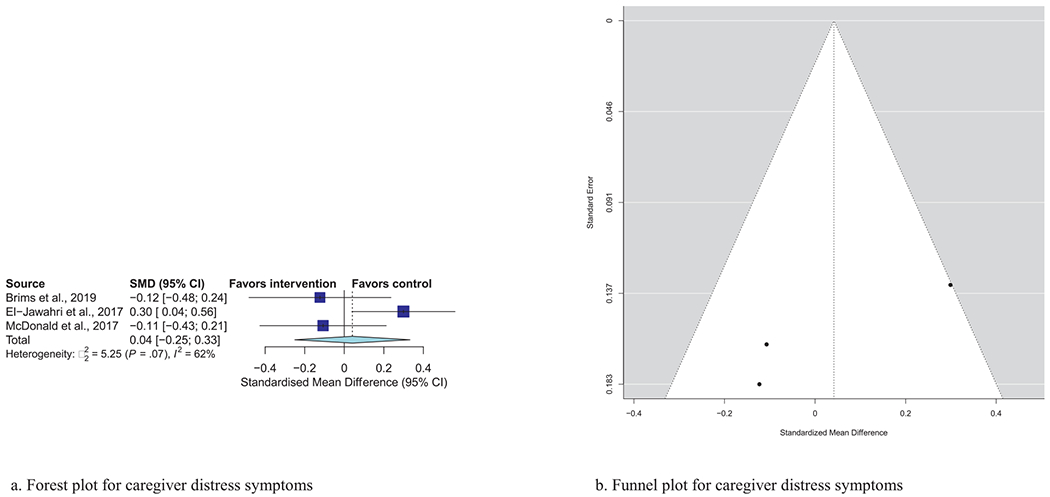
Results: We identified 38 RCTs meeting our inclusion criteria. Many (14/38) included studies excluded participants with common mental health conditions. There were no statistically significant improvements in patient or caregiver anxiety (patient SMD: -0.008, P = 0.96; caregiver SMD: -0.21, P = 0.79), depression (patient SMD: -0.13, P = 0.25; caregiver SMD -0.27, P = 0.08), or psychological distress (patient SMD: 0.26, P = 0.59; caregiver SMD: 0.04, P = 0.78).

Conclusions: Psychological distress is not likely to be reduced in the context of a typical palliative care intervention. The systemic exclusion of patients with common mental health conditions in more than 1/3 of the studies raises ethical questions about the goals of palliative care RCTS and could perpetuate inequalities.

Keywords: Meta-analysis; anxiety; caregiver; depression; palliative care interventions; patient; psychological distress.


Figures

Fig. 1.
Fig. 1.
PRISMA flow diagram of included studies. For interpretation of the references to color in this figure legend, the reader is referred to the web version of this article.
Fig. 2.
Fig. 2.
a) Forest plot for patient anxiety symptoms. b) Funnel plot for patient anxiety symptoms. For interpretation of the references to color in this figure legend, the reader is referred to the web version of this article.
Fig. 3.
Fig. 3.
a) Forest plot for patient depression symptoms. b) Funnel plot for patient depression symptoms. For interpretation of the references to color in this figure legend, the reader is referred to the web version of this article.
Fig. 4.
Fig. 4.
a) Forest plot for patient distress symptoms. b) Funnel plot for patient distress symptoms. For interpretation of the references to color in this figure legend, the reader is referred to the web version of this article.
Fig. 5.
Fig. 5.
a) Forest plot for caregiver anxiety symptoms. b) Funnel plot for caregiver anxiety symptoms. For interpretation of the references to color in this figure legend, the reader is referred to the web version of this article.
Fig. 6.
Fig. 6.
a) Forest plot for caregiver depression symptoms. b) Funnel plot for caregiver depression symptoms. For interpretation of the references to color in this figure legend, the reader is referred to the web version of this article.
Fig. 7.
Fig. 7.
a) Forest plot for caregiver distress symptoms. b) Funnel plot for caregiver distress symptoms. For interpretation of the references to color in this figure legend, the reader is referred to the web version of this article.

Comment in

References

    1. Kozlov E, Eghan C, Moran S, Herr K, Reid MC. Palliative care providers’ practices surrounding psychological distress screening and treatment: a National Survey. Am J Hosp Palliat Med 2018;35:938–944. 10.1177/1049909117743960. - DOI - PMC - PubMed
    1. Ridner SH. Psychological distress: concept analysis. J Adv Nurs 2004;45:536–545. 10.1046/j.1365-2648.2003.02938.x. - DOI - PubMed
    1. Mitchell AJ, Chan M, Bhatti H, et al. Prevalence of depression, anxiety, and adjustment disorder in oncological, haematological, and palliative-care settings: a meta-analysis of 94 interview-based studies. Lancet Oncol 2011;12:160–174. 10.1016/S1470-2045(11)70002-X. - DOI - PubMed
    1. Yohannes AM, Willgoss TG, Baldwin RC, Connolly MJ. Depression and anxiety in chronic heart failure and chronic obstructive pulmonary disease: prevalence, relevance, clinical implications and management principles. Int J Geriatr Psychiatry 2010;25:1209–1221. 10.1002/gps.2463. - DOI - PubMed
    1. Kozlov E, Dong X, Kelley AS, Ankuda C The epidemiology of depressive symptoms in the last year of life. J Am Geriatr Soc 2020;68:321–328. 10.1111/jgs.16197. - DOI - PMC - PubMed