Review
. 2023 Nov 1;94(9):694-705.
doi: 10.1016/j.biopsych.2023.02.001. Epub 2023 Feb 9.

The Cutting Edge of Epigenetic Clocks: In Search of Mechanisms Linking Aging and Mental Health

Affiliations
Review

The Cutting Edge of Epigenetic Clocks: In Search of Mechanisms Linking Aging and Mental Health

Zachary M Harvanek et al. Biol Psychiatry. .

Abstract

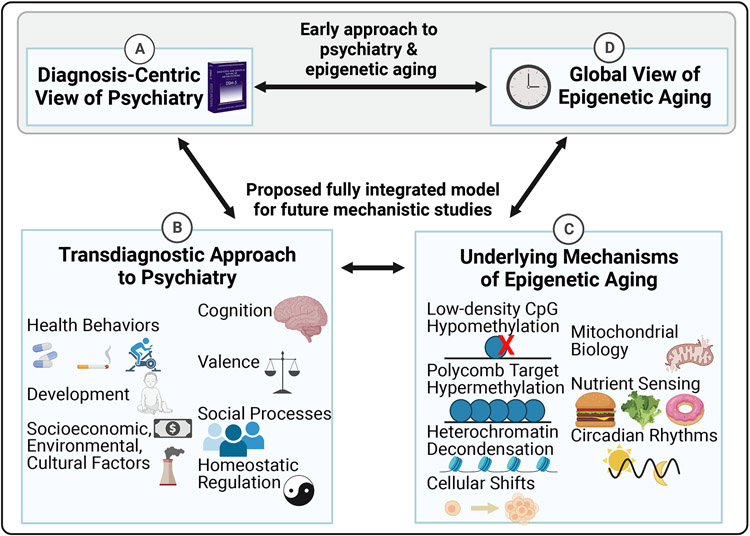
Individuals with psychiatric disorders are at increased risk of age-related diseases and early mortality. Recent studies demonstrate that this link between mental health and aging is reflected in epigenetic clocks, aging biomarkers based on DNA methylation. The reported relationships between epigenetic clocks and mental health are mostly correlational, and the mechanisms are poorly understood. Here, we review recent progress concerning the molecular and cellular processes underlying epigenetic clocks as well as novel technologies enabling further studies of the causes and consequences of epigenetic aging. We then review the current literature on how epigenetic clocks relate to specific aspects of mental health, such as stress, medications, substance use, health behaviors, and symptom clusters. We propose an integrated framework where mental health and epigenetic aging are each broken down into multiple distinct processes, which are then linked to each other, using stress and schizophrenia as examples. This framework incorporates the heterogeneity and complexity of both mental health conditions and aging, may help reconcile conflicting results, and provides a basis for further hypothesis-driven research in humans and model systems to investigate potentially causal mechanisms linking aging and mental health.

Keywords: Aging; Biomarkers; Clocks; Epigenetics; Schizophrenia; Stress.


Conflict of interest statement

Disclosures: AHC received consulting fees from FOXO Technologies and TruDiagnostic concerning epigenetic clocks. AHC is named on two epigenetic clock inventions owned by Yale University. A clock based on the PC clock methodology is licensed to Elysium Health. None of these commercial entities were involved in the conceptualization, preparation, review, approval, or submission of this manuscript. All other authors report no biomedical financial interests or potential conflicts of interest.

Figures

Figure 1.
Figure 1.. Framework for connecting mental health and epigenetic aging.
Image created with Biorender.com.
Figure 2.
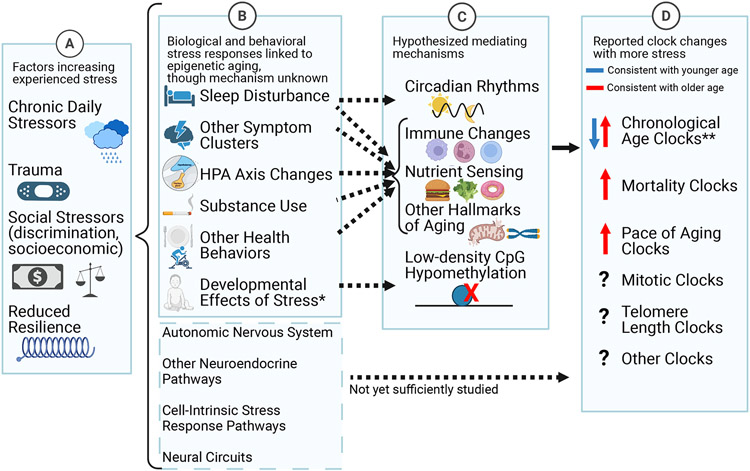
Figure 2.. Linking stress and epigenetic aging.
Dotted arrows indicate hypothesized relationships for future investigation. Note that arrows indicate relationships that may ultimately increase or decrease epigenetic age. Most clocks in D are each comprised of a complex mixture of the mechanisms in C, and this remains an active area of research (see “Disentangling Mechanisms within Individual Epigenetic Clocks” and Table 1). *Developmental effects of stress likely also influence epigenetic aging by altering other stress responses, such as the HPA axis or health behaviors. **Chronological age clocks have shown inconsistent effects across studies. Discrepancies may be due to the exact clock used or due to heterogeneity in populations being studied. HPA axis, hypothalamic-pituitary-adrenal axis. Image created with Biorender.com.
Figure 3.
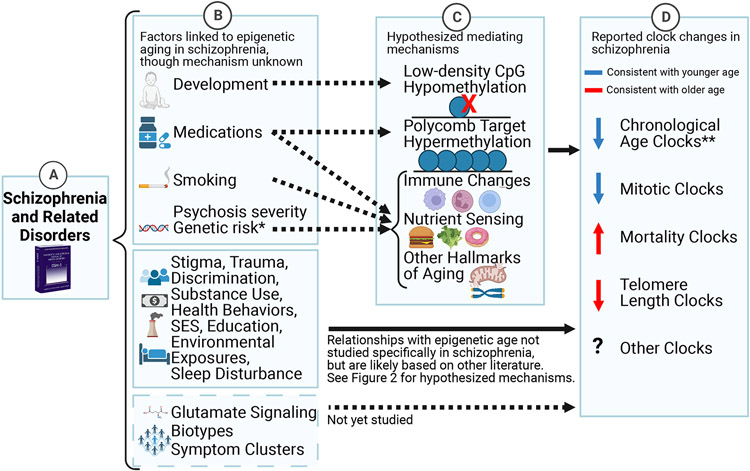
Figure 3.. Linking schizophrenia and epigenetic aging.
Dotted arrows indicate hypothesized relationships for future investigation. Note that arrows indicate relationships that may ultimately increase or decrease epigenetic age. Most clocks in D are each comprised of a complex mixture of the mechanisms in C, and this remains an active area of research (see “Disentangling Mechanisms within Individual Epigenetic Clocks” and Table 1). *Psychosis severity and genetic risk may also affect epigenetic age by increasing many of the other schizophrenia-associated factors (e.g. smoking, medications, etc). **Chronological age clocks show inconsistent effects between studies, which may be due to the clock being used, sample size, or heterogeneity in the study populations. Image created with Biorender.com.

References

    1. Walker ER, McGee RE, Druss BG (2015): Mortality in mental disorders and global disease burden implications: a systematic review and meta-analysis. JAMA Psychiatry 72: 334–341. - PMC - PubMed
    1. Lawrence D, Hancock KJ, Kisely S (2013): The gap in life expectancy from preventable physical illness in psychiatric patients in Western Australia: retrospective analysis of population based registers. BMJ 346: f2539. - PMC - PubMed
    1. Richmond-Rakerd LS, D’Souza S, Milne BJ, Caspi A, Moffitt TE (2022): Longitudinal Associations of Mental Disorders With Dementia: 30-Year Analysis of 1.7 Million New Zealand Citizens. JAMA Psychiatry 79: 333–340. - PMC - PubMed
    1. Lambert AM, Parretti HM, Pearce E, Price MJ, Riley M, Ryan R, et al. (2022): Temporal trends in associations between severe mental illness and risk of cardiovascular disease: A systematic review and meta-analysis. PLoS Med 19: e1003960. - PMC - PubMed
    1. López-Otín C, Blasco MA, Partridge L, Serrano M, Kroemer G (2013): The hallmarks of aging. Cell 153: 1194–1217. - PMC - PubMed

Publication types