


Exploring the Past, Present, and Future of Anti-Angiogenic Therapy in Glioblastoma
- PMID: 36765787
- PMCID: PMC9913517
- DOI: 10.3390/cancers15030830
Exploring the Past, Present, and Future of Anti-Angiogenic Therapy in Glioblastoma
Abstract
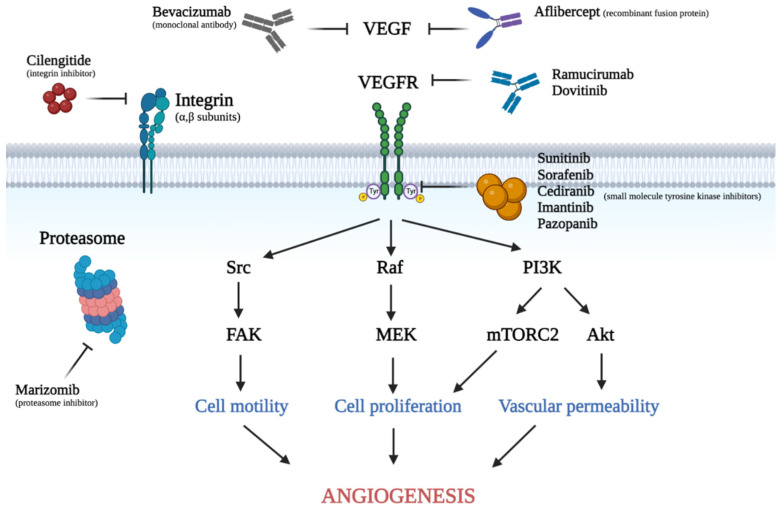
Glioblastoma, a WHO grade IV astrocytoma, constitutes approximately half of malignant tumors of the central nervous system. Despite technological advancements and aggressive multimodal treatment, prognosis remains dismal. The highly vascularized nature of glioblastoma enables the tumor cells to grow and invade the surrounding tissue, and vascular endothelial growth factor-A (VEGF-A) is a critical mediator of this process. Therefore, over the past decade, angiogenesis, and more specifically, the VEGF signaling pathway, has emerged as a therapeutic target for glioblastoma therapy. This led to the FDA approval of bevacizumab, a monoclonal antibody designed against VEGF-A, for treatment of recurrent glioblastoma. Despite the promising preclinical data and its theoretical effectiveness, bevacizumab has failed to improve patients' overall survival. Furthermore, several other anti-angiogenic agents that target the VEGF signaling pathway have also not demonstrated survival improvement. This suggests the presence of other compensatory angiogenic signaling pathways that surpass the anti-angiogenic effects of these agents and facilitate vascularization despite ongoing VEGF signaling inhibition. Herein, we review the current state of anti-angiogenic agents, discuss potential mechanisms of anti-angiogenic resistance, and suggest potential avenues to increase the efficacy of this therapeutic approach.
Keywords: angiogenesis; glioblastoma; tumor microenvironment.
Conflict of interest statement
M.W. is an inventor on the University of California patents related to anti-EMP2 antibodies.
Figures
References
-
- Survival Rates for Selected Adult Brain and Spinal Cord Tumors. [(accessed on 1 September 2022)]. Available online: https://www.cancer.org/cancer/brain-spinal-cord-tumors-adults/detection-....
Publication types
LinkOut - more resources
Full Text Sources
Miscellaneous
