


Glycemic Responses of Milk and Plant-Based Drinks: Food Matrix Effects
- PMID: 36765982
- PMCID: PMC9914410
- DOI: 10.3390/foods12030453
Glycemic Responses of Milk and Plant-Based Drinks: Food Matrix Effects
Abstract
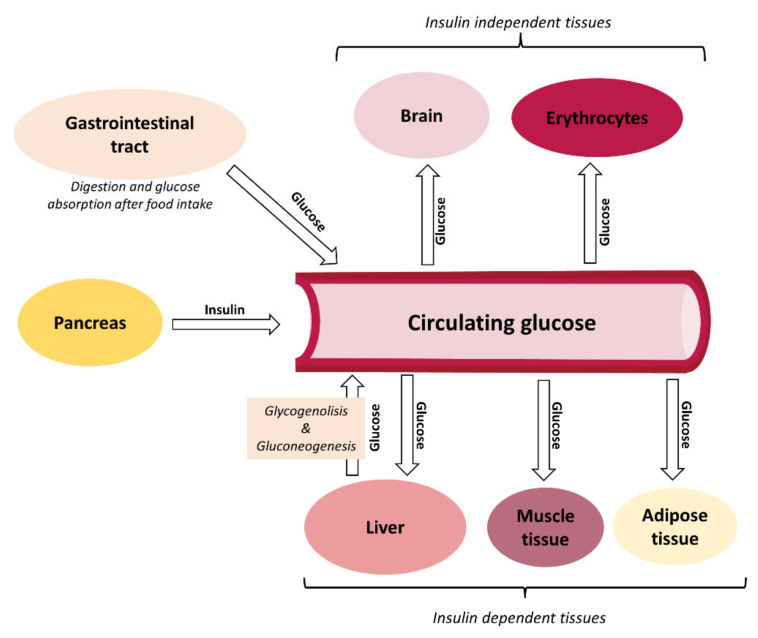
The consumption of food items containing digestible carbohydrates in food products leads to postprandial increases in blood glucose levels and glycemic responses. The extent to which these occur depends on many factors, including concentration and type of carbohydrate, but also other physicochemical properties of the food matrix, which determine the rate of uptake of monosaccharides into the bloodstream, including product structure and factors affecting gastric emptying. For milk, control of postprandial glycemic responses appears to be multifaceted, including a controlled rate of gastric emptying, a rate of glucose and galactose uptake into the bloodstream controlled by enzymatic hydrolysis, as well as stimulated insulin secretion to enhance uptake of blood glucose from the bloodstream. Altogether, this allows milk to deliver comparatively high levels of carbohydrate with limited glycemic responses. For plant-based drinks positioned as milk alternatives, however, compositional differences (including carbohydrate type and concentration) as well as matrix factors limiting control over gastric emptying and insulin secretion can, in some cases, lead to much stronger glycemic responses, which are undesirable in relation to non-communicable diseases, such as type-2 diabetes. This review discusses glycemic responses to milk and plant-based drinks from this perspective, focusing on mechanistic insights and food matrix effects.
Keywords: carbohydrates; dairy products; food matrix; glycemic index; glycemic load; metabolism; plant-based drinks; postprandial glycemic response.
Conflict of interest statement
The author declares no conflict of interest.
Figures
References
-
- van Rossum C.T.M., Buurma-Rethans E.J.M., Dinnissen C.S., Beukers M.H., Brants H.A.M., Dekkers A.L.M., Ocké M.C. The Diet of the Dutch: Results of the Dutch National Food Consumption Survey 2012–2016. National Institute for Public Health and the Environment RIVM; Bilthoven, The Netherlands: 2020.
-
- Huppertz T. Understanding and Improving the Functional and Nutritional Properties of Milk. Burleigh Dodds Science Publishing Limited; Cambridge, UK: 2022. Lactose in Milk: Properties, Nutritional Characteristics and Role in Dairy Products.
-
- Romero-Velarde E., Delgado-Franco D., García-Gutiérrez M., Gurrola-Díaz C., Larrosa-Haro A., Montijo-Barrios E., Muskiet F.A.J., Vargas-Guerrero B., Geurts J. The Importance of Lactose in the Human Diet: Outcomes of a Mexican Consensus Meeting. Nutrients. 2019;11:2737. doi: 10.3390/nu11112737. - DOI - PMC - PubMed
-
- Bocker R., Silva E.K. Innovative Technologies for Manufacturing Plant-Based Non-Dairy Alternative Milk and Their Impact on Nutritional, Sensory and Safety Aspects. Future Foods. 2022;5:100098. doi: 10.1016/j.fufo.2021.100098. - DOI
Publication types
Grants and funding
LinkOut - more resources
Full Text Sources
Medical
