


The Role of Cytokines in Epithelial-Mesenchymal Transition in Gynaecological Cancers: A Systematic Review
- PMID: 36766756
- PMCID: PMC9913821
- DOI: 10.3390/cells12030416
The Role of Cytokines in Epithelial-Mesenchymal Transition in Gynaecological Cancers: A Systematic Review
Abstract
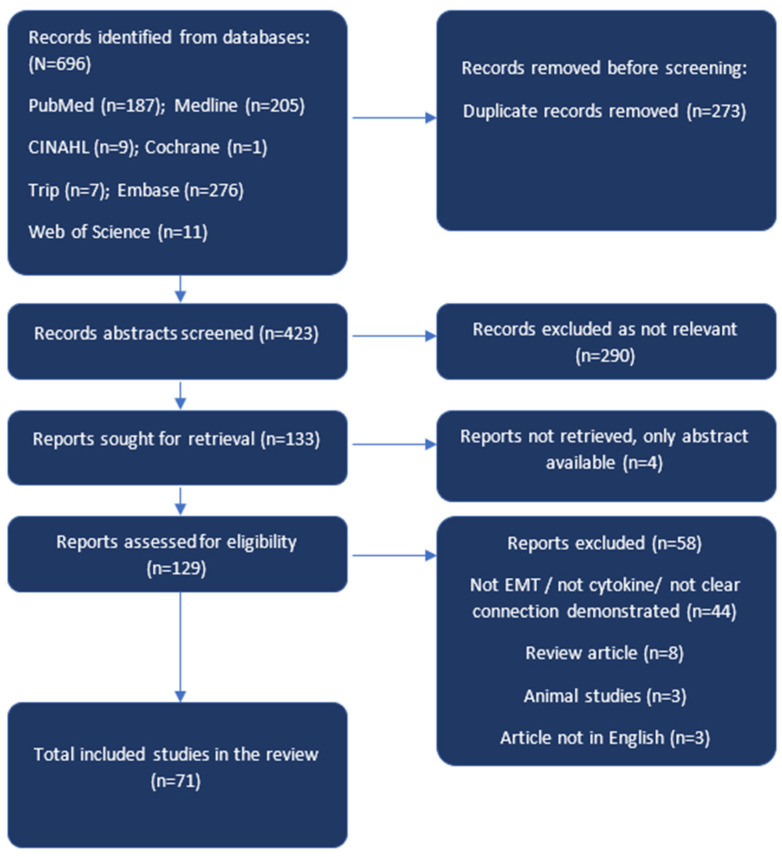
Chronic inflammation has been closely linked to the development and progression of various cancers. The epithelial-mesenchymal transition (EMT) is a process involving the acquisition of mesenchymal features by carcinoma cells and is an important link between inflammation and cancer development. Inflammatory mediators in the tumour micro-environment, such as cytokines and chemokines, can promote EMT changes in cancer cells. The aim of this systematic review is to analyse the effect of cytokines on EMT in gynaecological cancers and discuss their possible therapeutic implications. A search of the databases CINAHL, Cochrane, Embase, Medline, PubMed, TRIP, and Web of Science was performed using the keywords: "cytokines" AND "epithelial mesenchymal transition OR transformation" AND "gynaecological cancer". Seventy-one articles reported that various cytokines, such as TGF-β, TNF-α, IL-6, etc., promoted EMT changes in ovarian, cervical, and endometrial cancers. The EMT changes included from epithelial to mesenchymal morphological change, downregulation of the epithelial markers E-cadherin/β-catenin, upregulation of the mesenchymal markers N-cadherin/vimentin/fibronectin, and upregulation of the EMT-transformation factors (EMT-TF) SNAI1/SNAI2/TWIST/ZEB. Cytokine-induced EMT can lead to gynaecological cancer development and metastasis and hence novel therapies targeting the cytokines or their EMT signalling pathways could possibly prevent cancer progression, reduce cancer recurrence, and prevent drug-resistance.
Keywords: EMT; cervical cancer; cytokines; development and progression of cancer; endometrial cancer; epithelial–mesenchymal transition; gynaecological cancer; ovarian cancer; systematic review.
Conflict of interest statement
The authors declare no conflict of interest.
Figures
References
Publication types
MeSH terms
Substances
LinkOut - more resources
Full Text Sources
Research Materials
Miscellaneous
