


Kainate Receptor Antagonists: Recent Advances and Therapeutic Perspective
- PMID: 36768227
- PMCID: PMC9916396
- DOI: 10.3390/ijms24031908
Kainate Receptor Antagonists: Recent Advances and Therapeutic Perspective
Abstract
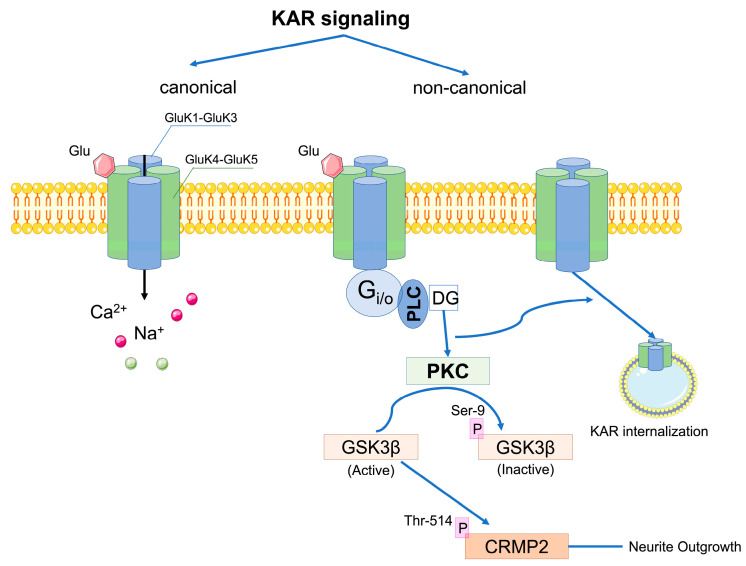
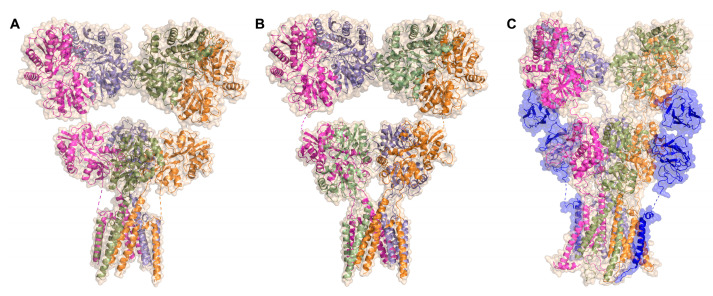
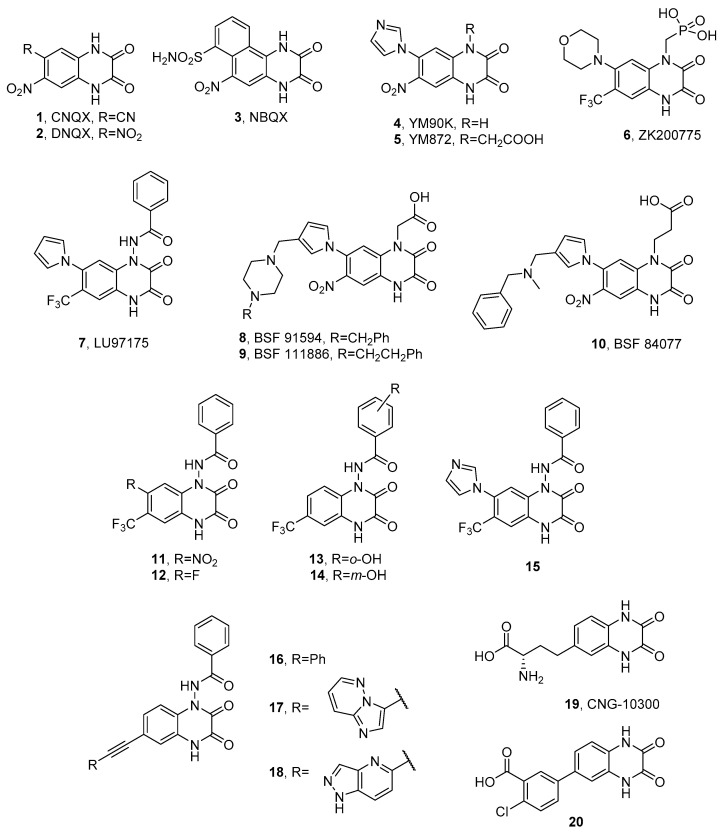
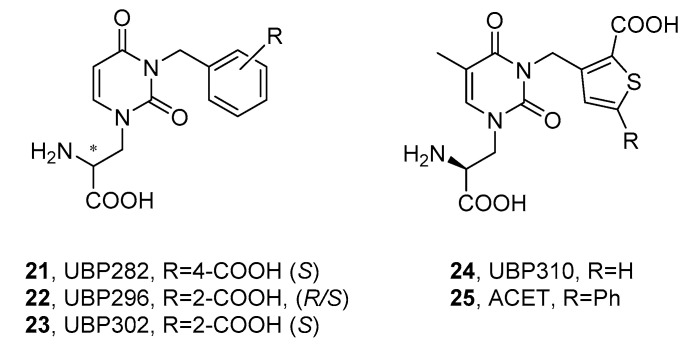
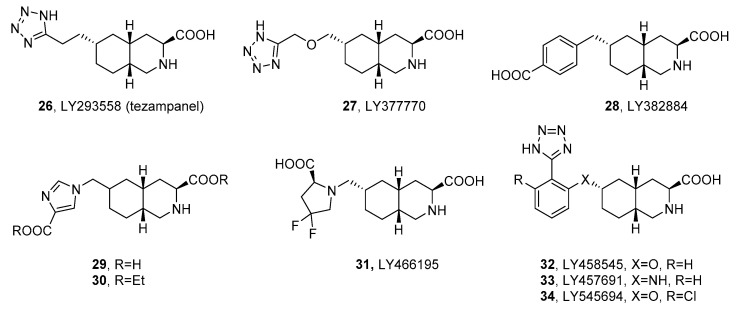
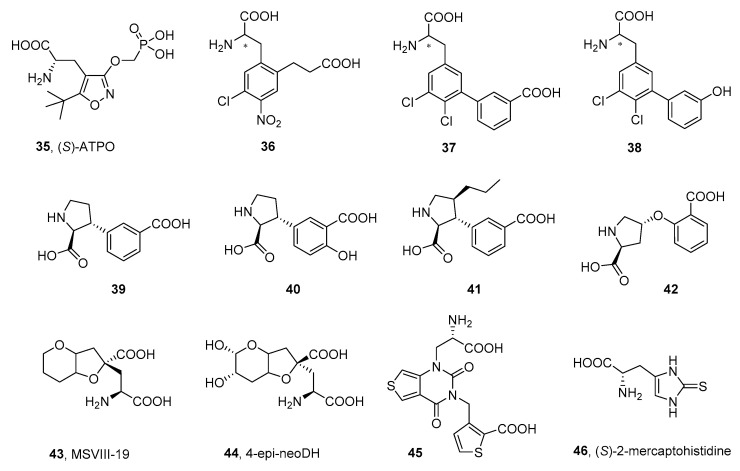
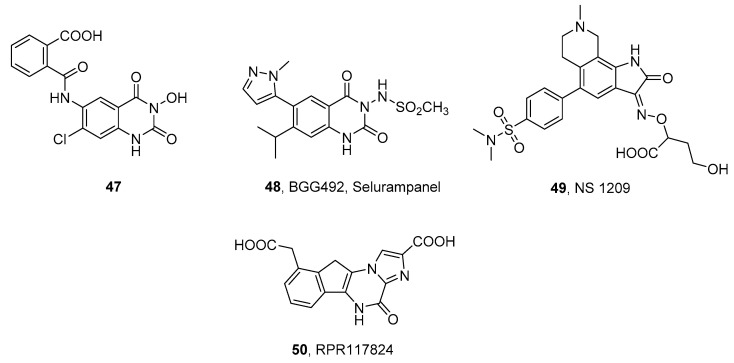
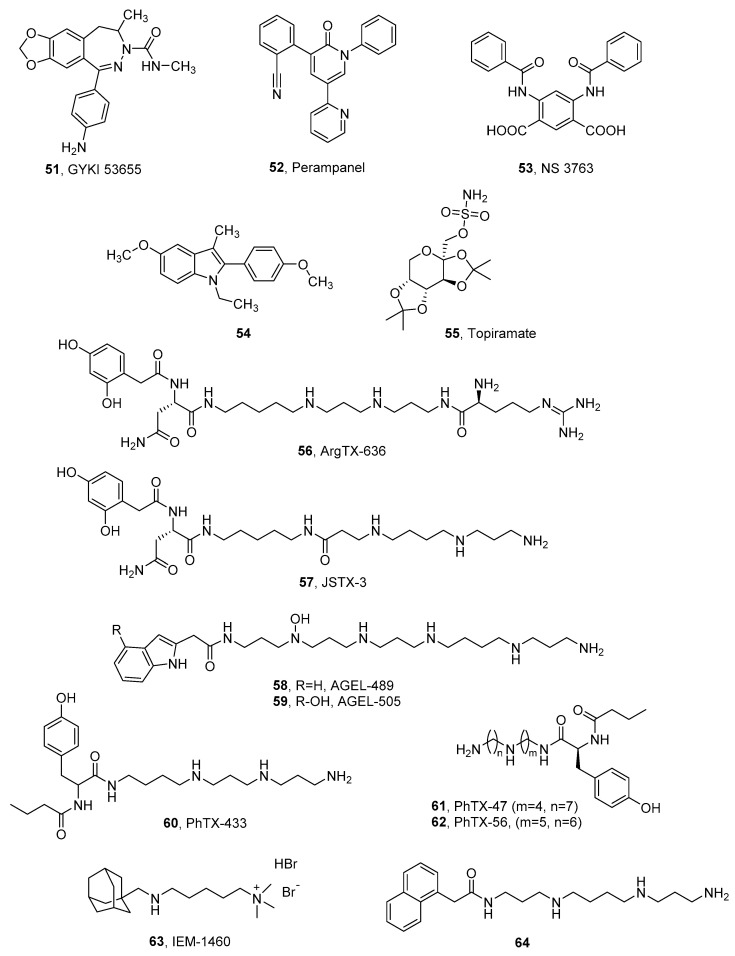
Since the 1990s, ionotropic glutamate receptors have served as an outstanding target for drug discovery research aimed at the discovery of new neurotherapeutic agents. With the recent approval of perampanel, the first marketed non-competitive antagonist of AMPA receptors, particular interest has been directed toward 'non-NMDA' (AMPA and kainate) receptor inhibitors. Although the role of AMPA receptors in the development of neurological or psychiatric disorders has been well recognized and characterized, progress in understanding the function of kainate receptors (KARs) has been hampered, mainly due to the lack of specific and selective pharmacological tools. The latest findings in the biology of KA receptors indicate that they are involved in neurophysiological activity and play an important role in both health and disease, including conditions such as anxiety, schizophrenia, epilepsy, neuropathic pain, and migraine. Therefore, we reviewed recent advances in the field of competitive and non-competitive kainate receptor antagonists and their potential therapeutic applications. Due to the high level of structural divergence among the compounds described here, we decided to divide them into seven groups according to their overall structure, presenting a total of 72 active compounds.
Keywords: CNS diseases; antagonist; chronic pain; epilepsy; glutamate ionotropic receptors; kainate receptors; neurological diseases.
Conflict of interest statement
The authors declare no conflict of interest.
Figures
References
-
- Hansen K.B., Wollmuth L.P., Bowie D., Furukawa H., Menniti F.S., Sobolevsky A.I., Swanson G.T., Swanger S.A., Greger I.H., Nakagawa T., et al. Structure, function, and pharmacology of glutamate receptor ion channels. Pharmacol. Rev. 2021;73:298–487. doi: 10.1124/pharmrev.120.000131. - DOI - PMC - PubMed
Publication types
MeSH terms
Substances
Grants and funding
LinkOut - more resources
Full Text Sources
Other Literature Sources
Medical
Miscellaneous
