


Anti-Inflammatory, Antioxidant, and Neuroprotective Effects of Polyphenols-Polyphenols as an Element of Diet Therapy in Depressive Disorders
- PMID: 36768580
- PMCID: PMC9916817
- DOI: 10.3390/ijms24032258
Anti-Inflammatory, Antioxidant, and Neuroprotective Effects of Polyphenols-Polyphenols as an Element of Diet Therapy in Depressive Disorders
Abstract
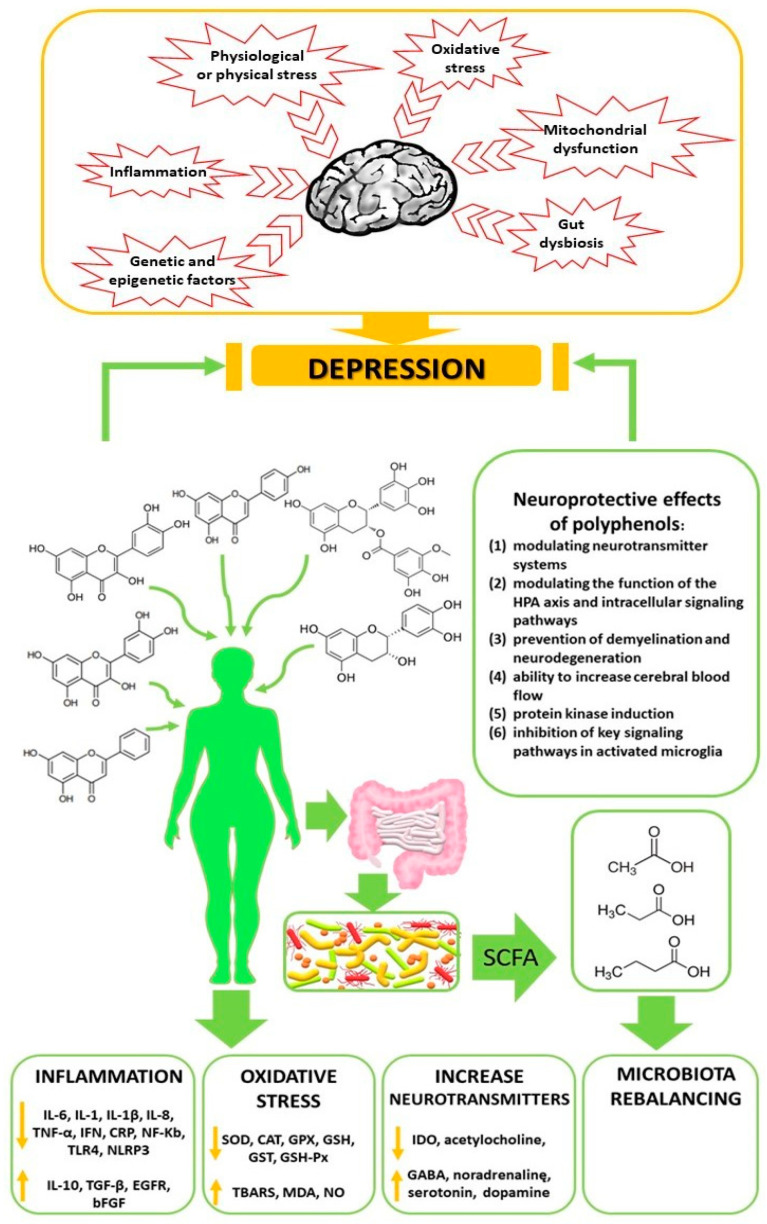
Depressive disorders can affect up to 350 million people worldwide, and in developed countries, the percentage of patients with depressive disorders may be as high as 10%. During depression, activation of pro-inflammatory pathways, mitochondrial dysfunction, increased markers of oxidative stress, and a reduction in the antioxidant effectiveness of the body are observed. It is estimated that approximately 30% of depressed patients do not respond to traditional pharmacological treatments. However, more and more attention is being paid to the influence of active ingredients in food on the course and risk of neurological disorders, including depression. The possibility of using foods containing polyphenols as an element of diet therapy in depression was analyzed in the review. The possibility of whether the consumption of products such as polyphenols could alleviate the course of depression or prevent the progression of it was also considered. Results from preclinical studies demonstrate the potential of phenolic compounds have the potential to reduce depressive behaviors by regulating factors related to oxidative stress, neuroinflammation, and modulation of the intestinal microbiota.
Keywords: anti-inflammatory; antioxidant and neuroprotective effects; depression; dietetic polyphenols.
Conflict of interest statement
The authors declare no conflict of interest.
Figures
References
-
- Skonieczna-Żydecka K., Grochans E., Maciejewska D., Szkup M., Schneider-Matyka D., Jurczak A., Łoniewski I., Kaczmarczyk M., Marlicz W., Czerwińska-Rogowska M., et al. Faecal short chain fatty acids profile is changed in polish depressive women. Nutrients. 2018;10:1939. doi: 10.3390/nu10121939. - DOI - PMC - PubMed
-
- Gautam M., Agrawal M., Gautam S., Gautam M. Role of antioxidants in depression. Ind J. Priv. Psychiatry. 2017;11:1–4. doi: 10.5005/jp-journals-10067-0001. - DOI
Publication types
MeSH terms
Substances
LinkOut - more resources
Full Text Sources
