


Necrotizing Enterocolitis: The Role of Hypoxia, Gut Microbiome, and Microbial Metabolites
- PMID: 36768793
- PMCID: PMC9917134
- DOI: 10.3390/ijms24032471
Necrotizing Enterocolitis: The Role of Hypoxia, Gut Microbiome, and Microbial Metabolites
Abstract
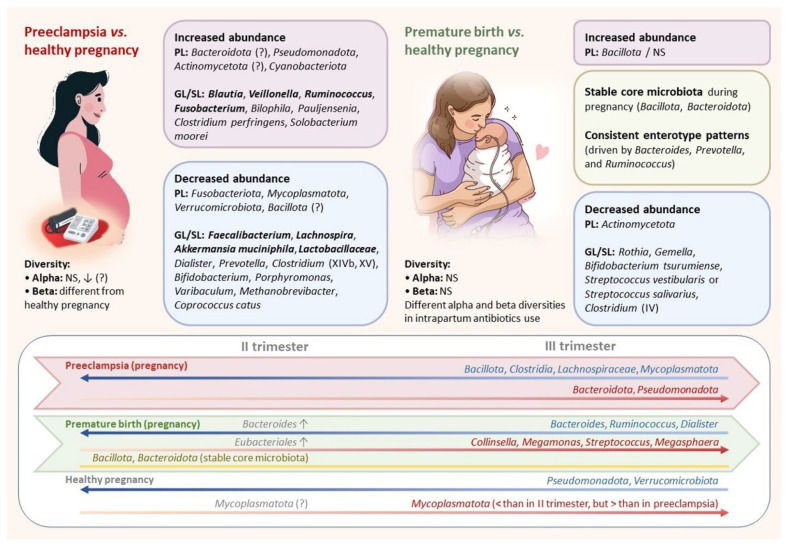
Necrotizing enterocolitis (NEC) is a life-threatening disease that predominantly affects very low birth weight preterm infants. Development of NEC in preterm infants is accompanied by high mortality. Surgical treatment of NEC can be complicated by short bowel syndrome, intestinal failure, parenteral nutrition-associated liver disease, and neurodevelopmental delay. Issues surrounding pathogenesis, prevention, and treatment of NEC remain unclear. This review summarizes data on prenatal risk factors for NEC, the role of pre-eclampsia, and intrauterine growth retardation in the pathogenesis of NEC. The role of hypoxia in NEC is discussed. Recent data on the role of the intestinal microbiome in the development of NEC, and features of the metabolome that can serve as potential biomarkers, are presented. The Pseudomonadota phylum is known to be associated with NEC in preterm neonates, and the role of other bacteria and their metabolites in NEC pathogenesis is also discussed. The most promising approaches for preventing and treating NEC are summarized.
Keywords: NEC; fucose; glyco-redox; gut microbiome; hypoxia; microbial metabolites; necrotizing enterocolitis.
Conflict of interest statement
The authors declare no conflict of interest.
Figures
References
-
- van der Heide M., Mebius M.J., Bos A.F., Roofthooft M.T.R., Berger R.M.F., Hulscher J.B.F., Kooi E.M.W. Hypoxic/ischemic hits predispose to necrotizing enterocolitis in (near) term infants with congenital heart disease: A case control study. BMC Pediatr. 2020;20:553. doi: 10.1186/s12887-020-02446-6. - DOI - PMC - PubMed
-
- Short S.S., Papillon S., Berel D., Ford H.R., Frykman P.K., Kawaguchi A. Late onset of necrotizing enterocolitis in the full-term infant is associated with increased mortality: Results from a two-center analysis. J. Pediatr. Surg. 2014;49:950–953. doi: 10.1016/j.jpedsurg.2014.01.028. - DOI - PMC - PubMed
Publication types
MeSH terms
Grants and funding
LinkOut - more resources
Full Text Sources
Medical
