


Liquid Biopsy for Lung Cancer: Up-to-Date and Perspectives for Screening Programs
- PMID: 36768828
- PMCID: PMC9917347
- DOI: 10.3390/ijms24032505
Liquid Biopsy for Lung Cancer: Up-to-Date and Perspectives for Screening Programs
Abstract
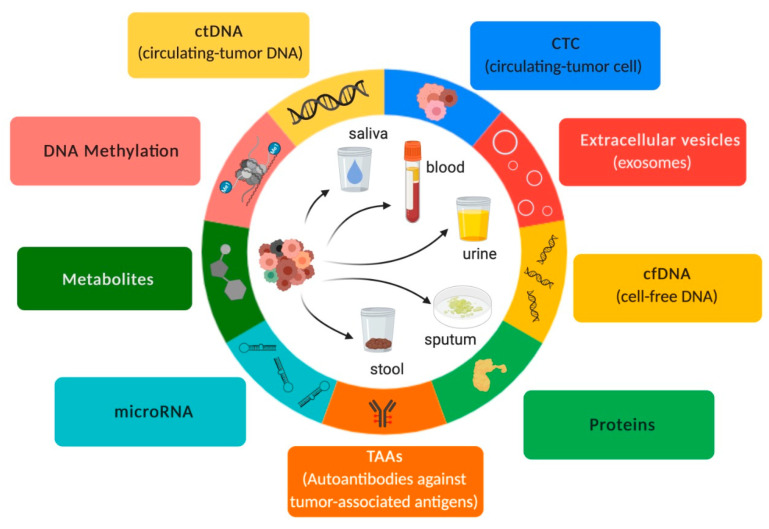
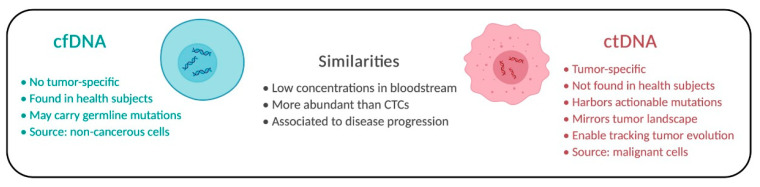
Lung cancer is the deadliest cancer worldwide. Tissue biopsy is currently employed for the diagnosis and molecular stratification of lung cancer. Liquid biopsy is a minimally invasive approach to determine biomarkers from body fluids, such as blood, urine, sputum, and saliva. Tumor cells release cfDNA, ctDNA, exosomes, miRNAs, circRNAs, CTCs, and DNA methylated fragments, among others, which can be successfully used as biomarkers for diagnosis, prognosis, and prediction of treatment response. Predictive biomarkers are well-established for managing lung cancer, and liquid biopsy options have emerged in the last few years. Currently, detecting EGFR p.(Tyr790Met) mutation in plasma samples from lung cancer patients has been used for predicting response and monitoring tyrosine kinase inhibitors (TKi)-treated patients with lung cancer. In addition, many efforts continue to bring more sensitive technologies to improve the detection of clinically relevant biomarkers for lung cancer. Moreover, liquid biopsy can dramatically decrease the turnaround time for laboratory reports, accelerating the beginning of treatment and improving the overall survival of lung cancer patients. Herein, we summarized all available and emerging approaches of liquid biopsy-techniques, molecules, and sample type-for lung cancer.
Keywords: biomarkers; liquid biopsy; lung cancer; precision medicine.
Conflict of interest statement
The authors declare no conflict of interest.
Figures

References
-
- Howlader N.N., Noone A.M., Krapcho M., Miller D., Brest A., Yu M., Ruhl J., Tatalovich Z., Mariotto A., Lewis D.R., et al. SEER Cancer Statistics Review, 1975–2017. Volume 4 National Cancer Institute; Bethesda, MD, USA: 2020.
Publication types
MeSH terms
Substances
Grants and funding
LinkOut - more resources
Full Text Sources
Other Literature Sources
Medical
Research Materials
Miscellaneous
