


Follicular Fluid Components in Reduced Ovarian Reserve, Endometriosis, and Idiopathic Infertility
- PMID: 36768912
- PMCID: PMC9916781
- DOI: 10.3390/ijms24032589
Follicular Fluid Components in Reduced Ovarian Reserve, Endometriosis, and Idiopathic Infertility
Abstract
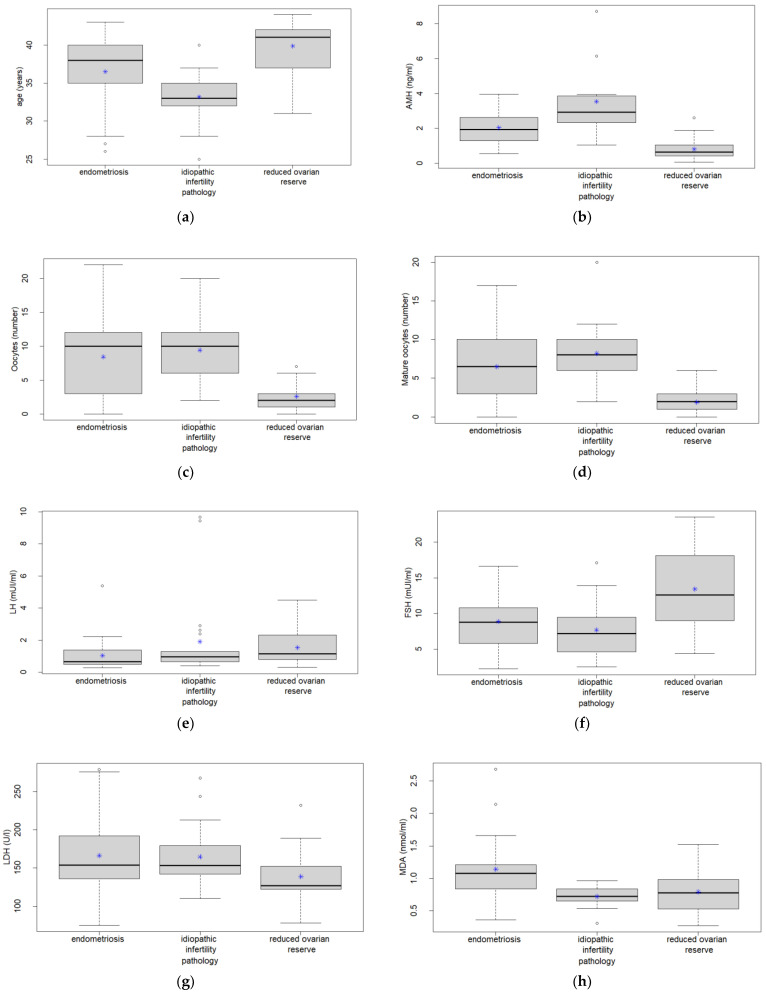
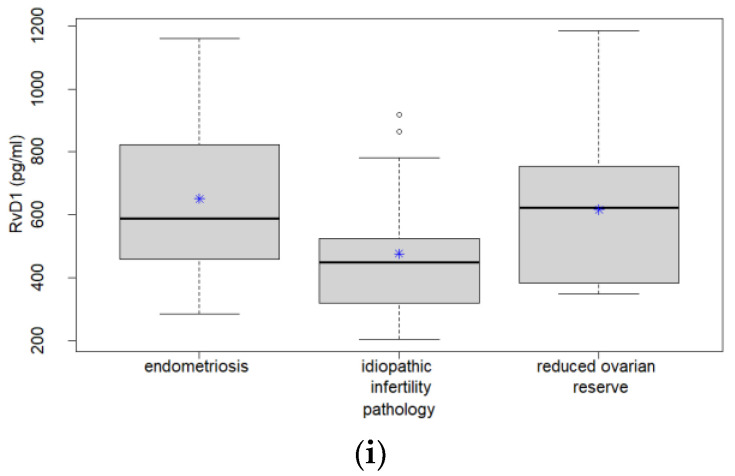
Follicular fluid (FF) molecules, and their increase or decrease, can contribute to appropriate follicular growth and oocyte maturation, thus being related to female infertility conditions. In this paper, we studied the changes and the relationships of some biochemical components, hormones, antioxidant enzymes, F2-Isoprostanes (F2-IsoPs), and resolvin (Rv) D1 in the FF of infertile women with different reproductive conditions such as endometriosis, reduced ovarian reserve, and idiopathic infertility during assisted reproductive techniques (ART). In the whole population, positive correlations between albumin (ALB)/iron (Fe), ALB/beta-2-microglobulin (B2MG), and F2-IsoPs/RvD1 were detected in the FF. In FF from aged women, increased levels of follicle stimulating hormone (FSH) and reduced anti-Müllerian hormone (AMH) levels were associated with a worse oocyte quality. The negative ART outcome was influenced by patient age and AMH, B2MG, and FSH levels. Moreover, the reduced ovarian reserve condition was characterised by a significant decrease in oocyte number and quality, AMH amount, and lactate dehydrogenase (LDH) activity, as well as by an increase in age and FSH levels. In the presence of endometriosis, high levels of MDA and RvD1 were detected in FF, with a decrease in luteinising hormone (LH). Finally, among the molecules examined, none characterised the condition of idiopathic infertility. These data could support the identification of new FF markers in different reproductive disorders, suggesting the need for personalised therapeutic approaches and optimised ART outcomes. In particular, the evaluation of resolvins and lipid mediators in FF could be a promising field of investigation with which to understand the entity of oxidative stress and inflammation in some female infertility conditions.
Keywords: endometriosis; female idiopathic infertility; follicular fluid molecules; inflammation; lipid mediators; oxidative stress; reduced ovarian reserve.
Conflict of interest statement
The authors declare that they have no conflict of interest.
Figures
References
-
- Ambekar A.S., Nirujogi R.S., Srikanth S.M., Chavan S., Kelkar D.S., Hinduja I., Zaveri K., Prasad T.S.K., Harsha H.C., Pandey A., et al. PROTEOMIC analysis of human follicular fluid: A new perspective towards understanding folliculogenesis. J. Proteomics. 2013;87:68–77. doi: 10.1016/j.jprot.2013.05.017. - DOI - PubMed
MeSH terms
Substances
LinkOut - more resources
Full Text Sources
Medical
Research Materials
Miscellaneous
