


Leptin Increases: Physiological Roles in the Control of Sympathetic Nerve Activity, Energy Balance, and the Hypothalamic-Pituitary-Thyroid Axis
- PMID: 36769012
- PMCID: PMC9917048
- DOI: 10.3390/ijms24032684
Leptin Increases: Physiological Roles in the Control of Sympathetic Nerve Activity, Energy Balance, and the Hypothalamic-Pituitary-Thyroid Axis
Abstract
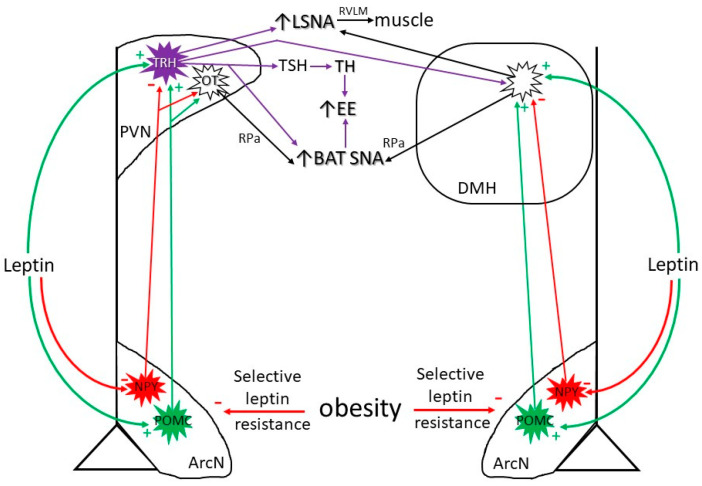
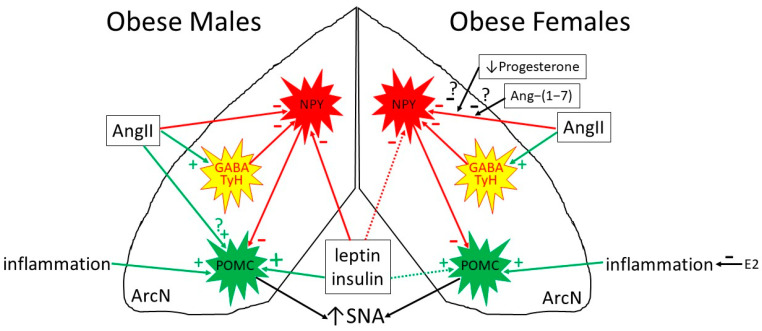
It is well established that decreases in plasma leptin levels, as with fasting, signal starvation and elicit appropriate physiological responses, such as increasing the drive to eat and decreasing energy expenditure. These responses are mediated largely by suppression of the actions of leptin in the hypothalamus, most notably on arcuate nucleus (ArcN) orexigenic neuropeptide Y neurons and anorexic pro-opiomelanocortin neurons. However, the question addressed in this review is whether the effects of increased leptin levels are also significant on the long-term control of energy balance, despite conventional wisdom to the contrary. We focus on leptin's actions (in both lean and obese individuals) to decrease food intake, increase sympathetic nerve activity, and support the hypothalamic-pituitary-thyroid axis, with particular attention to sex differences. We also elaborate on obesity-induced inflammation and its role in the altered actions of leptin during obesity.
Keywords: arcuate nucleus; brown adipose tissue; diet-induced thermogenesis; energy expenditure; obesity; obesity-induced inflammation; paraventricular nucleus; selective leptin resistance; sex differences; weight regain.
Conflict of interest statement
The authors declare no conflict of interest.
Figures
References
Publication types
MeSH terms
Substances
LinkOut - more resources
Full Text Sources
