


Inflammation and the Potential Implication of Macrophage-Microglia Polarization in Human ASD: An Overview
- PMID: 36769026
- PMCID: PMC9916462
- DOI: 10.3390/ijms24032703
Inflammation and the Potential Implication of Macrophage-Microglia Polarization in Human ASD: An Overview
Abstract
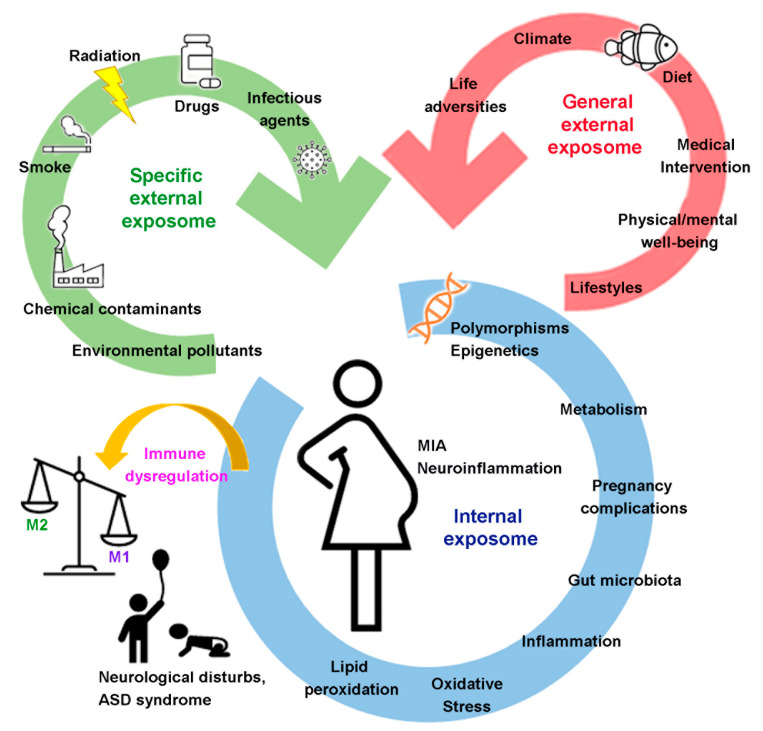
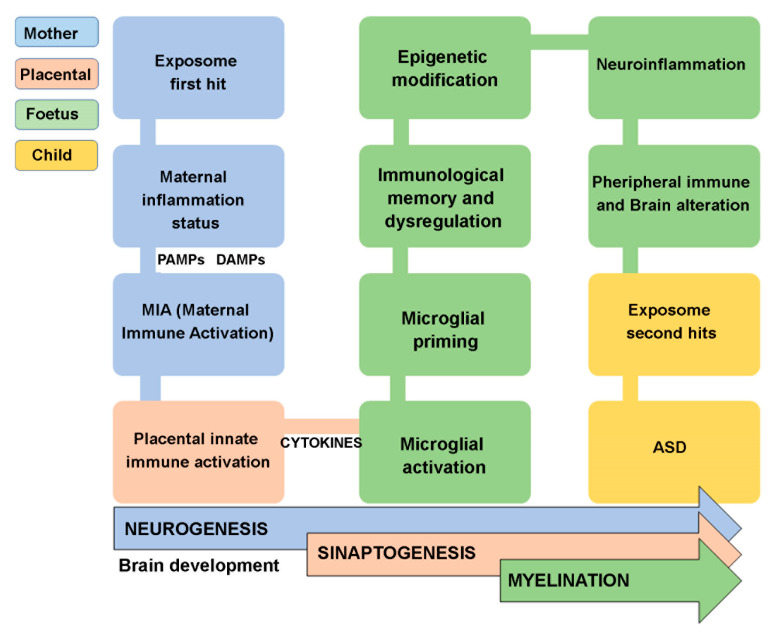
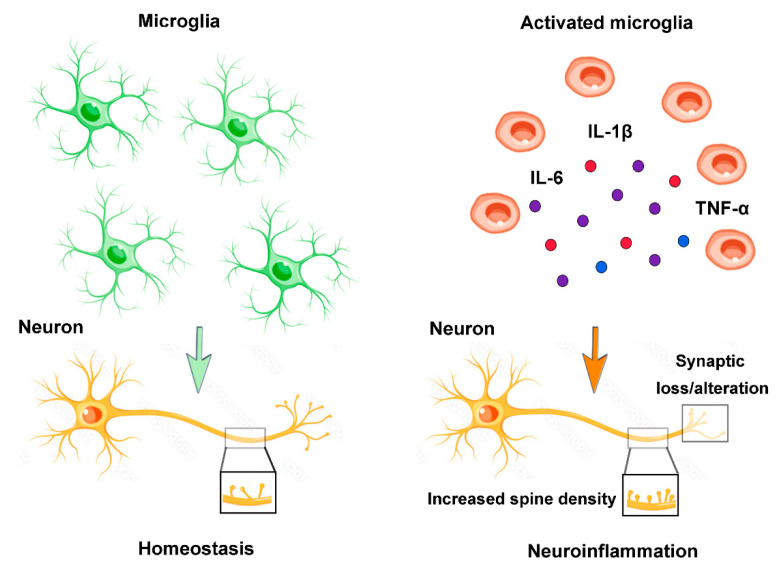
Autism spectrum disorder (ASD) is a heterogeneous collection of neurodevelopmental disorders, difficult to diagnose and currently lacking treatment options. The possibility of finding reliable biomarkers useful for early identification would offer the opportunity to intervene with treatment strategies to improve the life quality of ASD patients. To date, there are many recognized risk factors for the development of ASD, both genetic and non-genetic. Although genetic and epigenetic factors may play a critical role, the extent of their contribution to ASD risk is still under study. On the other hand, non-genetic risk factors include pollution, nutrition, infection, psychological states, and lifestyle, all together known as the exposome, which impacts the mother's and fetus's life, especially during pregnancy. Pathogenic and non-pathogenic maternal immune activation (MIA) and autoimmune diseases can cause various alterations in the fetal environment, also contributing to the etiology of ASD in offspring. Activation of monocytes, macrophages, mast cells and microglia and high production of pro-inflammatory cytokines are indeed the cause of neuroinflammation, and the latter is involved in ASD's onset and development. In this review, we focused on non-genetic risk factors, especially on the connection between inflammation, macrophage polarization and ASD syndrome, MIA, and the involvement of microglia.
Keywords: ASD; MIA; cytokines; exposome; innate immune system; macrophage; mast cells; microglia; polarization.
Conflict of interest statement
The authors declare no conflict of interest.
Figures
References
-
- Kanner L. Autistic disturbances of affective contact. Nerv. Child. 1943;2:217–250. - PubMed
-
- Werling D.M., Brand H., An J.Y., Stone M.R., Zhu L., Glessner J.T., Collins R.L., Dong S., Layer R.M., Markenscoff-Papadimitriou E., et al. An analytical framework for whole-genome sequence association studies and its implications for autism spectrum disorder. Nat. Genet. 2018;50:727–736. doi: 10.1038/s41588-018-0107-y. - DOI - PMC - PubMed
Publication types
MeSH terms
LinkOut - more resources
Full Text Sources
Medical
