. 2023 Feb 1;24(3):2738.
doi: 10.3390/ijms24032738.

Mitochondrial Transfer into Human Oocytes Improved Embryo Quality and Clinical Outcomes in Recurrent Pregnancy Failure Cases

Affiliations

Mitochondrial Transfer into Human Oocytes Improved Embryo Quality and Clinical Outcomes in Recurrent Pregnancy Failure Cases

Yoshiharu Morimoto et al. Int J Mol Sci. .

Abstract

One of the most critical issues to be solved in reproductive medicine is the treatment of patients with multiple failures of assisted reproductive treatment caused by low-quality embryos. This study investigated whether mitochondrial transfer to human oocytes improves embryo quality and provides subsequent acceptable clinical results and normality to children born due to the use of this technology. We transferred autologous mitochondria extracted from oogonia stem cells to mature oocytes with sperm at the time of intracytoplasmic sperm injection in 52 patients with recurrent failures (average 5.3 times). We assessed embryo quality using the following three methods: good-quality embryo rates, transferable embryo rates, and a novel embryo-scoring system (embryo quality score; EQS) in 33 patients who meet the preset inclusion criteria for analysis. We also evaluated the clinical outcomes of the in vitro fertilization and development of children born using this technology and compared the mtDNA sequences of the children and their mothers. The good-quality embryo rates, transferable embryo rates, and EQS significantly increased after mitochondrial transfer and resulted in 13 babies born in normal conditions. The mtDNA sequences were almost identical to the respective maternal sequences at the 83 major sites examined. Mitochondrial transfer into human oocytes is an effective clinical option to enhance embryo quality in recurrent in vitro fertilization-failure cases.

Keywords: clinical outcome; cognitive development; embryo quality; mitochondrial transfer; mtDNA.


Conflict of interest statement

The authors declare no conflict of interest.

Figures
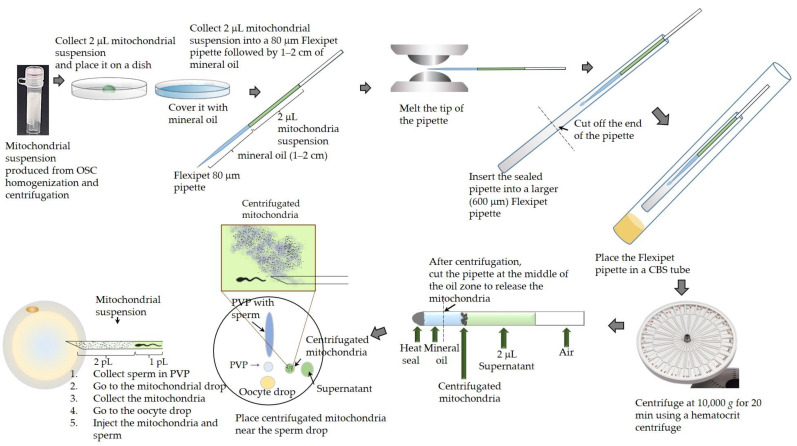
Figure 3
Figure 3
The method for isolation of p-OSCs, extraction of mitochondria, and injection of mitochondria into oocytes.
Figure 1
Figure 1
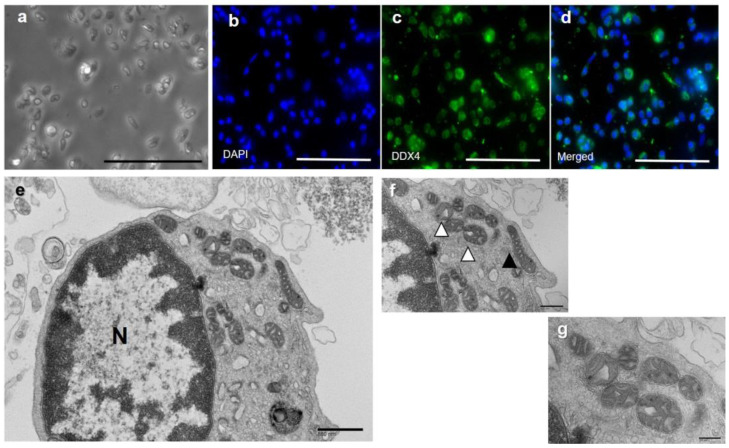
Morphology of OSCs. (a) Phase-contrast micrograph. (bd) Immunofluorescence staining of DDX4 in sorted oogonial stem cells (OSCs; different cells from (a). Ovarian cortex cells were stained with a DDX4 antibody, sorted, and then fixed for imaging. (c) The fluorescence microscopy images show the cell membranous and cytoplasmic expression of DDX4. DAPI was used as the counterstain (b: DAPI), and no nuclear expression of DDX4 was observed (d: merged) (ad scale bar: 100 μm). (eg) Transmission electron micrograph of a human oogonial stem cell. (e) Electron micrograph of an OSC. The cell contains a large nucleus (N, ×25,000, scale bar: 800 nm). (f) Mitochondria at high magnification. Oval (empty arrowheads) and elongated (filled arrowheads) mitochondria are shown (×50,000, scale bar: 400 nm). (g) Cristae are clearly identified (×100,000, scale bar: 200 nm).
Figure 2
Figure 2
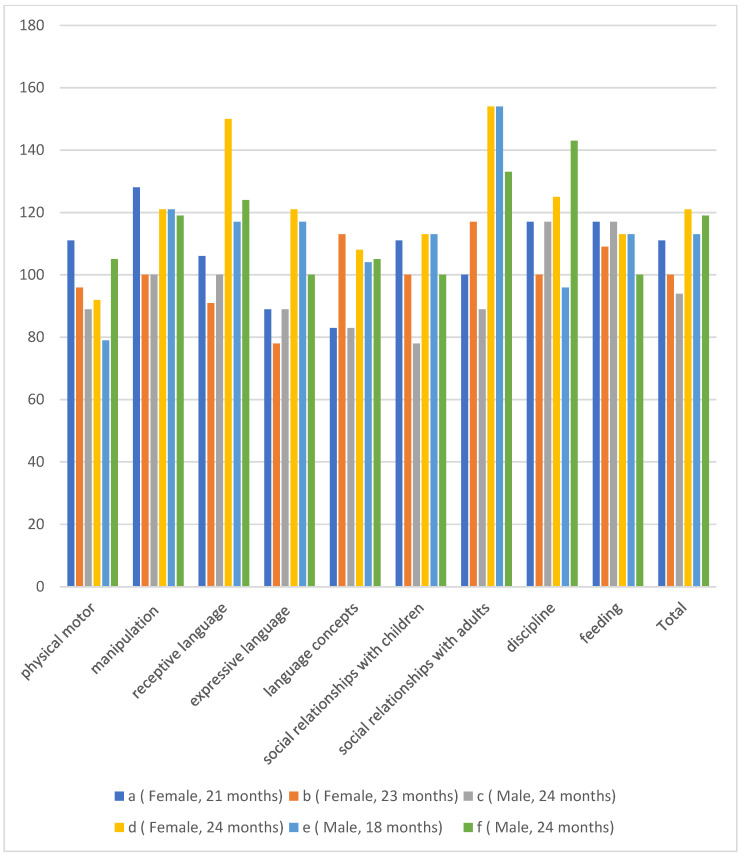
Results of KIDS test. The motor and cognitive development scores of the children born via MT were assessed with the Type B KIDS (Kinder Infant Developmental Scale) test. KIDS comprises a list of behaviors in the nine subscales. The average scores of each subscale ranged from 95.2 to 124.7, and the scores were not under cut-off range of 70. Therefore, all children developed normally.

References

    1. Penzias A.S. Recurrent IVF Failure: Other Factors. Fertil. Steril. 2012;97:1033–1038. doi: 10.1016/j.fertnstert.2012.03.017. - DOI - PubMed
    1. Van Blerkom J. Mitochondrial Function in the Human Oocyte and Embryo and Their Role in Developmental Competence. Mitochondrion. 2011;11:797–813. doi: 10.1016/j.mito.2010.09.012. - DOI - PubMed
    1. Majumdar G., Majumdar A., Verma I., Upadhyaya K. Relationship Between Morphology, Euploidy and Implantation Potential of Cleavage and Blastocyst Stage Embryos. J. Hum. Reprod. Sci. 2017;10:49–57. doi: 10.4103/0974-1208.204013. - DOI - PMC - PubMed
    1. Liu L. Ageing-Associated Aberration in Meiosis of Oocytes from Senescence-Accelerated Mice. Hum. Reprod. 2002;17:2678–2685. doi: 10.1093/humrep/17.10.2678. - DOI - PubMed
    1. Kristensen S.G., Pors S.E., Andersen C.Y. Improving Oocyte Quality by Transfer of Autologous Mitochondria from Fully Grown Oocytes. Hum. Reprod. 2017;32:725–732. doi: 10.1093/humrep/dex043. - DOI - PubMed

Substances

LinkOut - more resources