


Monocyte-Derived miRNA-1914-5p Attenuates IL-1β-Induced Monocyte Adhesion and Transmigration
- PMID: 36769149
- PMCID: PMC9917334
- DOI: 10.3390/ijms24032829
Monocyte-Derived miRNA-1914-5p Attenuates IL-1β-Induced Monocyte Adhesion and Transmigration
Abstract
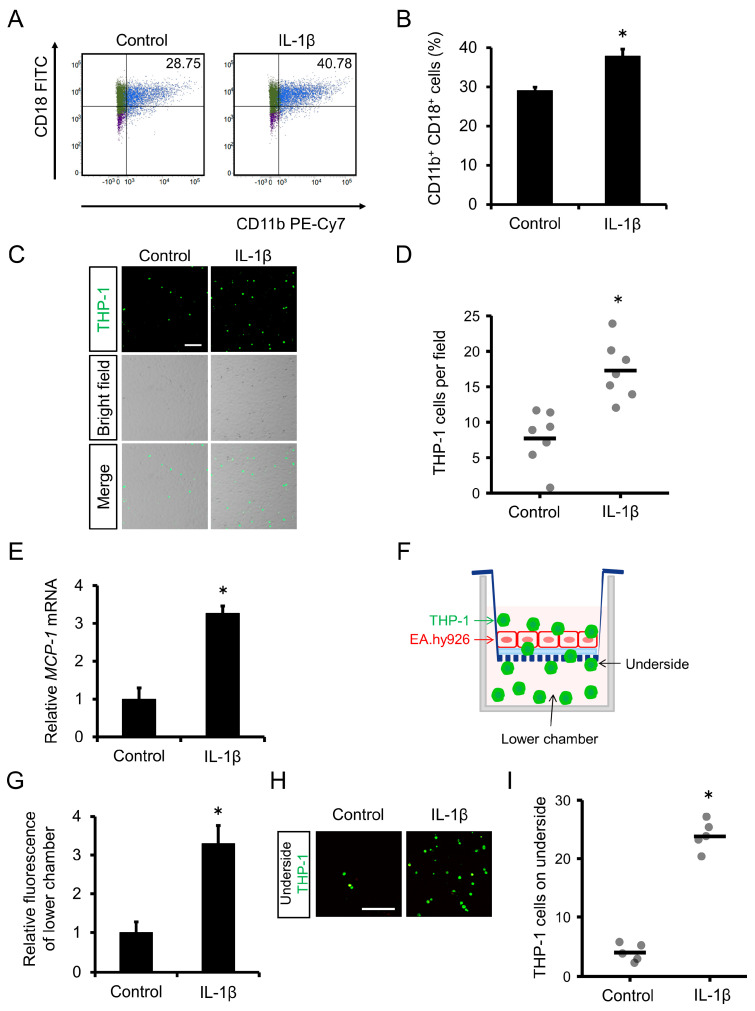
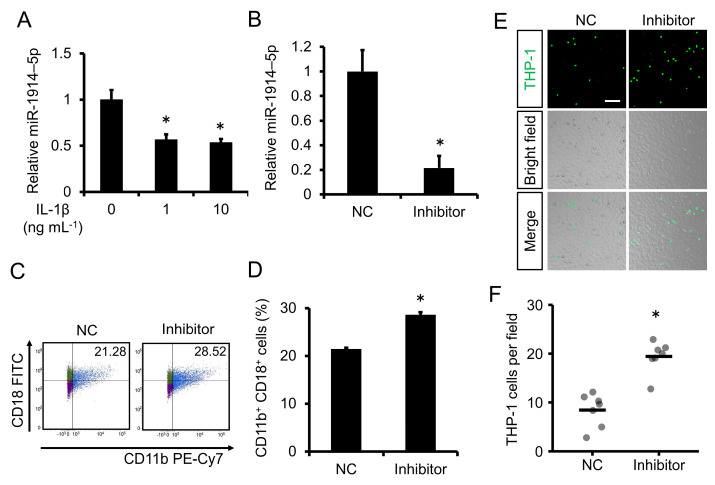
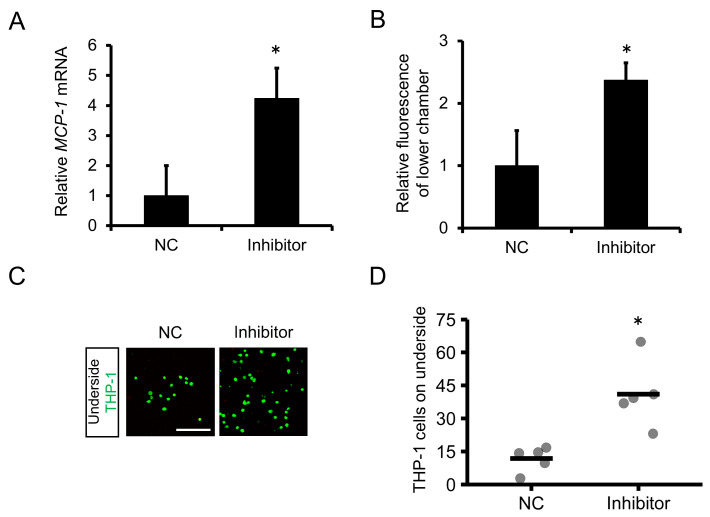
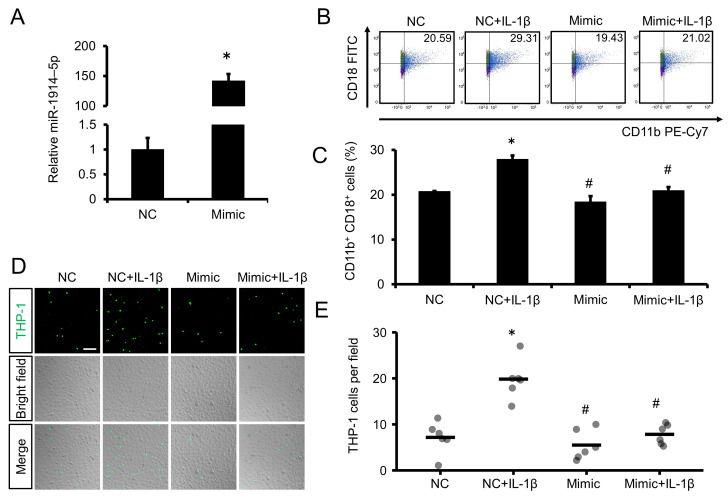
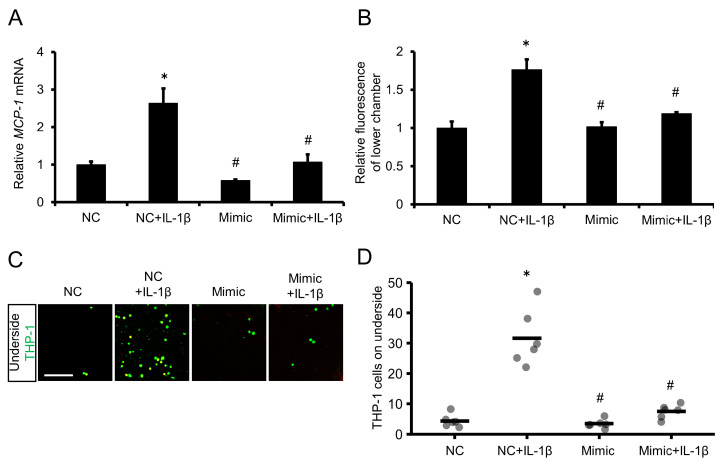
Atherosclerosis can lead to cardiovascular and cerebrovascular diseases. Atherosclerotic plaque formation is promoted by the accumulation of inflammatory cells. Therefore, modulating monocyte recruitment represents a potential therapeutic strategy. In an inflammatory state, the expression of adhesion molecules such as intercellular adhesion molecule-1 (ICAM-1) is upregulated in endothelial cells. We previously reported that miR-1914-5p in endothelial cells suppresses interleukin (IL)-1β-induced ICAM-1 expression and monocyte adhesion to endothelial cells. However, whether monocyte miR-1914-5p affects monocyte recruitment is unclear. In this study, IL-1β decreased miR-1914-5p expression in a human monocyte cell line. Moreover, miR-1914-5p inhibition enhanced adhesion to endothelial cells with the upregulation of macrophage-1 antigen (Mac-1), a counter-ligand to ICAM-1. Transmigration through the endothelial layer was also promoted with the upregulation of monocyte chemotactic protein-1 (MCP-1). Furthermore, a miR-1914-5p mimic suppressed IL-1β-induced monocyte adhesion and transmigration in monocytes with Mac-1 and MCP-1 downregulation. Further investigation of miR-1914-5p in monocytes could lead to the development of novel diagnostic markers and therapeutic strategies for atherosclerosis.
Keywords: MCP-1; Mac-1; atherosclerosis; miR-1914-5p; monocyte adhesion; monocyte transmigration.
Conflict of interest statement
The authors declare no conflict of interest.
Figures
References
MeSH terms
Substances
Grants and funding
LinkOut - more resources
Full Text Sources
Medical
Research Materials
Miscellaneous
