


Integrative and Mechanistic Approach to the Hair Growth Cycle and Hair Loss
- PMID: 36769541
- PMCID: PMC9917549
- DOI: 10.3390/jcm12030893
Integrative and Mechanistic Approach to the Hair Growth Cycle and Hair Loss
Abstract
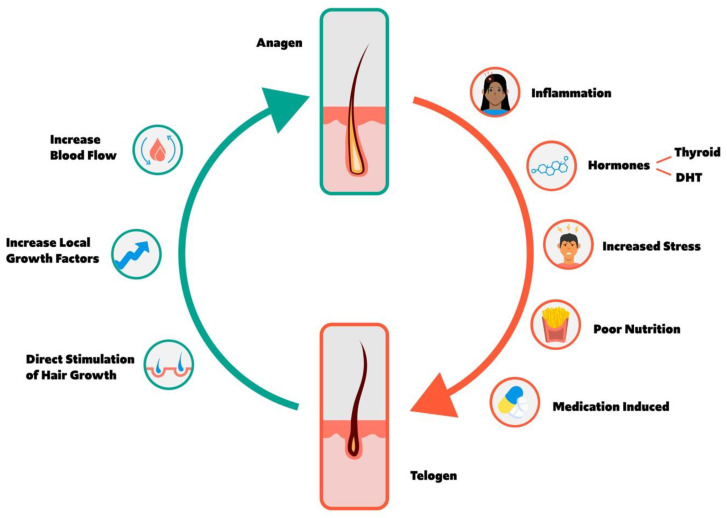
The hair cycle is composed of four primary phases: anagen, catagen, telogen, and exogen. Anagen is a highly mitotic phase characterized by the production of a hair shaft from the hair follicle, whereas catagen and telogen describe regression and the resting phase of the follicle, respectively, ultimately resulting in hair shedding. While 9% of hair follicles reside in telogen at any time, a variety of factors promote anagen to telogen transition, including inflammation, hormones, stress, nutritional deficiency, poor sleep quality, and cellular division inhibiting medication. Conversely, increased blood flow, direct stimulation of the hair follicle, and growth factors promote telogen to anagen transition and subsequent hair growth. This review seeks to comprehensively describe the hair cycle, anagen and telogen balance, factors that promote anagen to telogen transition and vice versa, and the clinical utility of a variety of lab testing and evaluations. Ultimately, a variety of factors impact the hair cycle, necessitating a holistic approach to hair loss.
Keywords: alopecia; anagen; androgenic; hair cycle; hair loss; hair thinning; telogen.
Conflict of interest statement
The authors declare no conflicts of interest.
Figures
References
-
- Burg D., Yamamoto M., Namekata M., Haklani J., Koike K., Halasz M. Promotion of anagen, increased hair density and reduction of hair fall in a clinical setting following identification of FGF5-inhibiting compounds via a novel 2-stage process. Clin. Cosmet. Investig. Dermatol. 2017;10:71–85. doi: 10.2147/CCID.S123401. - DOI - PMC - PubMed
Publication types
LinkOut - more resources
Full Text Sources
Miscellaneous
