. 2023 Jan 20;28(3):1043.
doi: 10.3390/molecules28031043.

Antioxidant, Wound Healing Potential and In Silico Assessment of Naringin, Eicosane and Octacosane

Affiliations

Antioxidant, Wound Healing Potential and In Silico Assessment of Naringin, Eicosane and Octacosane

Abbirami Balachandran et al. Molecules. .

Abstract

1. Diabetic chronic wounds, mainly foot ulcers, constitute one of the most common complications of poorly managed diabetes mellitus. The most typical reasons are insufficient glycemic management, latent neuropathy, peripheral vascular disease, and neglected foot care. In addition, it is a common cause of foot osteomyelitis and amputation of the lower extremities. Patients are admitted in larger numbers attributable to chronic wounds compared to any other diabetic disease. In the United States, diabetes is currently the most common cause of non-traumatic amputations. Approximately five percent of diabetics develop foot ulcers, and one percent require amputation. Therefore, it is necessary to identify sources of lead with wound-healing properties. Redox imbalance due to excessive oxidative stress is one of the causes for the development of diabetic wounds. Antioxidants have been shown to decrease the progression of diabetic neuropathy by scavenging ROS, regenerating endogenous and exogenous antioxidants, and reversing redox imbalance. Matrix metalloproteinases (MMPs) play vital roles in numerous phases of the wound healing process. Antioxidant and fibroblast cell migration activity of Marantodes pumilum (MP) crude extract has previously been reported. Through their antioxidant, epithelialization, collagen synthesis, and fibroblast migration activities, the authors hypothesise that naringin, eicosane and octacosane identified in the MP extract may have wound-healing properties. 2. The present study aims to identify the bioactive components present in the dichloromethane (DCM) extract of M. pumilum and evaluate their antioxidant and wound healing activity. Bioactive components were identified using LCMS, HPTLC and GCMS. Excision wound on STZ-induced diabetic rat model, human dermal fibroblast (HDF) cell line and colorimetric antioxidant assays were used to evaluate wound healing and antioxidant activities, respectively. Molecular docking and pkCMS software would be utilised to predict binding energy and affinity, as well as ADME parameters. 3. Naringin (NAR), eicosane (EIC), and octacosane (OCT) present in MP displayed antioxidant action and wound excision closure. Histological examination HDF cell line demonstrates epithelialization, collagen production, fibroblast migration, polymorphonuclear leukocyte migration (PNML), and fibroblast movement. The results of molecular docking indicate a substantial attraction and contact between MMPs. pkCMS prediction indicates inadequate blood-brain barrier permeability, low toxicity, and absence of hepatotoxicity. 4. Wound healing properties of (NEO) naringin, eicosane and octacosane may be the result of their antioxidant properties and possible interactions with MMP.

Keywords: MMPs; antioxidants; diabetes mellitus; eicosane; naringin; octacosane; wound healing.


Conflict of interest statement

The authors declare no conflict of interest.

Figures
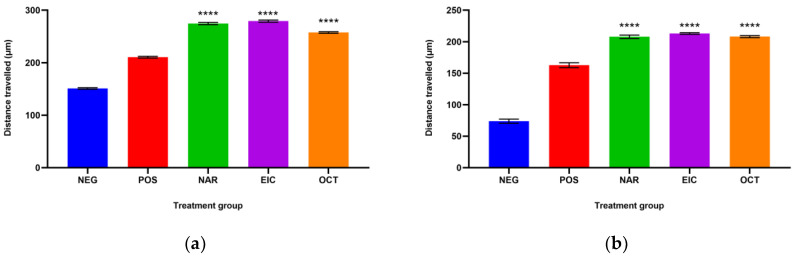
Figure 1
Figure 1
The total distance travelled by (a) normal HDF cells and (b) insulin-resistant HDF cells with different treatment groups. **** p < 0.0001 against the negative control group.
Figure 2
Figure 2
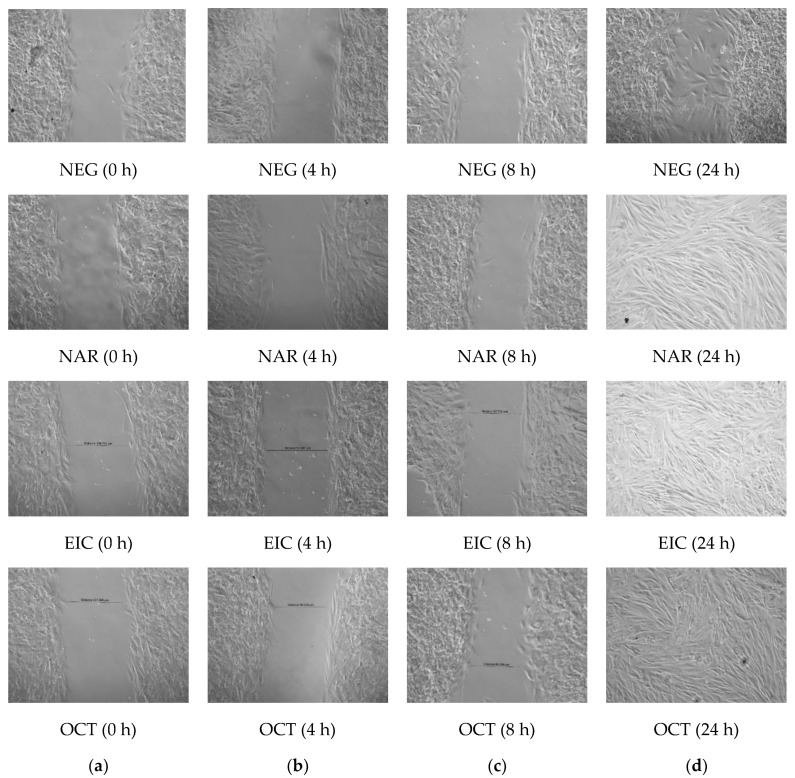
Fibroblast migration of untreated (NEG) vs. treated cells (POS, NAR, EIC and OCT) at (a) 0 h (b) after 4 h (c) after 8 h and (d) after 24 h.
Figure 3
Figure 3
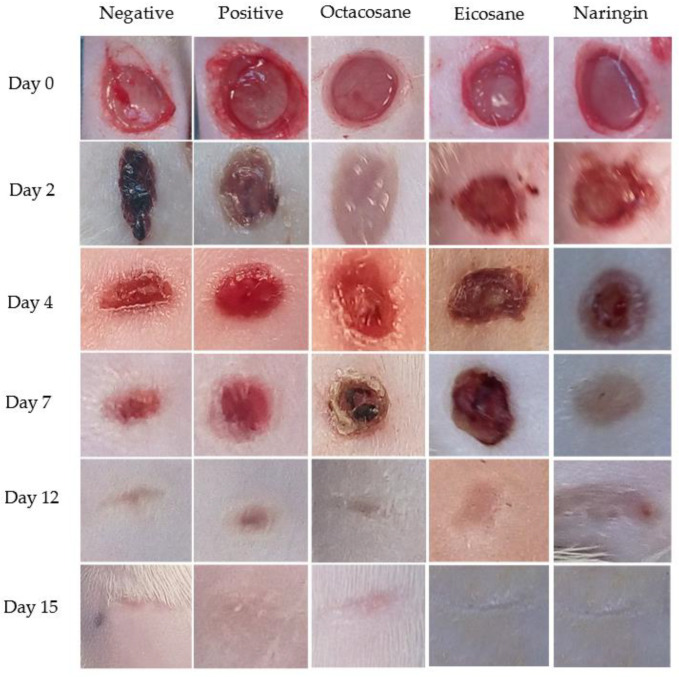
Excised wounds of different treatment groups from the diabetes-induced animal model on different days over a period of 15 days.
Figure 4
Figure 4
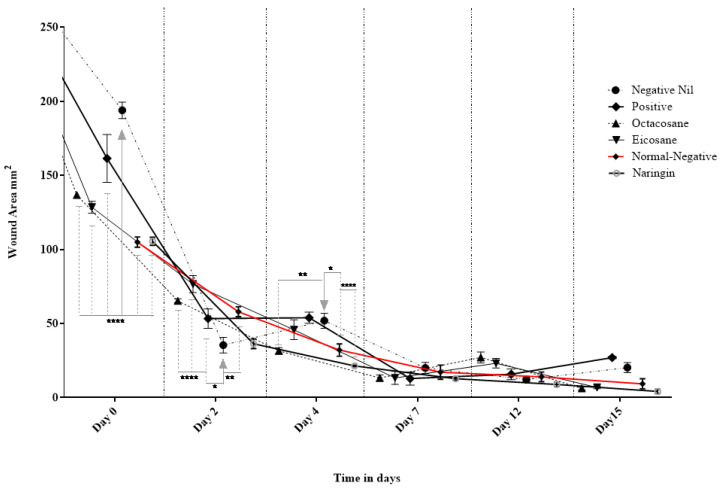
Effect of Naringin, Eicosane and Octacosane treatments on the wound area of diabetes-induced animals (mm2). * p < 0.05, ** p < 0.01, **** p < 0.0001.
Figure 5
Figure 5
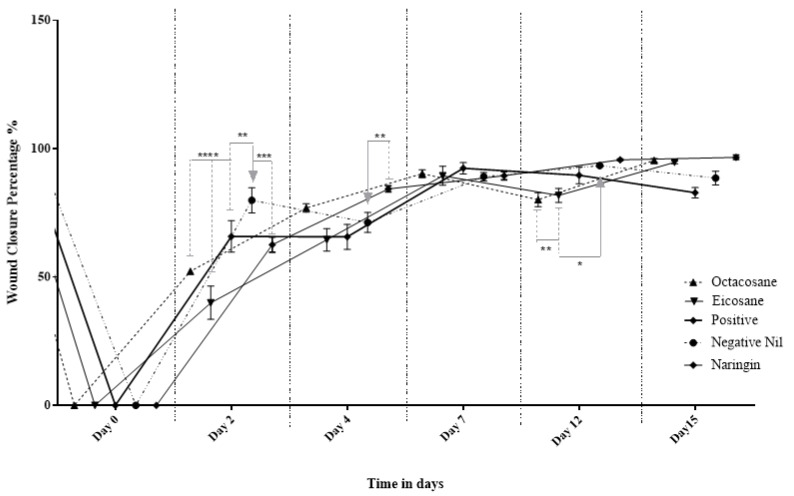
Percentage wound contraction of diabetic wounds from different treatment groups. * p < 0.05, ** p < 0.01, *** p < 0.001, **** p < 0.0001.
Figure 6
Figure 6
Histopathology sections of the (a) negative control (NEG) (b) positive control (POS) (c) Naringin (NAR) (d) Eicosane (EIC) and (e) Octacosane (OCT) groups on day 2 under an ×40 magnification. The red arrows indicate PMNL cells; the yellow arrows indicate keratinocyte migration.
Figure 7
Figure 7
Histopathology sections of the (a) negative control (NEG) (b) positive control (POS) (c) Naringin (NAR) (d) Eicosane (EIC) and (e) Octacosane (OCT) groups on day 12 under an ×20 magnification.
Figure 8
Figure 8
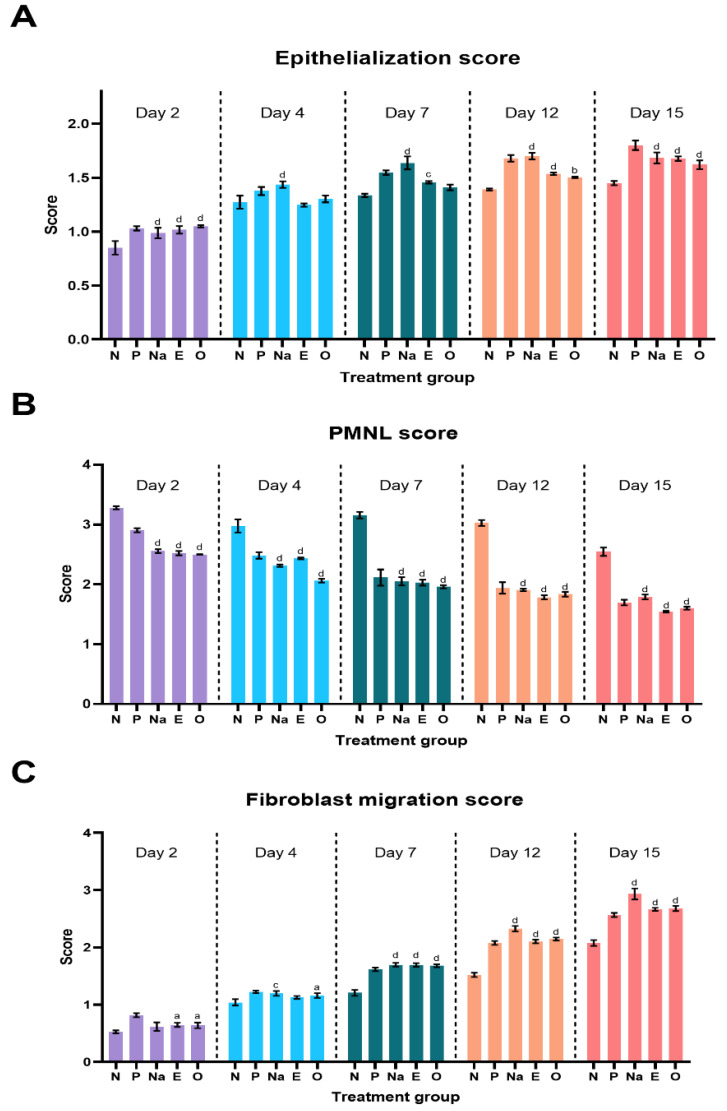
Semi-quantitative parameter analysis of (A) epithelialization score (B) PMNL score and (C) fibroblast migration score. Letters ‘a’ represents p < 0.05, ‘b’ for p < 0.01, ‘c’ for p < 0.001 and ‘d’ for p < 0.0001 against the negative group of their respective days.
Figure 9
Figure 9
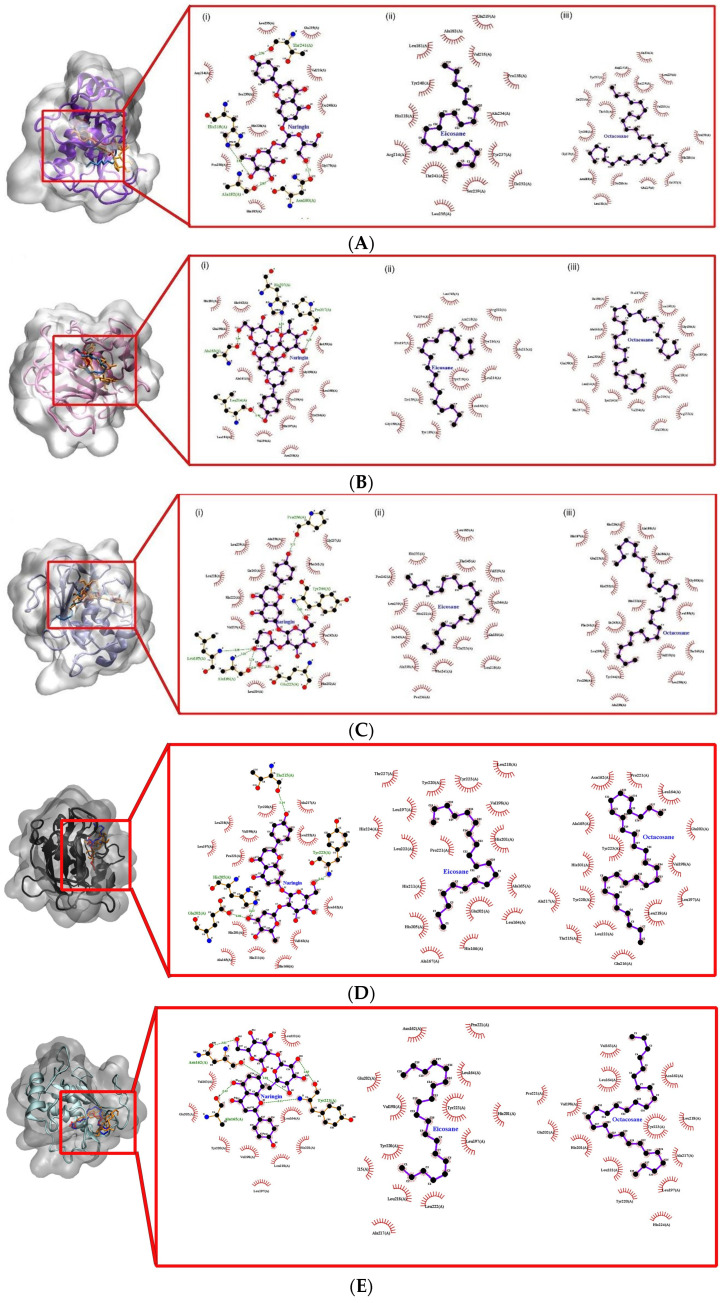
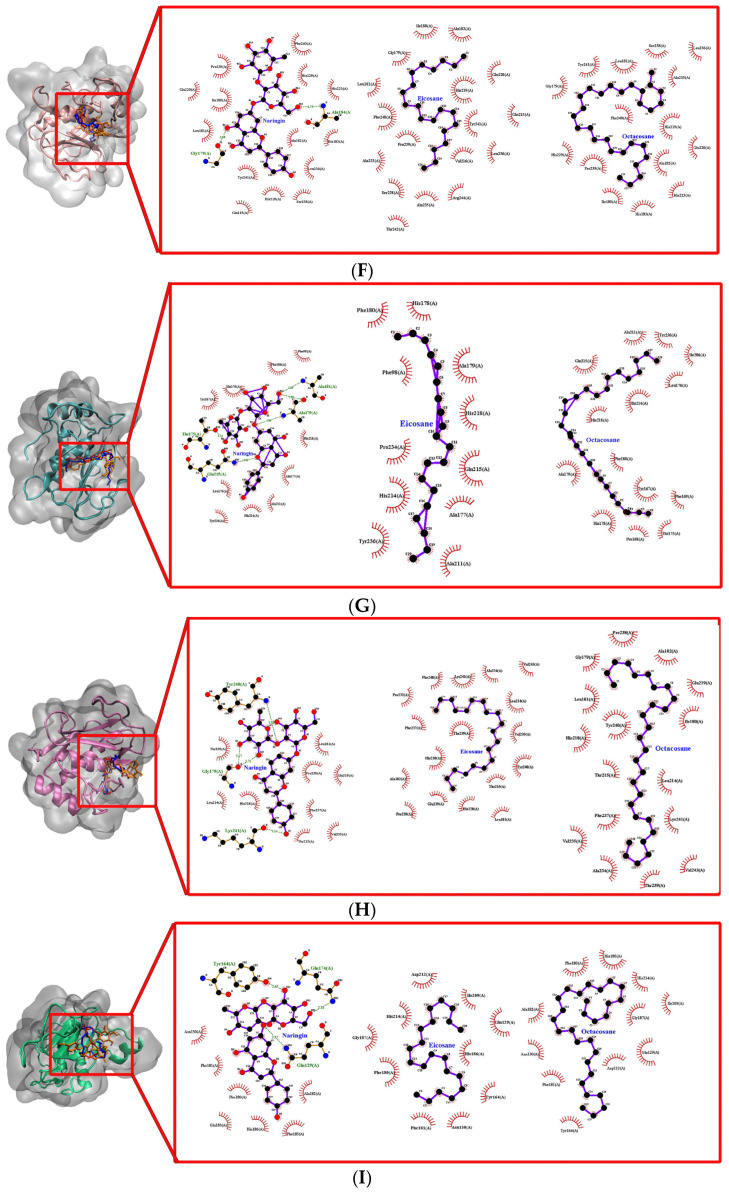
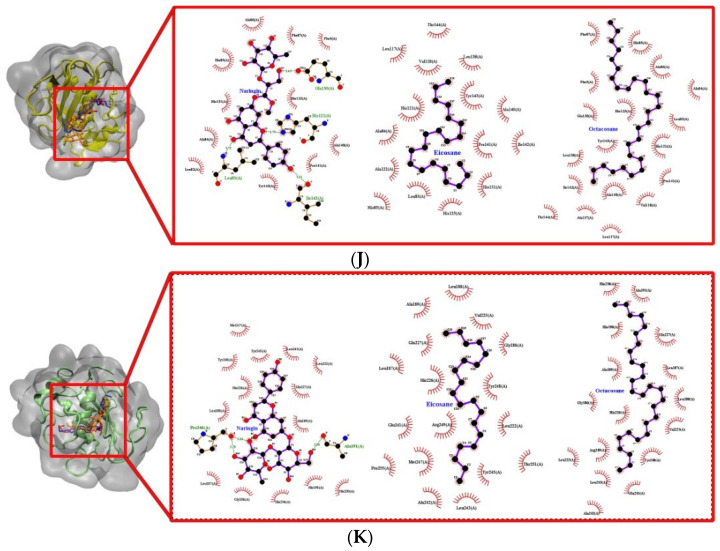
Docked conformation and interaction analysis of (A) COL1 (B) COL2 and (C) COL3 (D) STRO1 (E) STRO2 (F) STRO3 (G) Matrilysin (H) Metalloelastase (I) Metalloproteinase (J) GEL A and (K) GEL B against NAR (orange—(i)), EIC (red—(ii)) and OCT (blue—(iii)). The compounds were docked at the binding sites of the control ligand/co-crystallized ligand. Hydrophobic interaction is represented as spokes whereas hydrogen bonding interaction is represented with the green dotted line.
Figure 9
Figure 9
Docked conformation and interaction analysis of (A) COL1 (B) COL2 and (C) COL3 (D) STRO1 (E) STRO2 (F) STRO3 (G) Matrilysin (H) Metalloelastase (I) Metalloproteinase (J) GEL A and (K) GEL B against NAR (orange—(i)), EIC (red—(ii)) and OCT (blue—(iii)). The compounds were docked at the binding sites of the control ligand/co-crystallized ligand. Hydrophobic interaction is represented as spokes whereas hydrogen bonding interaction is represented with the green dotted line.
Figure 9
Figure 9
Docked conformation and interaction analysis of (A) COL1 (B) COL2 and (C) COL3 (D) STRO1 (E) STRO2 (F) STRO3 (G) Matrilysin (H) Metalloelastase (I) Metalloproteinase (J) GEL A and (K) GEL B against NAR (orange—(i)), EIC (red—(ii)) and OCT (blue—(iii)). The compounds were docked at the binding sites of the control ligand/co-crystallized ligand. Hydrophobic interaction is represented as spokes whereas hydrogen bonding interaction is represented with the green dotted line.
Figure 10
Figure 10
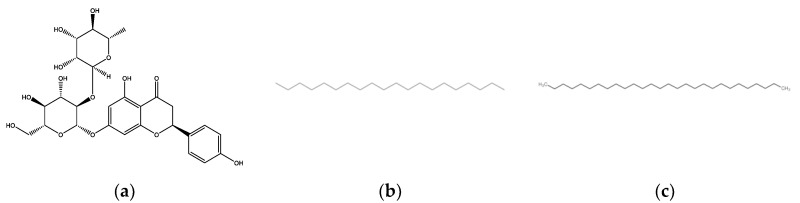
Structure of bioactive compounds (a) Naringin (b) Eicosane and (c) Octacosane.
Figure 11
Figure 11
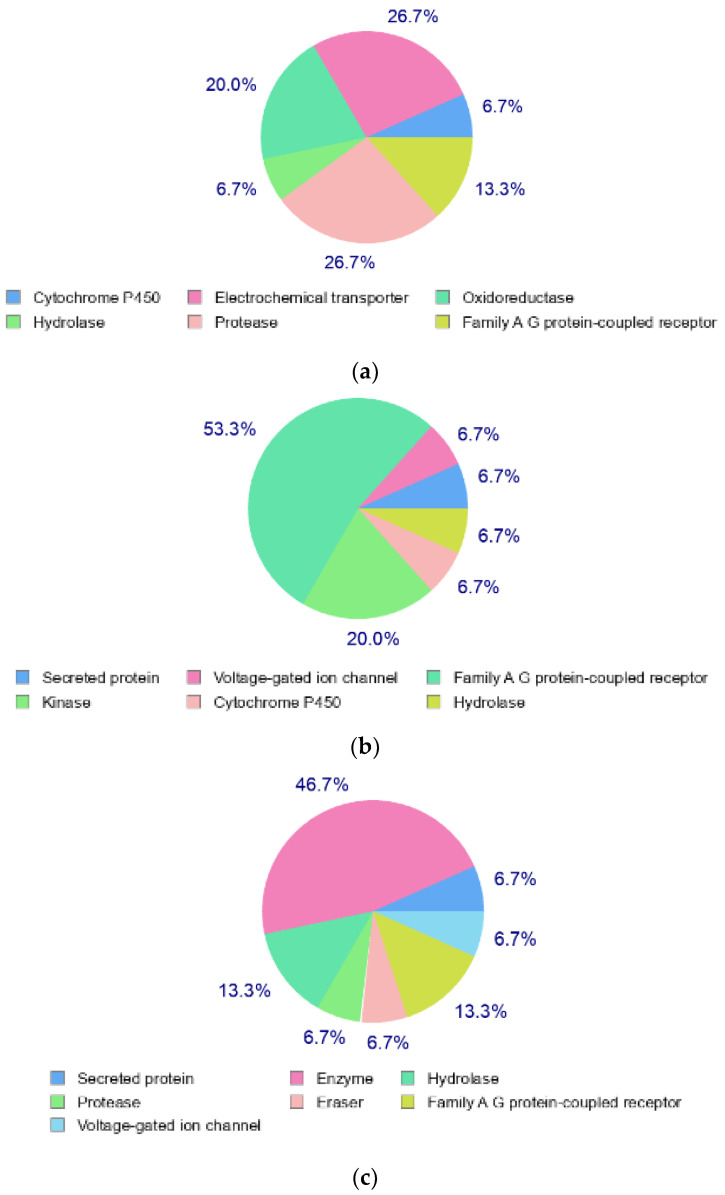
Target classes of compounds (a) Naringin (b) Eicosane and (c) Octacosane.
Figure 12
Figure 12
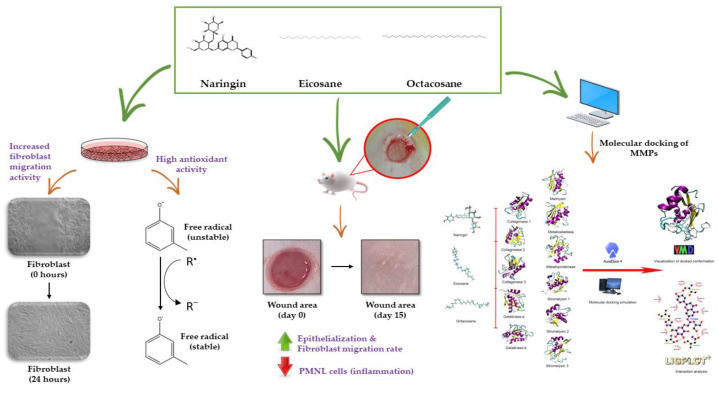
Mechanism of action of naringin, eicosane and octacosane through the in vitro and in vivo models, and the molecular docking of these compounds with the MMPs involved in wound healing.

References

    1. Burgess J.L., Wyant W.A., Abujamra B.A., Kirsner R.S., Jozic I. Diabetic Wound-Healing Science. Medicina. 2021;57:1072. doi: 10.3390/medicina57101072. - DOI - PMC - PubMed
    1. Oliver T.I., Mutluoglu M. StatPearls. StatPearls Publishing; Treasure Island, FL, USA: 2022. [(accessed on 10 December 2022)]. Diabetic Foot Ulcer. Available online: https://www.ncbi.nlm.nih.gov/books/NBK537328/
    1. Fiorentino T.V., Prioletta A., Zuo P., Folli F. Hyperglycemia-induced oxidative stress and its role in diabetes mellitus related cardiovascular diseases. Curr. Pharm. Des. 2013;19:5695–5703. doi: 10.2174/1381612811319320005. - DOI - PubMed
    1. Deng L., Du C., Song P., Chen T., Rui S., Armstrong D.G., Deng W. The Role of Oxidative Stress and Antioxidants in Diabetic Wound Healing. Oxidative Med. Cell. Longev. 2021;2021:8852759. doi: 10.1155/2021/8852759. - DOI - PMC - PubMed
    1. Gill S.E., Parks W.C. Metalloproteinases and Their Inhibitors: Regulators of Wound Healing. Int. J. Biochem. Cell Biol. 2009;40:1334–1347. doi: 10.1016/j.biocel.2007.10.024. - DOI - PMC - PubMed