


Anti-Inflammatory Effect of Garcinol Extracted from Garcinia dulcis via Modulating NF-κB Signaling Pathway
- PMID: 36771283
- PMCID: PMC9918937
- DOI: 10.3390/nu15030575
Anti-Inflammatory Effect of Garcinol Extracted from Garcinia dulcis via Modulating NF-κB Signaling Pathway
Abstract
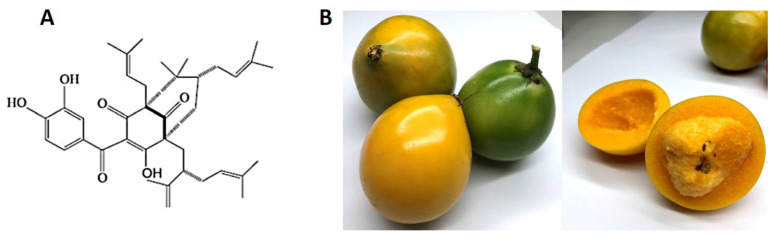
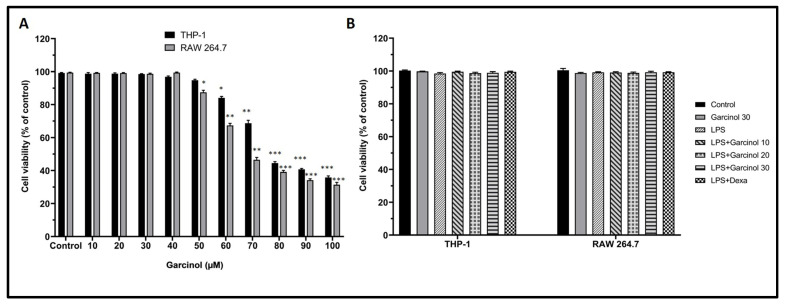
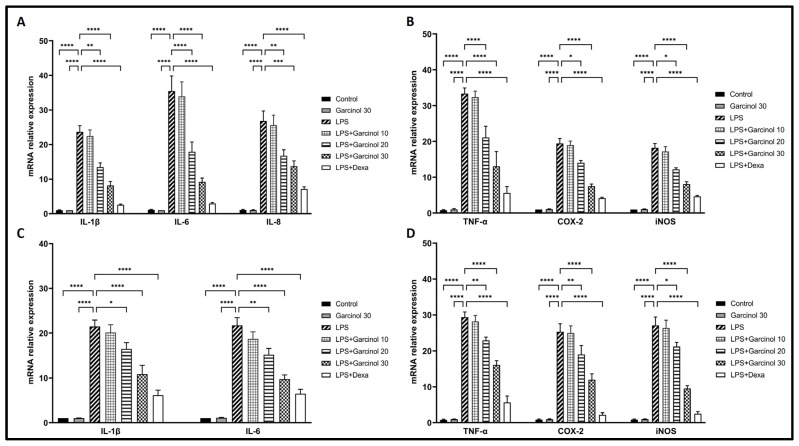
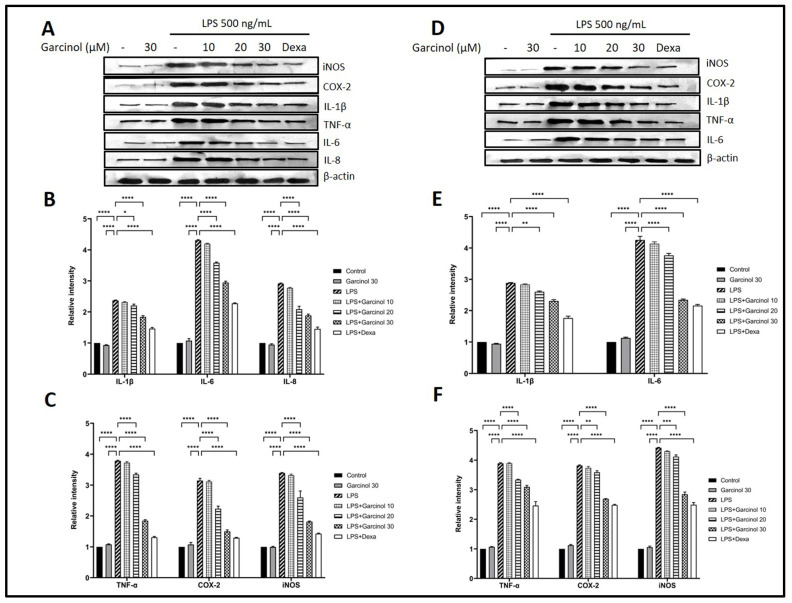
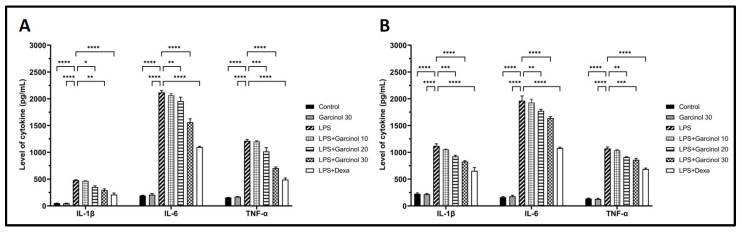
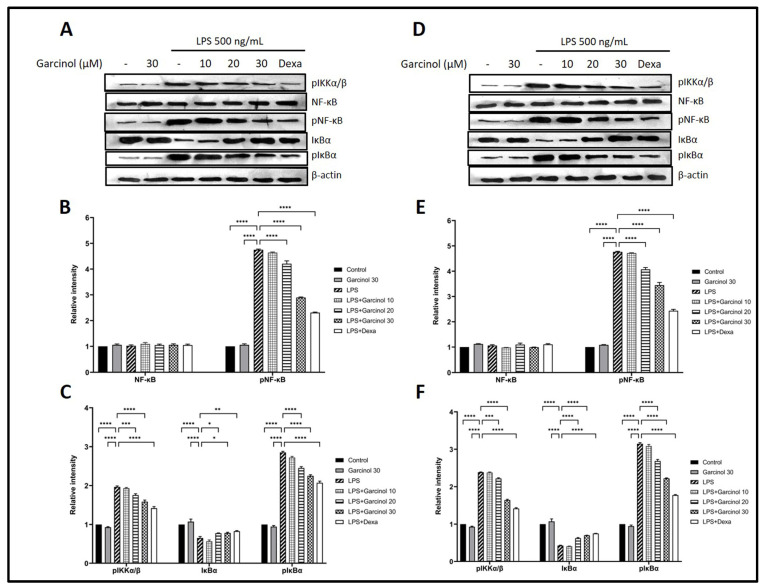
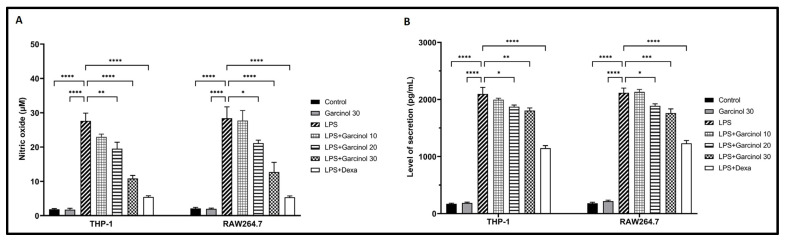
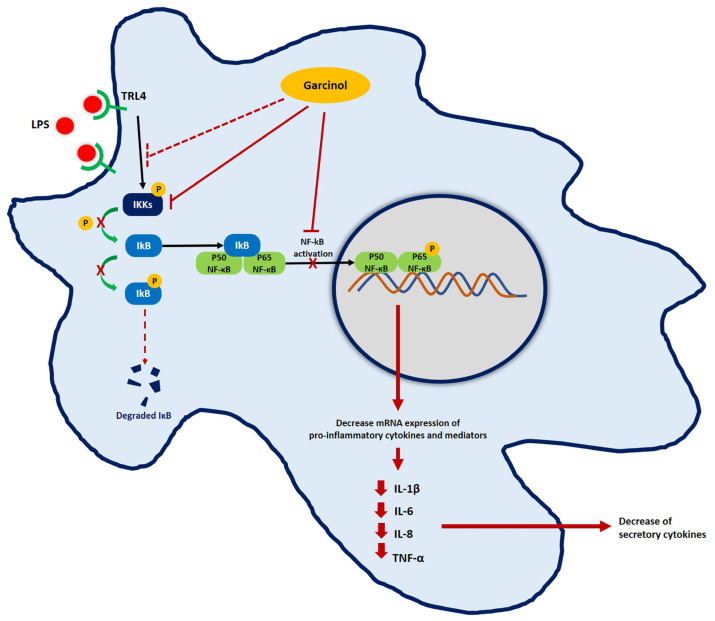
Garcinia is a significant medicinal plant with many beneficial phytoconstituents, including garcinol. This study investigated the anti-inflammatory effect of garcinol isolated from Garcinia dulcis fruit in LPS-activated THP-1 and Raw 264.7 macrophages. The results demonstrated that the low concentration of garcinol did not alter cell viability. Furthermore, co-incubation of garcinol with LPS inhibited the production of pro-inflammatory cytokines, including TNF-α, IL-8, IL-6, IL-1β, and pro-inflammatory mediators, including iNOS and COX-2 at the mRNA and protein expression levels. Garcinol also decreased the secretion of TNF-α, IL-6, IL-1β, PGE2, and NO. Moreover, the anti-inflammatory effects involved an alteration in the NF-κB signaling pathway. Downregulation of pIKKα/β, pIκBα, and pNF-κB was observed, hence reducing the translocation of pNF-κB from the cytosol into the nucleus, which subsequently decreased the production of pro-inflammatory molecules. Therefore, garcinol isolated from Garcinia dulcis is a potential candidate as an anti-inflammatory agent for inflammation-related disease treatment.
Keywords: Garcinia dulcis; NF-κB; RAW 264.7; THP-1; garcinol; inflammation.
Conflict of interest statement
The authors declare no conflict of interest. The funders had no role in the design of the study; in the collection, analyses, or interpretation of data; in the writing of the manuscript; or in the decision to publish the results.
Figures
References
MeSH terms
Substances
Grants and funding
LinkOut - more resources
Full Text Sources
Research Materials
