


A Proximal Sensor-Based Approach for Clean, Fast, and Accurate Assessment of the Eucalyptus spp. Nutritional Status and Differentiation of Clones
- PMID: 36771645
- PMCID: PMC9919597
- DOI: 10.3390/plants12030561
A Proximal Sensor-Based Approach for Clean, Fast, and Accurate Assessment of the Eucalyptus spp. Nutritional Status and Differentiation of Clones
Abstract
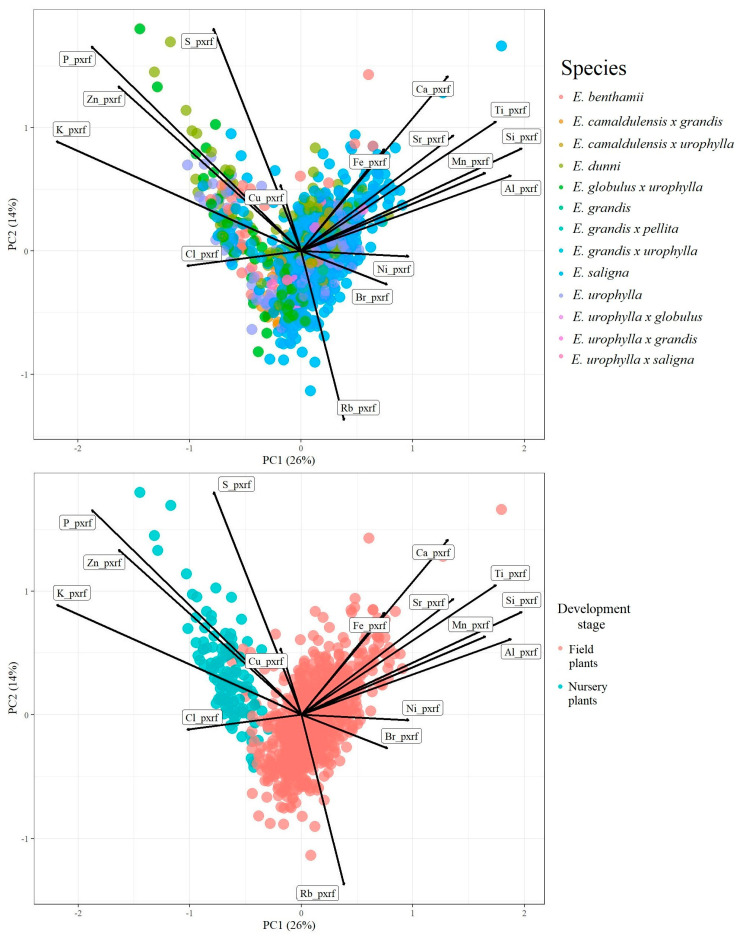
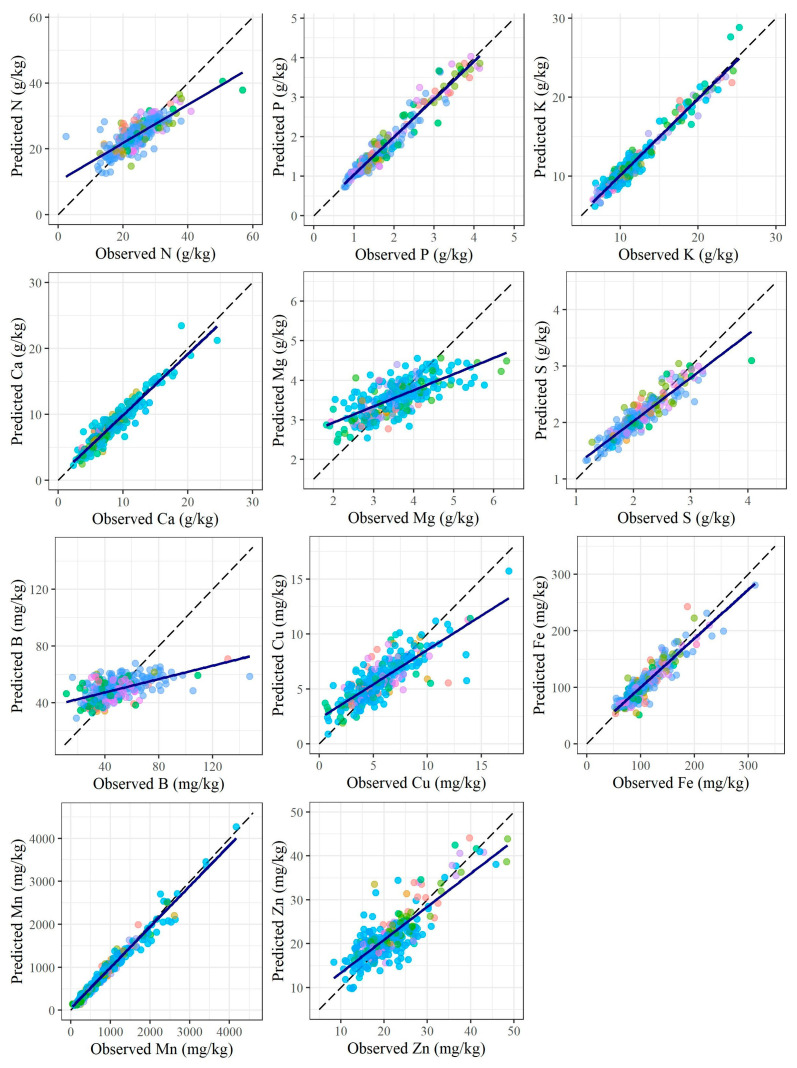
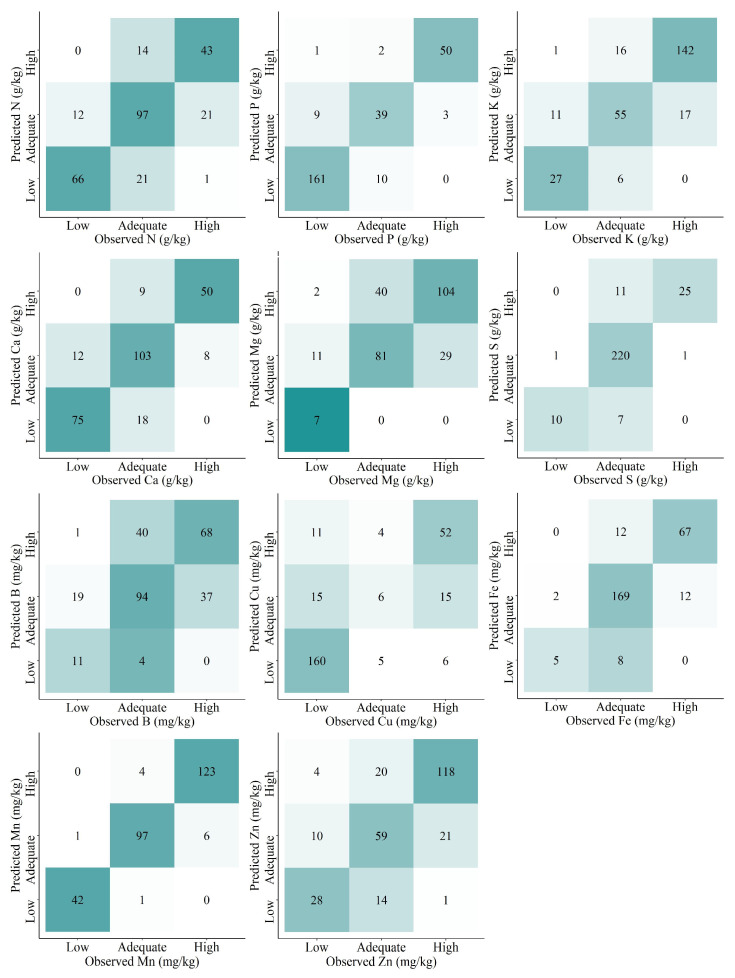
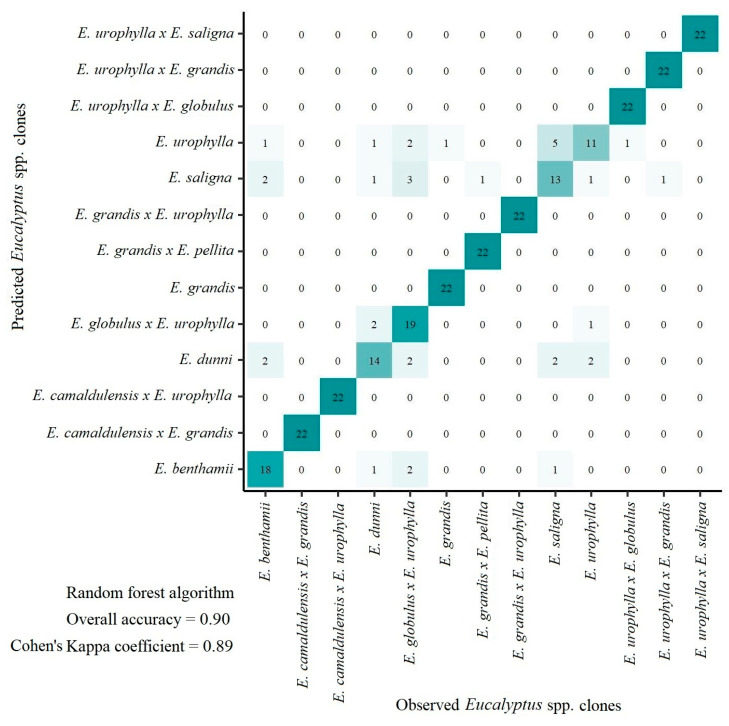
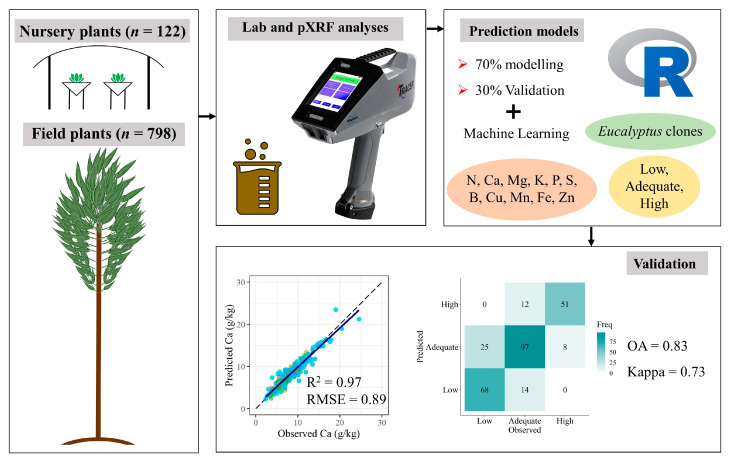
Several materials have been characterized using proximal sensors, but still incipient efforts have been driven to plant tissues. Eucalyptus spp. cultivation in Brazil covers approximately 7.47 million hectares, requiring faster methods to assess plant nutritional status. This study applies portable X-ray fluorescence (pXRF) spectrometry to (i) distinguish Eucalyptus clones using pre-processed pXRF data; and (ii) predict the contents of eleven nutrients in the leaves of Eucalyptus (B, Ca, Cu, Fe, K, Mg, Mn, N, P, S, and Zn) aiming to accelerate the diagnosis of nutrient deficiency. Nine hundred and twenty samples of Eucalyptus leaves were collected, oven-dried, ground, and analyzed using acid-digestion (conventional method) and using pXRF. Six machine learning algorithms were trained with 70% of pXRF data to model conventional results and the remaining 30% were used to validate the models using root mean square error (RMSE) and coefficient of determination (R2). The principal component analysis clearly distinguished developmental stages based on pXRF data. Nine nutrients were accurately predicted, including N (not detected using pXRF spectrometry). Results for B and Mg were less satisfactory. This method can substantially accelerate decision-making and reduce costs for Eucalyptus foliar analysis, constituting an ecofriendly approach which should be tested for other crops.
Keywords: Eucalyptus cultivation; greentech analysis; leaf nutrient analysis; machine learning; plant mineral nutrition; portable X-ray fluorescence (pXRF) spectrometry; proximal sensing.
Conflict of interest statement
The authors declare no conflict of interest. The funders had no role in the design of the study; in the collection, analyses, or interpretation of data; in the writing of the manuscript; or in the decision to publish the results.
Figures
References
-
- IBÁ Brazilian Tree Industry Annual Report. 2021. [(accessed on 21 September 2022)]. Available online: https://iba.org/eng/datafiles/publicacoes/relatorios/relatorioiba2021.pdf.
-
- Polito F., Kouki H., Khedhri S., Hamrouni L., Mabrouk Y., Amri I., Nazzaro F., Fratianni F., De Feo V. Chemical Composition and Phytotoxic and Antibiofilm Activity of the Essential Oils of Eucalyptus Bicostata, E. Gigantea, E. Intertexta, E. Obliqua, E. Pauciflora and E. Tereticornis. Plants. 2022;11:3017. doi: 10.3390/plants11223017. - DOI - PMC - PubMed
LinkOut - more resources
Full Text Sources
Miscellaneous
