Effectiveness and feasibility of three types of parent reminders to increase adolescent human papillomavirus (HPV) vaccination
- PMID: 36773962
- PMCID: PMC10707435
- DOI: 10.1016/j.ypmed.2023.107448
Effectiveness and feasibility of three types of parent reminders to increase adolescent human papillomavirus (HPV) vaccination
Abstract
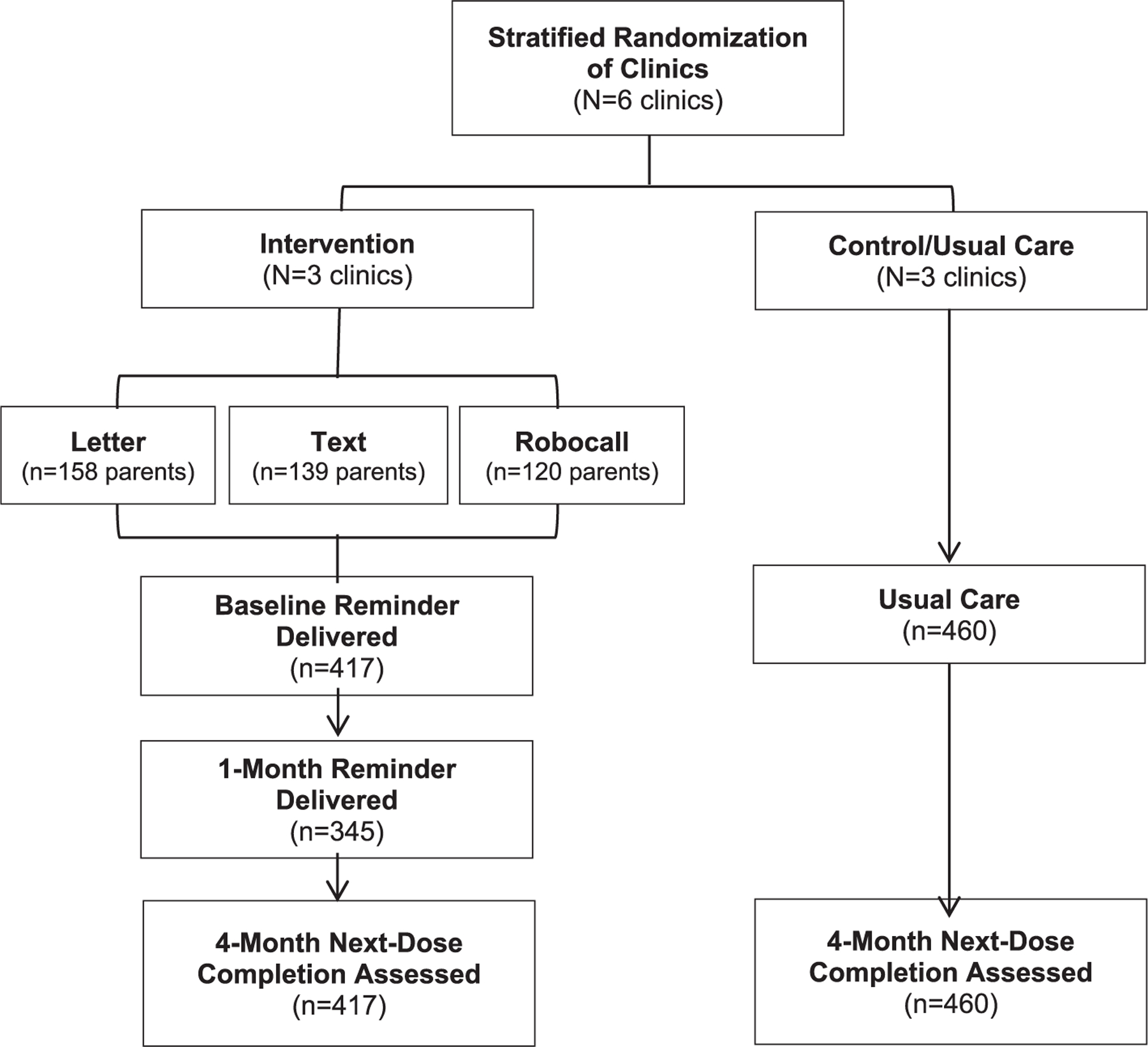
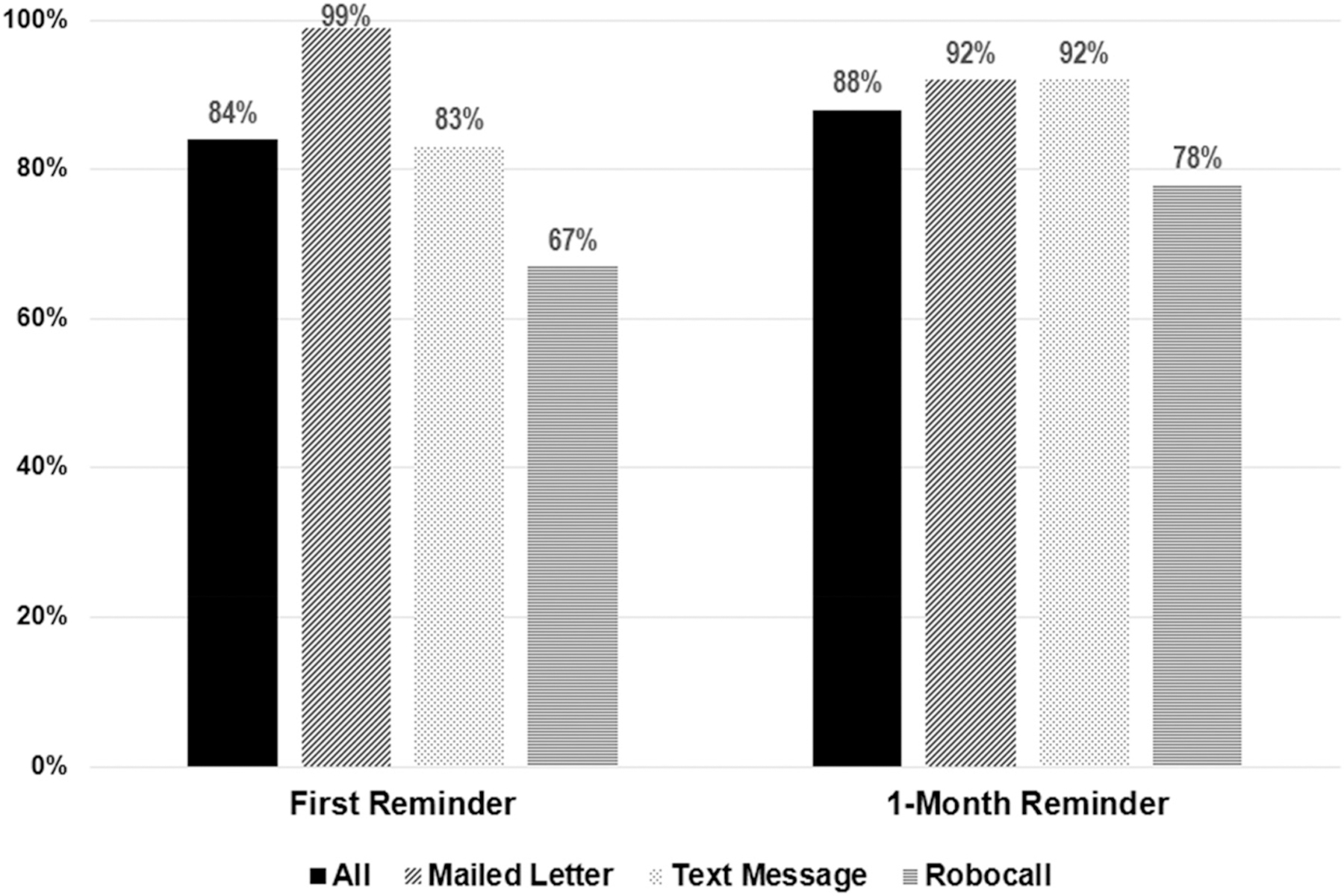
Parent reminders have produced modest improvements in human papillomavirus (HPV) vaccination among adolescents. However, little prior research has compared the effectiveness and feasibility of different HPV reminder types in resource-limited settings. We conducted a quasi-experimental study (2016-2017) to evaluate the effectiveness of three parent reminder types (mailed letters, robocalls, text messages) on next-dose HPV vaccine receipt among 12-year-olds in a large Federally Qualified Health Center in Los Angeles County. Six clinics were matched into three pairs: randomly assigning one clinic within each pair to intervention and control. Intervention clinics were randomly assigned to deliver one of the three parent reminder types. We calculated rates of next-dose vaccine receipt and assessed intervention effects using logistic regression models. We calculated the proportion of each type of reminder successfully delivered as a feasibility measure. The study sample comprised 877 12-year-olds due for an HPV vaccine dose (47% female, >85% Latino). At 4-month follow-up, 23% of intervention patients received an HPV vaccine dose compared to only 12% of control patients. Overall, receipt of any reminder increased rates of the next-needed HPV vaccine compared to usual care (p = 0.046). Significant improvements were observed for text reminders (p = 0.036) and boys (p = 0.006). Robocalls were the least feasible reminder type. Text message reminders are feasible and effective for promoting HPV vaccination. Future research is needed to assess the effectiveness and feasibility of reminders compared to other vaccine promotion strategies.
Keywords: Cervical cancer; Disparities; Human papillomavirus; Implementation science; Text message reminders; Uninsured; Vaccination.
Copyright © 2023 The Authors. Published by Elsevier Inc. All rights reserved.
Conflict of interest statement
Declaration of Competing Interest No authors have reported any conflicts of interest relevant to the project.
Figures