


Intraoperative oxygen tension and redox homeostasis in Pseudomyxoma peritonei: A short case series
- PMID: 36776312
- PMCID: PMC9909963
- DOI: 10.3389/fonc.2023.1076500
Intraoperative oxygen tension and redox homeostasis in Pseudomyxoma peritonei: A short case series
Abstract
Introduction: Pseudomyxoma peritonei (PMP) is a rare malignant disease characterized by a massive multifocal accumulation of mucin within the peritoneal cavity. The current treatment option is based on complete cytoreductive surgery combined with hyperthermic intraperitoneal chemotherapy. However, the recurrence is frequent with subsequent progression and death. To date, most of the studies published in PMP are related to histological and genomic analyses. Thus, the need for further studies unveiling the underlying PMP molecular mechanisms is urgent. In this regard, hypoxia and oxidative stress have been extensively related to tumoral pathologies, although their contribution to PMP has not been elucidated.
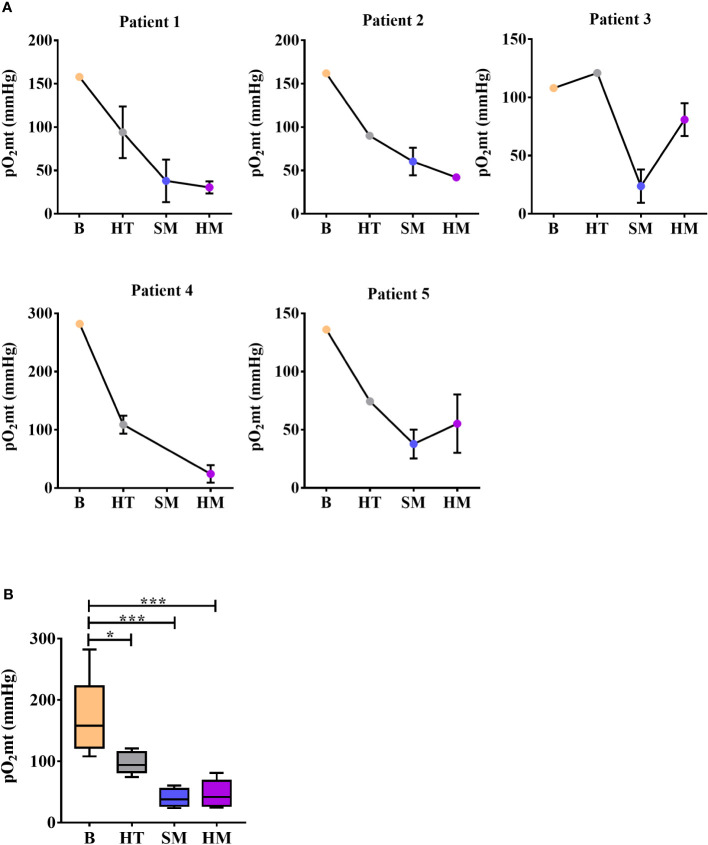
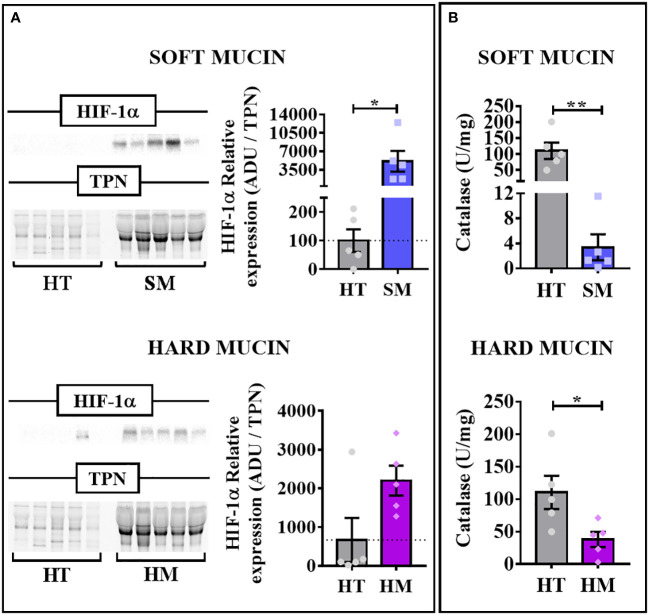
Methods: In this manuscript, we have evaluated, for the first time, the intratumoral real-time oxygen microtension (pO2mt) in the tumor (soft and hard mucin) and surrounding healthy tissue from five PMP patients during surgery. In addition, we measured hypoxia (Hypoxia Inducible Factor-1a; HIF-1α) and oxidative stress (catalase; CAT) markers in soft and hard mucin from the same five PMP patient samples and in five control samples.
Results: The results showed low intratumoral oxygen levels, which were associated with increased HIF-1α protein levels, suggesting the presence of a hypoxic environment in these tumors. We also found a significant reduction in CAT activity levels in soft and hard mucin compared with healthy tissue samples.
Discussion: In conclusion, our study provides the first evidence of low intratumoral oxygen levels in PMP patients associated with hypoxia and oxidative stress markers. However, further investigation is required to understand the potential role of oxidative stress in PMP in order to find new therapeutic strategies.
Keywords: HIF-1α; Pseudomyxoma peritonei; ROS; catalase; hypoxia; mucin; oxygen.
Copyright © 2023 Valenzuela-Molina, Bura, Vázquez-Borrego, Granados-Rodríguez, Rufián-Andujar, Rufián-Peña, Casado-Adam, Sánchez-Hidalgo, Rodríguez-Ortiz, Ortega-Salas, Martínez-López, Michán, Alhama, Arjona-Sánchez and Romero-Ruiz.
Conflict of interest statement
The authors declare that the research was conducted in the absence of any commercial or financial relationships that could be construed as a potential conflict of interest.
Figures
References
-
- Carr NJ, Cecil TD, Mohamed F, Sobin LH, Sugarbaker PH, González-Moreno S, et al. A consensus for classification and pathologic reporting of pseudomyxoma peritonei and associated appendiceal neoplasia: The results of the peritoneal surface oncology group international (PSOGI) modified Delphi process. In Am J Surg Pathol. (2016) 40(1), 14–26. doi: 10.1097/PAS.0000000000000535 - DOI - PubMed
-
- Dayal S, Taflampas P, Riss S, Chandrakumaran K, Cecil TD, Mohamed F, et al. Complete cytoreduction for pseudomyxoma peritonei is optimal but maximal tumor debulking may be beneficial in patients in whom complete tumor removal cannot be achieved. Dis Colon Rectum (2013) 56(12):1366–72. doi: 10.1097/DCR.0b013e3182a62b0d - DOI - PubMed
LinkOut - more resources
Full Text Sources
Miscellaneous
