


Mutations and clinical characteristics of dRTA caused by SLC4A1 mutations: Analysis based on published patients
- PMID: 36776909
- PMCID: PMC9910804
- DOI: 10.3389/fped.2023.1077120
Mutations and clinical characteristics of dRTA caused by SLC4A1 mutations: Analysis based on published patients
Abstract
Background and aims: The genetic and clinical characteristics of patients with distal renal tubular acidosis (dRTA) caused by SLC4A1 mutations have not been systematically recorded before. Here, we summarized the SLC4A1 mutations and clinical characteristics associated with dRTA.
Methods: Database was searched, and the mutations and clinical manifestations of patients were summarized from the relevant articles.
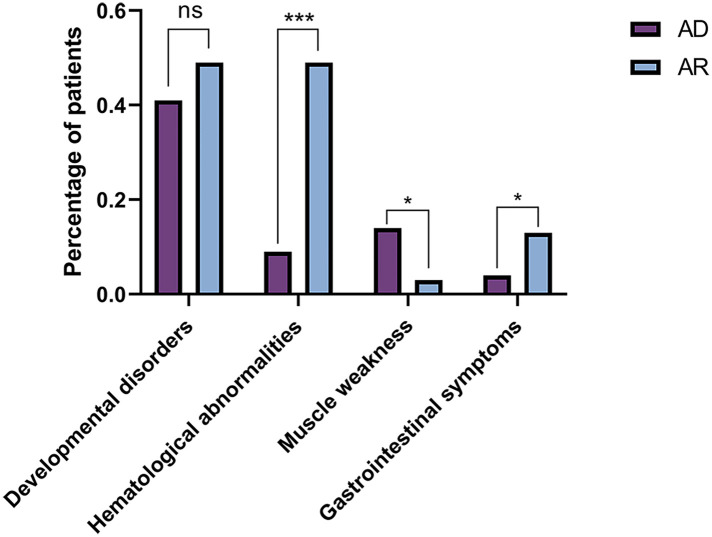
Results: Fifty-three eligible articles involving 169 patients were included and 41 mutations were identified totally. Fifteen mutations involving 100 patients were autosomal dominant inheritance, 21 mutations involving 61 patients were autosomal recessive inheritance. Nephrocalcinosis or kidney stones were found in 72.27%, impairment in renal function in 14.29%, developmental disorders in 61.16%, hematological abnormalities in 33.88%, and muscle weakness in 13.45% of patients. The age of onset was younger (P < 0.01), urine pH was higher (P < 0.01), and serum potassium was lower (P < 0.001) in recessive patients than patients with dominant SLC4A1 mutations. Autosomal recessive inheritance was more often found in Asian patients (P < 0.05).
Conclusions: The children present with metabolic acidosis with high urinary pH, accompanying hypokalemia, hyperchloremia, nephrocalcinosis, growth retardation and hematological abnormalities should be suspected as dRTA and suggested a genetic testing. The patients with recessive dRTA are generally more severely affected than that with dominant SLC4A1 mutations. Autosomal recessive inheritance was more often found in Asian patients, and more attentions should be paid to the Asian patients.
Keywords: SLC4A1; clinical characteristics; distal renal tubular acidosis; metabolic acidosis; mutation.
© 2023 Yang, Sheng, Ge, Song, Dong, Guo and Liao.
Conflict of interest statement
The authors declare that the research was conducted in the absence of any commercial or financial relationships that could be construed as a potential conflict of interest.
Figures


References
-
- Yenchitsomanus PT. Human anion exchanger1 mutations and distal renal tubular acidosis. Southeast Asian J Trop Med Public Health. (2003) 34(3):651–8. - PubMed
-
- Duangtum N, Junking M, Phadngam S, Sawasdee N, Castiglioni A, Charngkaew K, et al. gamma-COPI mediates the retention of kAE1 G701D protein in Golgi apparatus—a mechanistic explanation of distal renal tubular acidosis associated with the G701D mutation. Biochem J. (2017) 474(15):2573–84. 10.1042/bcj20170088 - DOI - PubMed
Publication types
LinkOut - more resources
Full Text Sources
Miscellaneous
