


Gut-joint axis: Gut dysbiosis can contribute to the onset of rheumatoid arthritis via multiple pathways
- PMID: 36779190
- PMCID: PMC9911673
- DOI: 10.3389/fcimb.2023.1092118
Gut-joint axis: Gut dysbiosis can contribute to the onset of rheumatoid arthritis via multiple pathways
Abstract
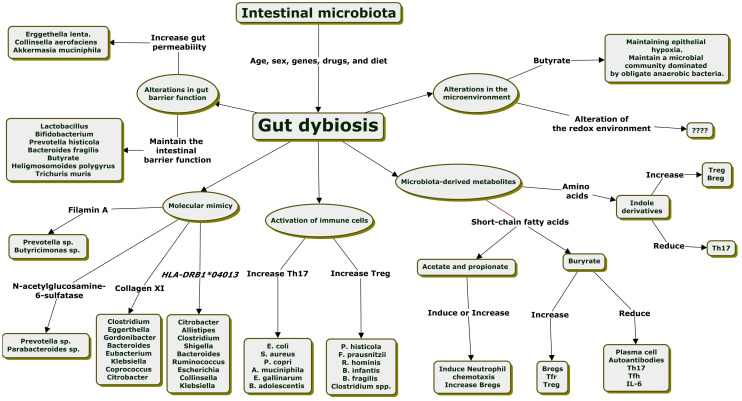
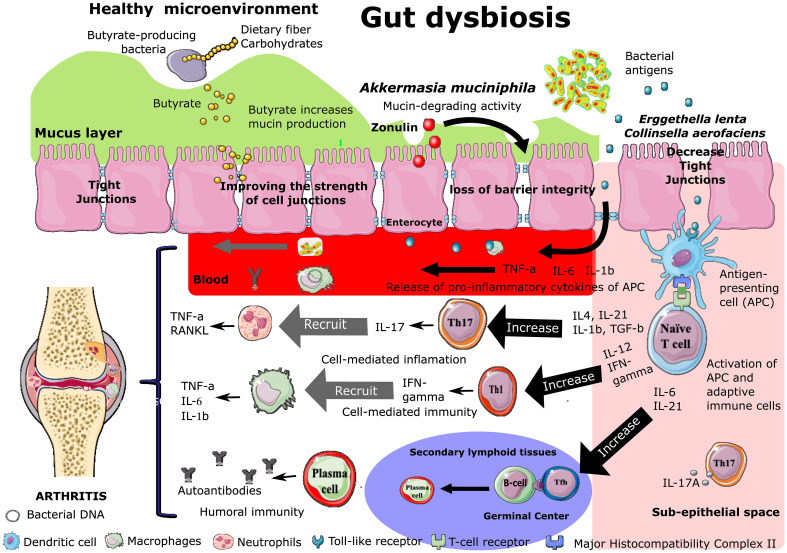
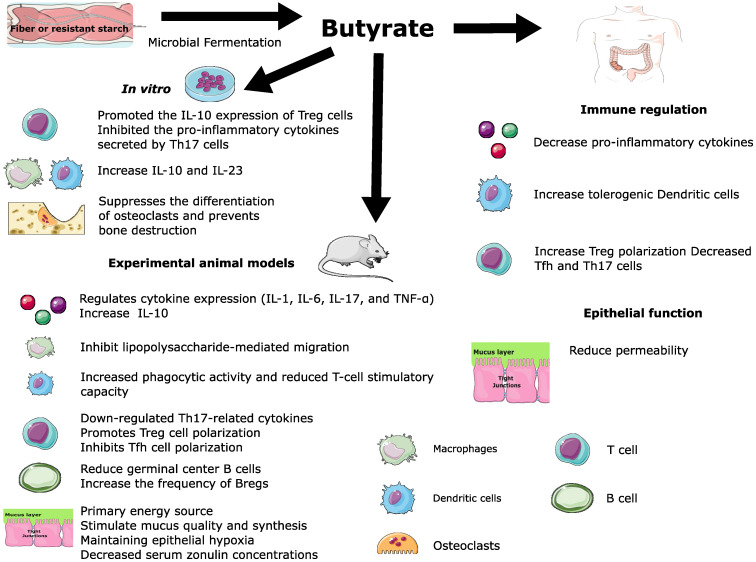
Rheumatoid Arthritis (RA) is an autoimmune disease characterized by loss of immune tolerance and chronic inflammation. It is pathogenesis complex and includes interaction between genetic and environmental factors. Current evidence supports the hypothesis that gut dysbiosis may play the role of environmental triggers of arthritis in animals and humans. Progress in the understanding of the gut microbiome and RA. has been remarkable in the last decade. In vitro and in vivo experiments revealed that gut dysbiosis could shape the immune system and cause persistent immune inflammatory responses. Furthermore, gut dysbiosis could induce alterations in intestinal permeability, which have been found to predate arthritis onset. In contrast, metabolites derived from the intestinal microbiota have an immunomodulatory and anti-inflammatory effect. However, the precise underlying mechanisms by which gut dysbiosis induces the development of arthritis remain elusive. This review aimed to highlight the mechanisms by which gut dysbiosis could contribute to the pathogenesis of RA. The overall data showed that gut dysbiosis could contribute to RA pathogenesis by multiple pathways, including alterations in gut barrier function, molecular mimicry, gut dysbiosis influences the activation and the differentiation of innate and acquired immune cells, cross-talk between gut microbiota-derived metabolites and immune cells, and alterations in the microenvironment. The relative weight of each of these mechanisms in RA pathogenesis remains uncertain. Recent studies showed a substantial role for gut microbiota-derived metabolites pathway, especially butyrate, in the RA pathogenesis.
Keywords: gut microflora; butyrate; gut microbiome; rheumatoid arthritis; short-chain fatty acid.
Copyright © 2023 Romero-Figueroa, Ramírez-Durán, Montiel-Jarquín and Horta-Baas.
Conflict of interest statement
The authors declare that the research was conducted in the absence of any commercial or financial relationships that could be construed as a potential conflict of interest.
Figures
References
-
- Alameddine J., Godefroy E., Papargyris L., Sarrabayrouse G., Tabiasco J., Bridonneau C., et al. (2019). Faecalibacterium prausnitzii skews human DC to prime IL10-producing T cells through TLR2/6/JNK signaling and IL-10, IL-27, CD39, and IDO-1 induction. Front. Immunol. 10. doi: 10.3389/fimmu.2019.00143 - DOI - PMC - PubMed
Publication types
MeSH terms
LinkOut - more resources
Full Text Sources
Medical
