


Clinical, pathologic, and molecular features of amphicrine prostate cancer
- PMID: 36779357
- PMCID: PMC11023623
- DOI: 10.1002/pros.24497
Clinical, pathologic, and molecular features of amphicrine prostate cancer
Abstract
Background: Amphicrine prostate carcinoma (AMPC) is a poorly defined subset of prostate cancer in which cells co-express luminal prostate epithelial and neuroendocrine markers. The optimal treatment strategy is unknown. We sought to further characterize the clinical, histomorphologic, and molecular characteristics of AMPC and to identify areas of potential future treatment investigations.
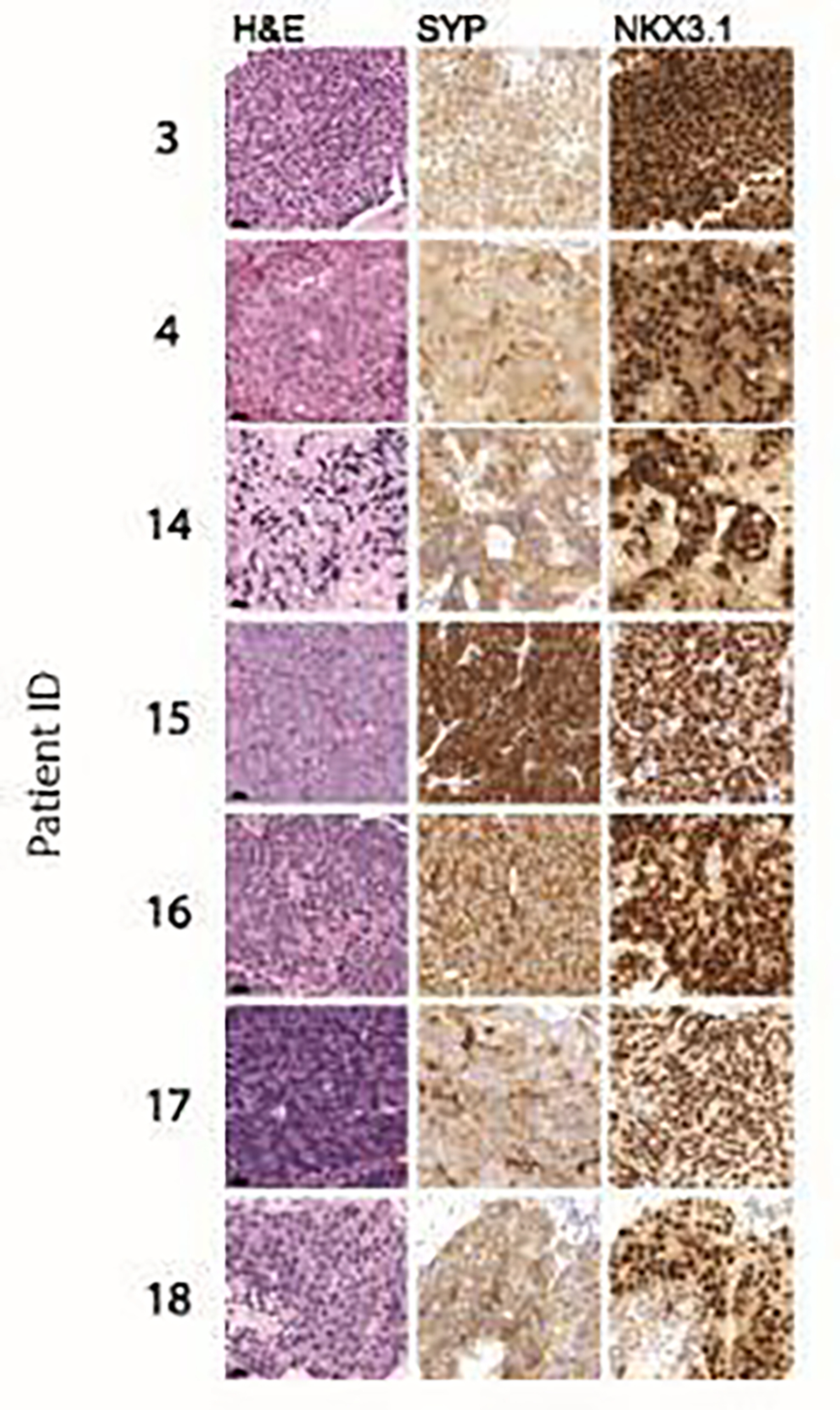
Methods: We retrospectively identified 17 cases of AMPC at a single institution, defined as synaptophysin expression in >70% of cells and co-expression of androgen receptor (AR) signaling markers (either AR, PSA, or NKX3.1) in >50% of cells. Clinical and histologic features of AMPC cases as well as response to treatment and clinical outcomes were described.
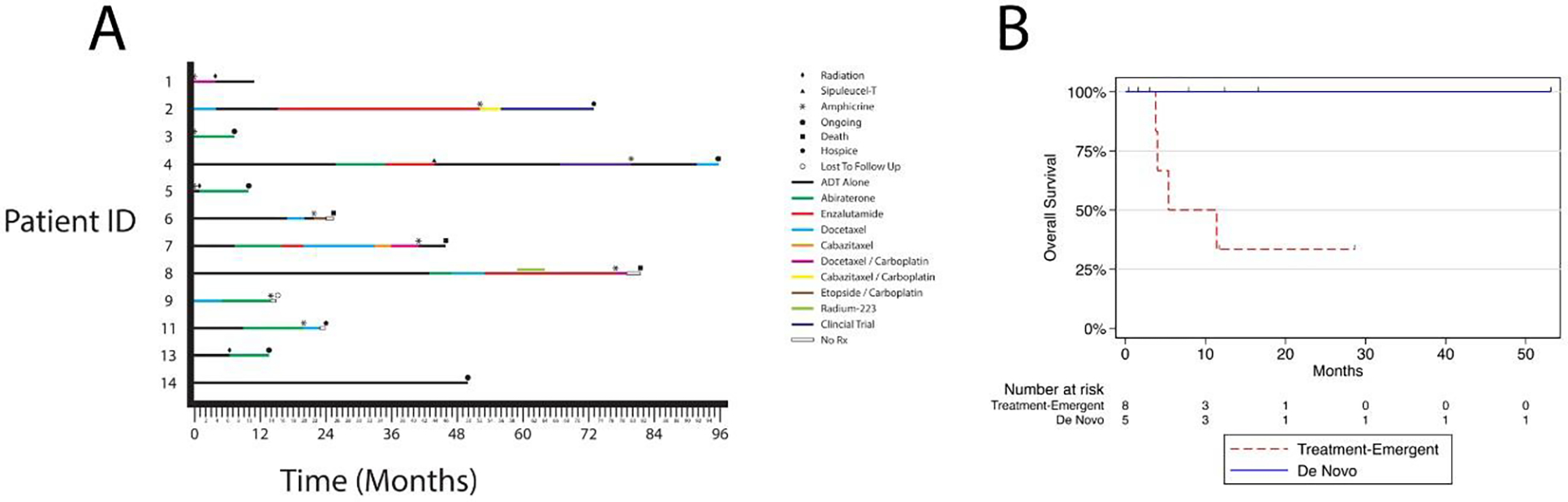
Results: Five AMPC cases arose de novo in the absence of prior systemic treatment and behaved distinctly from cases that were treatment-emergent. In these de novo cases, despite expression of neuroendocrine markers, prognosis appeared more favorable than high-grade neuroendocrine carcinoma, with two (40%) patients with de novo metastatic disease, universal response to androgen deprivation therapy, and no deaths at a median follow-up of 12.3 months. Treatment-emergent AMPC arose a median of 41.1 months after androgen deprivation therapy initiation and was associated with poor response to therapy.
Conclusions: We show that amphicrine prostate cancer is a unique entity and differs in clinical and molecular features from high-grade neuroendocrine carcinomas of the prostate. Our study highlights the need to recognize AMPC as a unique molecularly defined subgroup of prostate cancer.
Keywords: amphicrine prostate cancer; castration resistant prostate cancer; neuroendocrine; synaptophysin.
© 2023 Wiley Periodicals LLC.
Conflict of interest statement
Figures
References
-
- Graham L, Schweizer MT: Targeting persistent androgen receptor signaling in castration-resistant prostate cancer. Med Oncol 33:44, 2016 - PubMed
Publication types
MeSH terms
Substances
Grants and funding
LinkOut - more resources
Full Text Sources
Medical
Research Materials
Miscellaneous
