


Using the Past to Understand the Future of U.S. and Global Smoking Disparities: A Birth Cohort Perspective
- PMID: 36781373
- PMCID: PMC10033336
- DOI: 10.1016/j.amepre.2022.12.003
Using the Past to Understand the Future of U.S. and Global Smoking Disparities: A Birth Cohort Perspective
Abstract
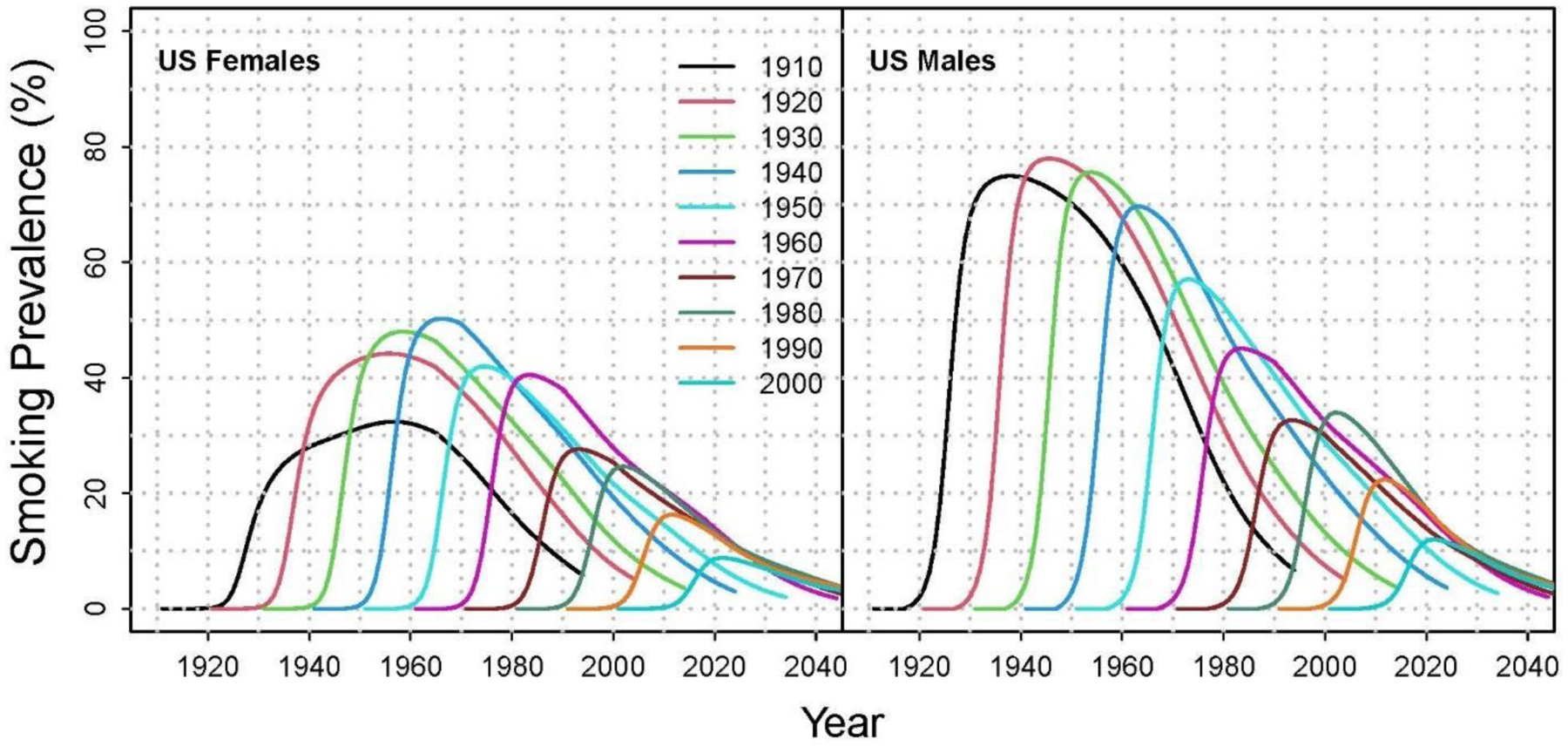
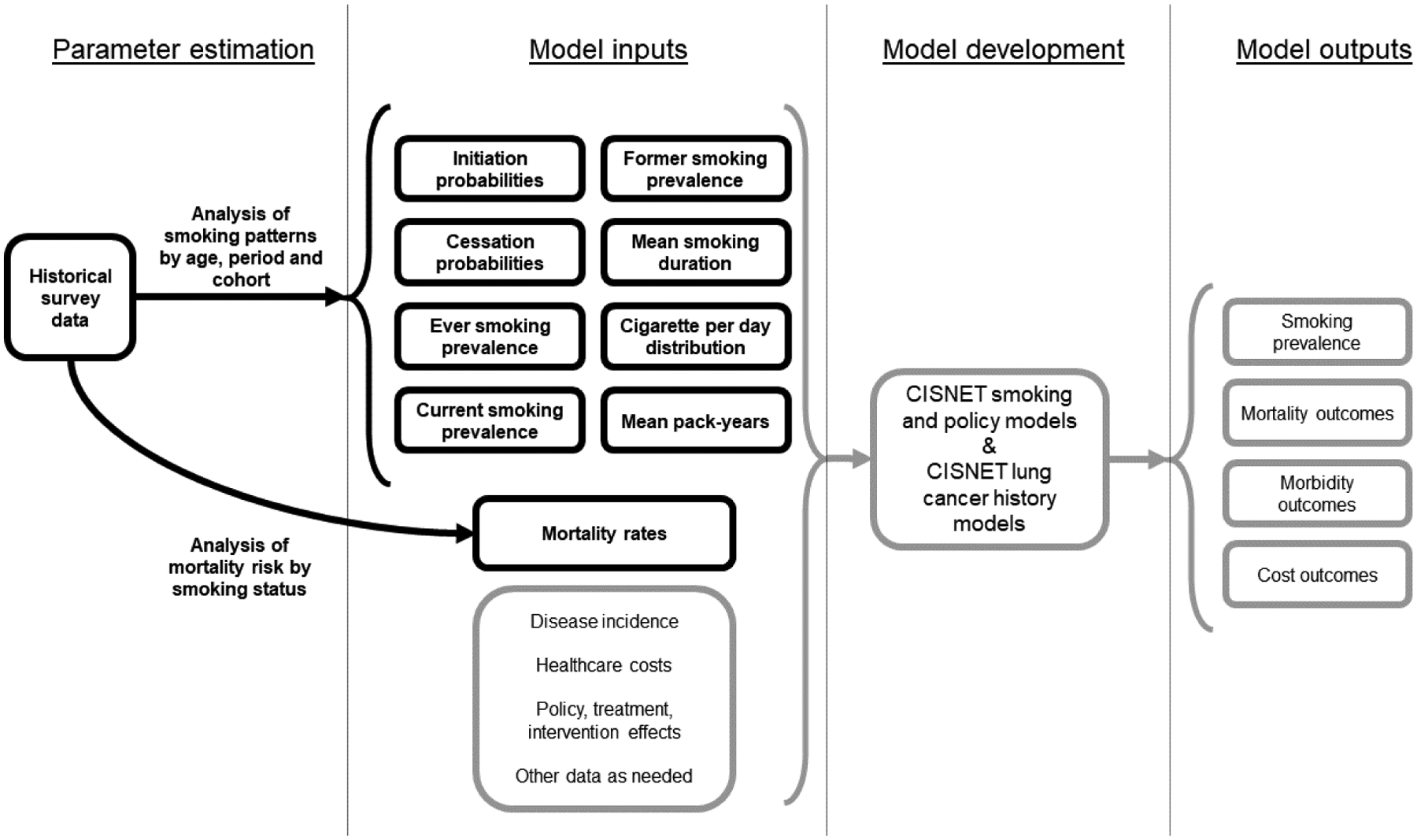
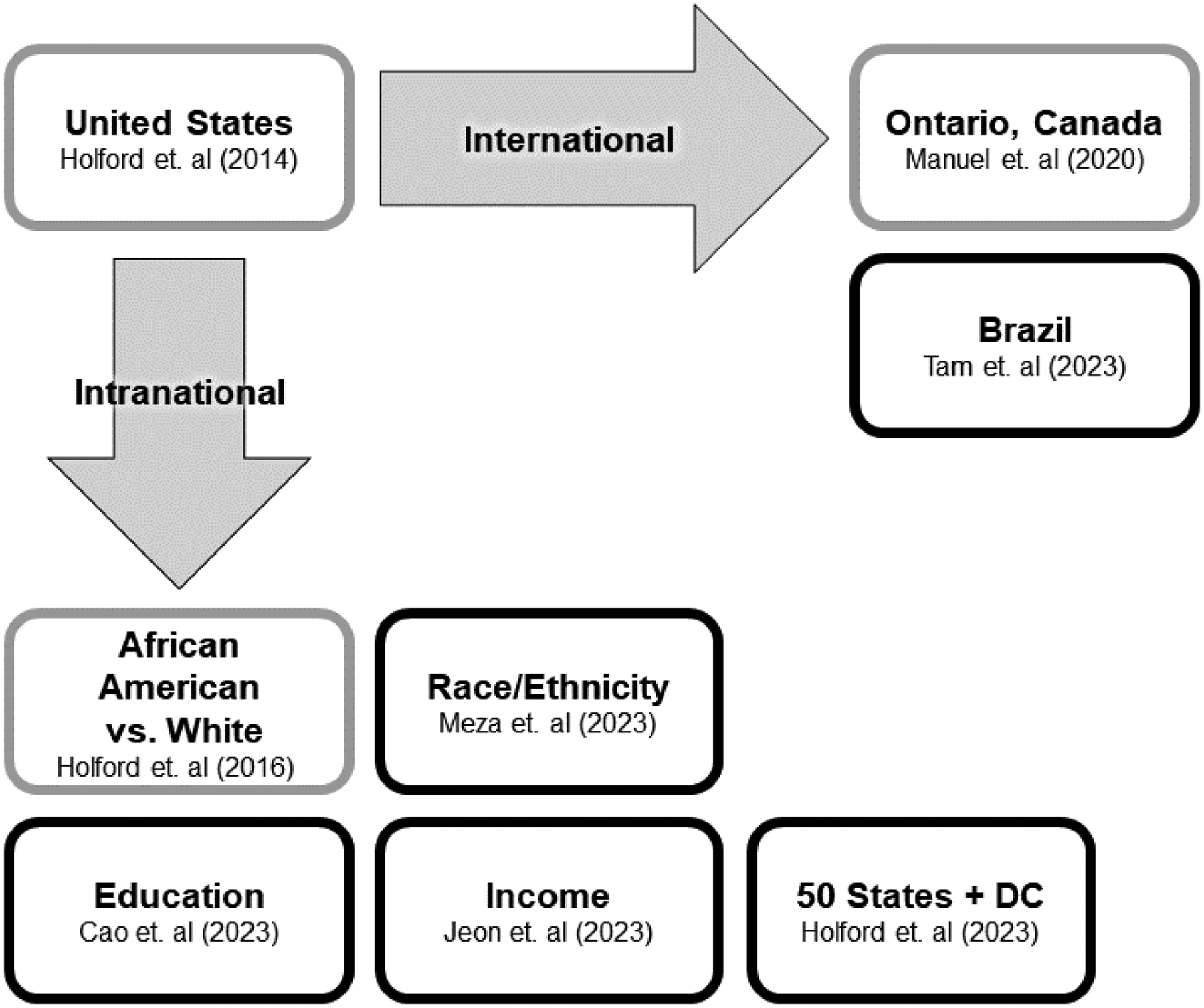
U.S. smoking-related disparities persist, but data evaluating how smoking patterns across diverse populations have changed by birth cohort are lacking. Worldwide, smoking continues to exact harm, especially to low- and middle-income nations with less historical data for smoking analyses. The Cancer Intervention and Surveillance Modeling Network (CISNET) Lung Working Group previously generated smoking histories for the whole U.S. population using an age, period, and birth cohort (APC) methodological framework. These inputs have been used in numerous models to simulate future patterns of smoking and to evaluate the potential impact of policies. However, the absence of detailed model-ready inputs on smoking behaviors for diverse U.S. populations has been a barrier to research evaluating future trends in smoking-related disparities or the projected impacts of policies across sociodemographic groups. This supplement issue provides new estimates of smoking behaviors with detailed historical data by race/ethnicity, educational attainment, family income, and for each of the 50 U.S. states and Washington, DC. All-cause mortality relative risks associated with smoking by race/ethnicity and educational attainment are also available for the first time. Finally, the supplement issue presents comprehensive smoking histories for Brazil, demonstrating the application of this methodology to resource-limited settings. Collectively, these data aim to offer insight into future U.S. and global smoking disparities and accelerate research on tobacco control policies that advance health equity. This effort will allow tobacco simulation models to account comprehensively for population diversity, thereby enabling researchers to develop more sophisticated analyses of tobacco use and control interventions.
Conflict of interest statement
No financial disclosures were reported by the authors of this paper.
Figures
References
-
- U.S. Department of Health Education and Welfare. Smoking and health: report of the Advisory Committee to the Surgeon General of the public health service. U.S. Department of Health, Education, and Welfare, Public Health Service; 1964.
-
- U.S. Department of Health and Human Services. Tobacco use among US racial/ethnic minority groups: A report of the Surgeon General. Atlanta, GA: US Department of Health and Human Services, Public Health Service, Centers for Disease Control, National Center for Chronic Disease Prevention and Health Promotion, Office on Smoking and Health; 1998.
-
- U.S. National Cancer Institute. A Socioecological Approach to Addressing Tobacco-Related Health Disparities. Bethesda, MD: U.S. Department of Health and Human Services, National Institutes of Health, National Cancer Institute; 2017.
Publication types
MeSH terms
Grants and funding
LinkOut - more resources
Full Text Sources
Miscellaneous
