


Interventions to reintroduce or increase assisted vaginal births: a systematic review of the literature
- PMID: 36787978
- PMCID: PMC9930566
- DOI: 10.1136/bmjopen-2022-070640
Interventions to reintroduce or increase assisted vaginal births: a systematic review of the literature
Abstract
Objective: To synthesise the evidence from studies that implemented interventions to increase/reintroduce the use of assisted vaginal births (AVB).
Design: Systematic review.
Eligibility criteria: We included experimental, semi-experimental and observational studies that reported any intervention to reintroduce/increase AVB use.
Data sources: We searched PubMed, EMBASE, CINAHL, LILACS, Scopus, Cochrane, WHO Library, Web of Science, ClinicalTrials.gov and WHO.int/ictrp through September 2021.
Risk of bias: For trials, we used the Cochrane Effective Practice and Organisation of Care tool; for other designs we used Risk of Bias for Non-Randomised Studies of Interventions.
Data extraction and synthesis: Due to heterogeneity in interventions, we did not conduct meta-analyses. We present data descriptively, grouping studies according to settings: high-income countries (HICs) or low/middle-income countries (LMICs). We classified direction of intervention effects as (a) statistically significant increase or decrease, (b) no statistically significant change or (c) statistical significance not reported in primary study. We provide qualitative syntheses of the main barriers and enablers for success of the intervention.
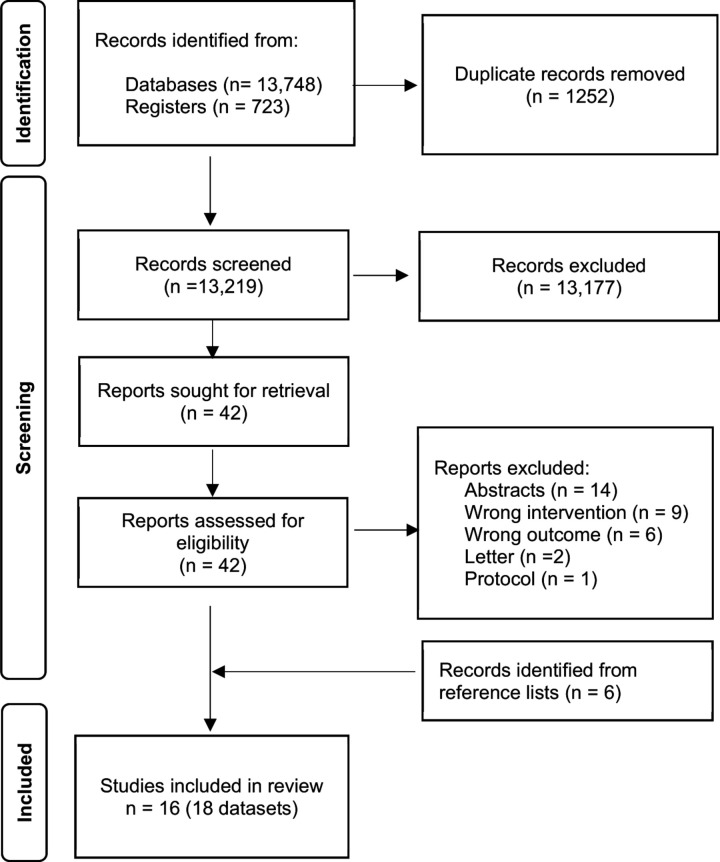
Results: We included 16 studies (10 from LMICs), mostly of low or moderate methodological quality, which described interventions with various components (eg, didactic sessions, simulation, hands-on training, guidelines, audit/feedback). All HICs studies described isolated initiatives to increase AVB use; 9/10 LMIC studies tested initiatives to increase AVB use as part of larger multicomponent interventions to improve maternal/perinatal healthcare. No study assessed women's views or designed interventions using behavioural theories. Overall, interventions were less successful in LMICs than in HICs. Increase in AVB use was not associated with significant increase in adverse maternal or perinatal outcomes. The main barriers to the successful implementation of the initiatives were related to staff and hospital environment.
Conclusions: There is insufficient evidence to indicate which intervention, or combination of interventions, is more effective to safely increase AVB use. More research is needed, especially in LMICs, including studies that design interventions taking into account theories of behaviour change.
Prospero registration number: CRD42020215224.
Keywords: obstetrics; perinatology; public health.
© World Health Organization 2023. Licensee BMJ.
Conflict of interest statement
Competing interests: BN and DG were authors of studies included in the review but were not involved in the analyses of these studies. All authors have no other conflicts of interest to declare.
Figures
References
-
- Rabiu KA, Adewunmi AA, Akinola OI, et al. . Comparison of maternal and neonatal outcomes following caesarean section in second versus first stage of labour in a tertiary hospital in Nigeria. Niger Postgrad Med J 2011;18:165–71. - PubMed
Publication types
MeSH terms
Grants and funding
LinkOut - more resources
Full Text Sources
Research Materials
