. 2023 Apr;20(4):389-403.
doi: 10.1038/s41423-023-00979-1. Epub 2023 Feb 14.

Maternal helminth infection protects offspring from high-fat-diet-induced obesity through altered microbiota and SCFAs

Affiliations

Maternal helminth infection protects offspring from high-fat-diet-induced obesity through altered microbiota and SCFAs

Chien-Wen Su et al. Cell Mol Immunol. 2023 Apr.

Abstract

Helminth-induced Th2 immunity and gut microbiota have been recently shown to be highly effective in modulating metabolic syndromes in animal models. This study aimed to determine whether maternal immunity and microbial factors affect the induction and development of obesity in offspring. Here, Heligomosomoides polygyrus (Hp)-infected or control female C57BL/6J mice mated with normal males and their offspring were fed a high-fat diet (HFD) for 9 weeks after weaning. Our results showed that Hp-induced maternal outcomes during gestation and lactation significantly impacted offspring metabolic phenotypes. This was evidenced by results showing that offspring from helminth-infected mothers on an HFD (Hp-offspring + HFD) gained significantly less body weight than those from uninfected mothers (Cont-offspring + HFD). Hp-offspring + HFD exhibited no Th2 phenotype but displayed a pattern of gut microbiota composition similar to that of Hp-infected mothers. Cross-fostering experiments confirmed that the helminth-induced maternal attenuation of offspring obesity was mediated through both prenatal and postnatal effects. Our results further showed that helminth-infected dams and their offspring had a markedly altered gut microbiome composition, with increased production of short-chain fatty acids (SCFAs). Intriguingly, Hp-infected mothers and Hp-offspring + HFD showed increased SCFA receptor (GPR) expression in adipose and colonic tissues compared to noninfected mothers and Cont-offspring + HFD, respectively. Moreover, SCFA supplementation to the pups of uninfected control mothers during lactation protected against HFD-induced weight gain, which corresponded with changes in gut bacterial colonization. Collectively, our findings provide new insights into the complex interaction of maternal immune status and gut microbiome, Hp infection, and the immunity and gut microbiome in obese-prone offspring in infant life.

Keywords: Helminth; Maternal; Microbiota; Obesity; Offspring; SCFAs; Th2 immunity.


Conflict of interest statement

The authors declare no competing interests.

Figures
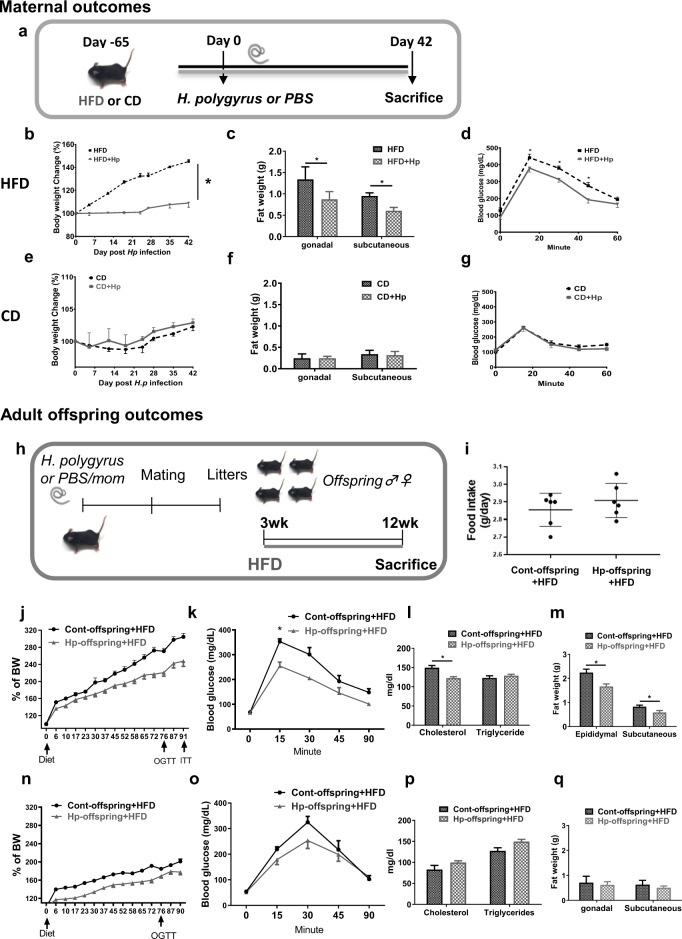
Fig. 1
Fig. 1
H. polygyrus-induced maternal phenotype changes result in attenuated obesity in HFD-fed offspring. a C57BL/6J female mice were fed an HFD or control diet followed by H. polygyrus or sham infection. H. polygyrus-infected female mice apparently gained less body weight (BW), reduced gonadal and subcutaneous (SC) fat mass, and improved glucose tolerance in an HFD model (b–d). In contrast, no significant differences in body weight gain, glucose tolerance, and fat mass were found between noninfected mice and H. polygyrus-infected mice in a CD model (eg). h Offspring from normal control and helminth-infected mother mice were fed an HFD after weaning. The offspring were weaned onto HFD for 9 weeks, and no significant difference in food intake was found (i). The male offspring had significantly less weight gain and fat mass, improved glucose tolerance, and lower TG levels, suggesting that the effect of maternal H. polygyrus-induced immunity on the male offspring metabolic phenotype is sex-dependent in an HFD-induced obesity model (jm). However, in female offspring, there was no significant difference in weight loss, glucose tolerance, levels of triglyceride (TG) and cholesterol, and fat mass between groups following 9 weeks of HFD feeding (nq). Data are shown as the mean ± SEM (n = 5–6) from 1 of 2 experiments performed, showing similar results. *p < 0.05, **p < 0.01; two-tailed Student’s t test
Fig. 2
Fig. 2
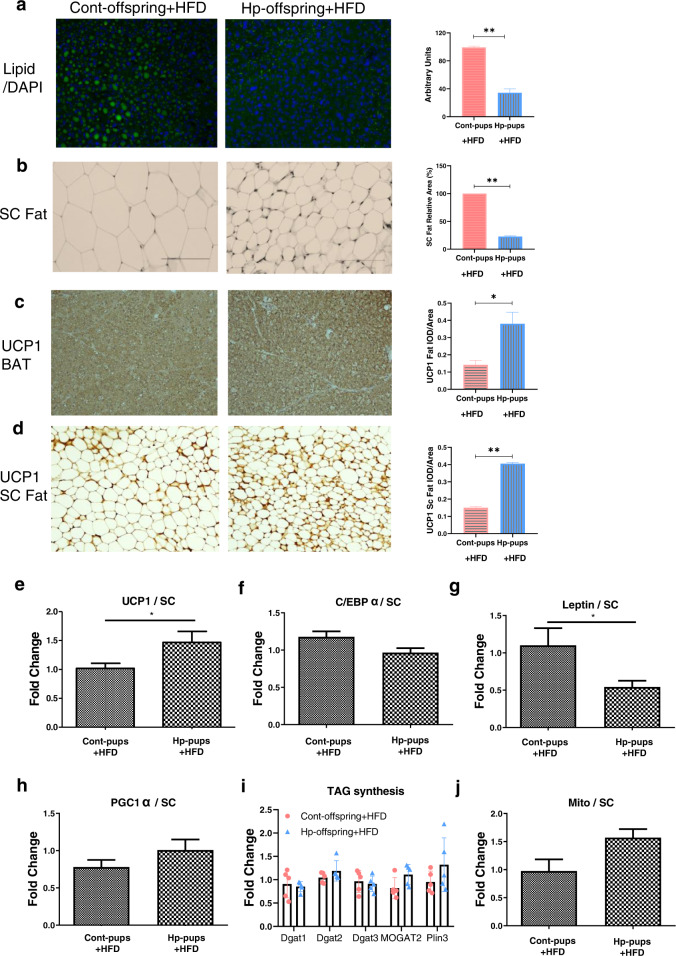
H. polygyrus infection shapes the energy expenditure and storage-related gene expression in adipose tissues of offspring. a Lipid droplets staining in the liver (200×) of offspring from H. polygyrus-infected mother vs. in offspring of control mother. b SC fat HE stains (200×) of offspring from H. polygyrus-infected mother vs. in offspring of control mother. c UCP-1 staining in BAT of offspring from H. polygyrus-infected mother vs. offspring from control mother. d UCP-1 staining in SC fat of offspring from H. polygyrus-infected mother vs. offspring from control mother. e The maternal effects on the UCP-1 gene expressed in SC of offspring from helminth-infected mother and the offspring from control mother both fed in high-fat diets. H. polygyrus infection alters the storage-related gene expression of leptin and C/EBPα in SC of offspring from helminth-infected mother and control mother (f, g) and fatty acid oxidation-related gene PGC1α in the SC (h). The maternal effects on TAG synthesis-related genes, including, Dgat1, Dgat2, Dgat3, Mogat2, and Plin3 (i), and energy expenditure gene Mito in the SC (j). Data are shown as mean ± SEM (n = 5–6) from 1 of 2 experiments performed showing similar results. *p < 0.05, **p < 0.01; 2-tailed Student’s t test. MOGATs mono-acylglycerol acyltransferases, DGAT diacylglycerol acyltransferases
Fig. 3
Fig. 3
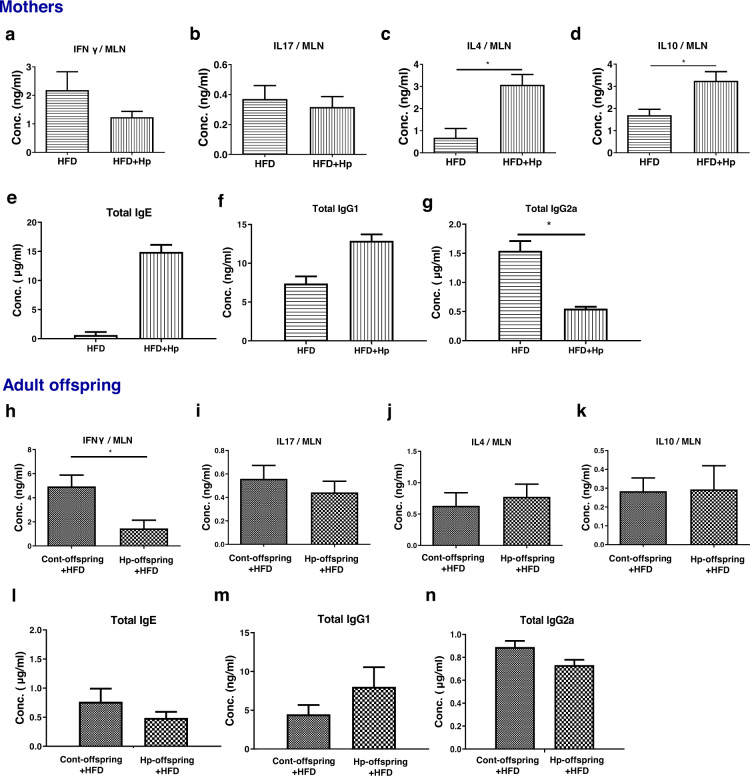
H. polygyrus infection influences the immune response, resulting in an anti-inflammatory phenotype in both the mother and offspring. ad The H. polygyrus-infected mother showed decreases in IFN-γ and IL-17 secretions in the supernatant of cultured MLN cells and had higher production of the cytokines IL-4 and IL-10 in MLN cells. eg IgE, IgG1, and IgG2a in serum of the helminth-infected and control mother. hk IFN-γ, IL-4, IL-10 and IL-17 were checked in MLNs from the offspring of control and helminth-infected mothers. ln. IgE, IgG1, and IgG2a in the serum of offspring from the control mother (left) and the offspring from the helminth-infected mother. Data are shown as the mean ± SEM (n = 5–6) from 1 of 2 experiments performed, showing similar results. * p < 0.05; two-tailed Student’s t test
Fig. 4
Fig. 4
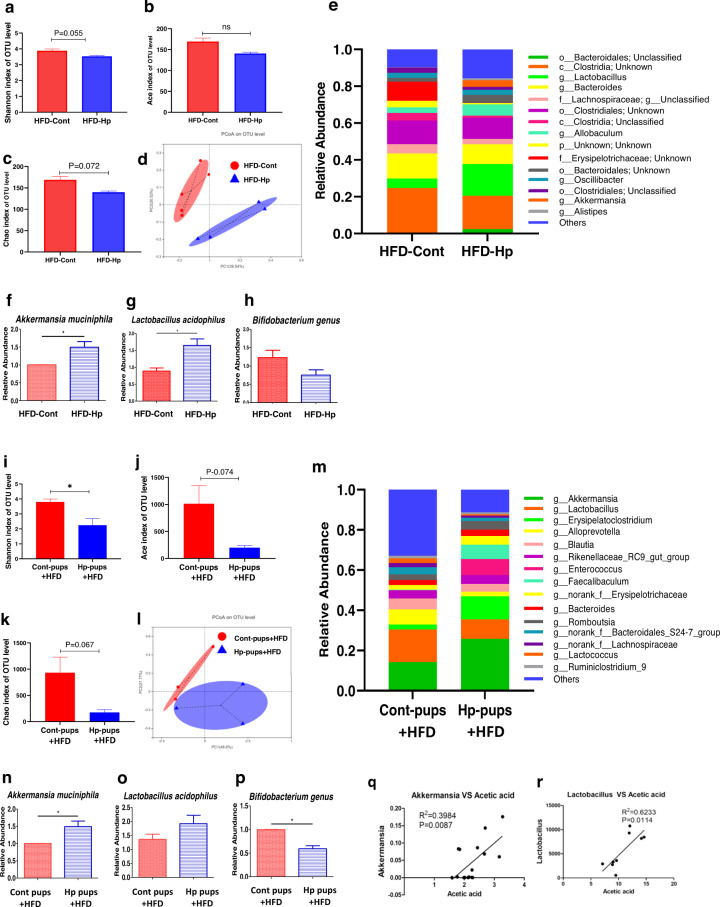
H. polygyrus induced similar changes in the gut microbiota of helminth-infected mothers and their offspring. H. polygyrus infection induces alteration of the intestinal microbiota in HFD-fed mice, and the results are based on 16S RNA gene sequencing data from fecal pellets of control and infected C57BL/6 mice at 2 weeks postinfection. ac Comparison of the Shannon index, Ace index, and Chao index of control and infected C57BL/6 mothers. d Principal coordinate analysis (PCoA) based on Bray‒Curtis distance between control and infected C57BL/6 mothers. e. Bacterial taxonomic profiling at the genus level of intestinal bacteria from different mice. fh The abundance of Akkermansia muciniphila, Lactobacillus acidophilus, and Bifidobacterium genus from fecal pellets of control and infected C57BL/6 mice. ip Maternal helminth infection results in alteration of the intestinal microbiota in offspring, which is based on 16S RNA gene sequencing data from fecal pellets of offspring from control and infected C57BL/6 mice. ik Comparison of the Shannon index, Ace index, and Chao index of offspring from control and infected C57BL/6 mothers. l. Principal coordinate analysis (PCoA) based on Bray‒Curtis distance between offspring. m Bacterial taxonomic profiling at the genus level of intestinal bacteria from different offspring. np The abundance of the A. muciniphila, L. acidophilus, and Bifidobacterium genera from fecal pellets of offspring from control and infected C57BL/6 mice. A. muciniphila and L. acidophilus were significantly correlated with acetic acid production, with R2 = 0.398 and 0.623 (q, r)
Fig. 5
Fig. 5
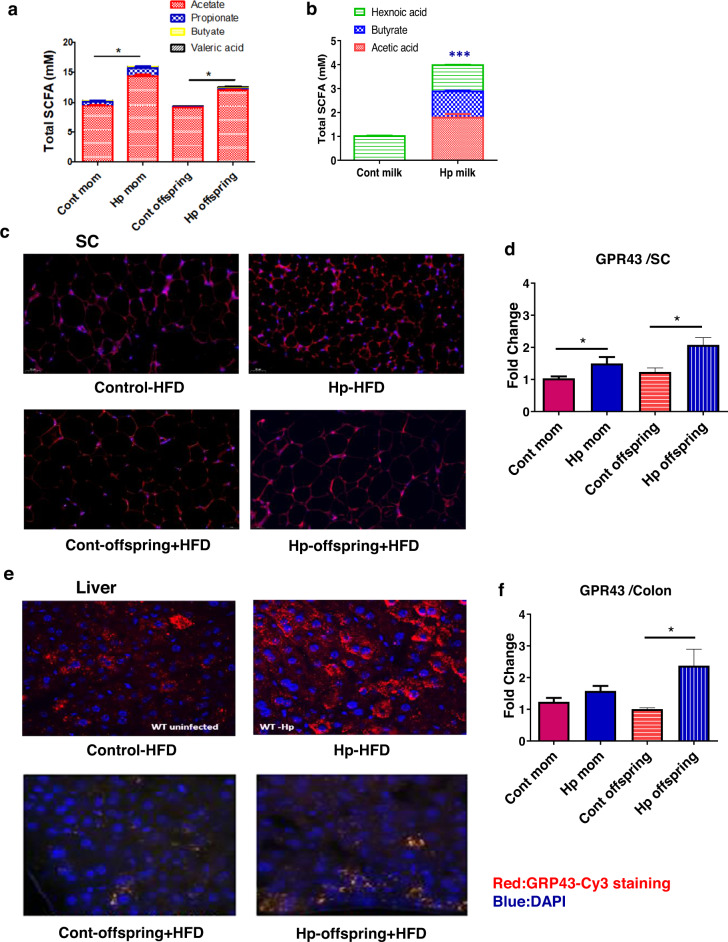
An altered maternal and offspring microbiota is associated with increased production of SCFAs and increased expression of GPR43. The total concentration of stool SCFAs in helminth-infected mothers and their offspring compared to their control counterparts (a). The proportions of acetate, butyrate, and propionate of the SCFAs in the milk of helminth-infected mothers were significantly different from those in the milk of control mothers (b). The expression of GPR43 in the SC fat in their offspring. The immunostaining results and gene expression in the SC fat are presented for GPR43 levels of both helminth-infected mothers and their offspring in the SC fat (c). The RT‒qPCR results showed increased mRNA expression of GPR43 in SC fat in Hp-offspring+HFD (d). The immunostaining results and gene expression in the liver are presented for GPR43 levels of both helminth-infected mothers and their offspring in the liver and GPR43 levels in the offspring. (GRP43-Cy3, DAPI nuclear staining) (e). The RT‒qPCR results showed increased mRNA expression of GPR43 in the colon of Hp-offspring + HFD (f). The concentration (in µM/g) of each SCFA was calculated using linear regression equations from the corresponding standard curves. Data are shown as the mean ± SEM (n = 3–5) from 1 of 2 experiments performed, showing similar results. ***p < 0.001, *p < 0.05; 2-tailed Student’s t test
Fig. 6
Fig. 6
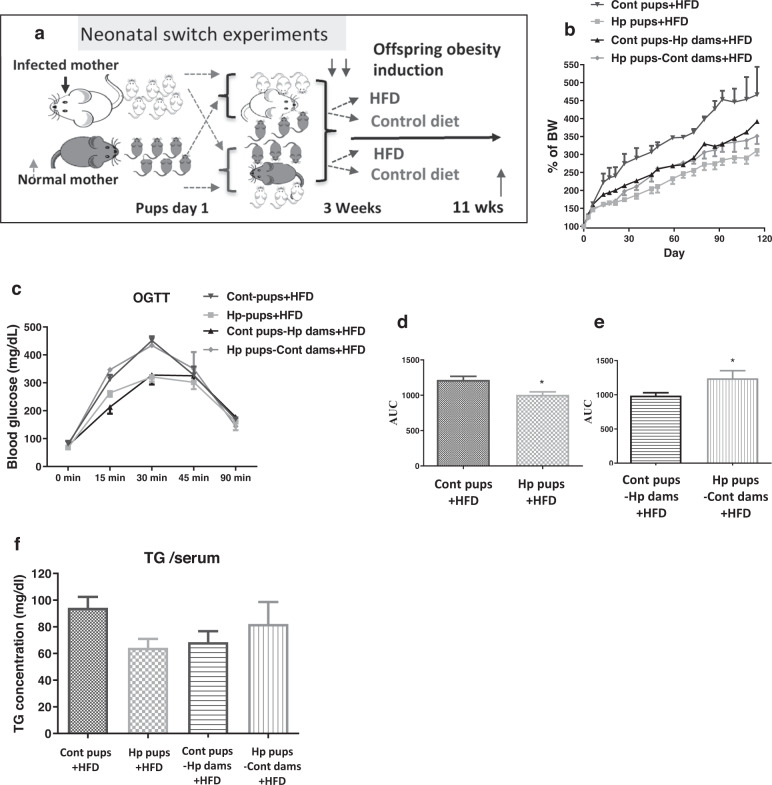
The cross-fostering experiment to identify the pre- and postnatal helminth-maternal effects on offspring obesity. The scheme of the cross-fostering experiment is presented (a). Female mice were infected with/without H. polygyrus before pregnancy and fed CD during gestation and lactation, and the offspring were fostered at birth. HFD-fed offspring born and nursery from helminth-infected mothers (blue color), HFD-fed offspring born and nursery from control mothers (black color), HFD-fed offspring born from control mother and nursery by helminth-infected mothers (green color), and HFD-fed offspring born from helminth-infected mothers and nursery by control mothers (red color) are significantly different in weight gain (b), OGTT (ce) and TG (f), in serum. Data are shown as the mean ± SEM (n = 3–5) from 1 of 2 experiments performed showing similar results. * p < 0.05; two-tailed Student’s t test
Fig. 7
Fig. 7
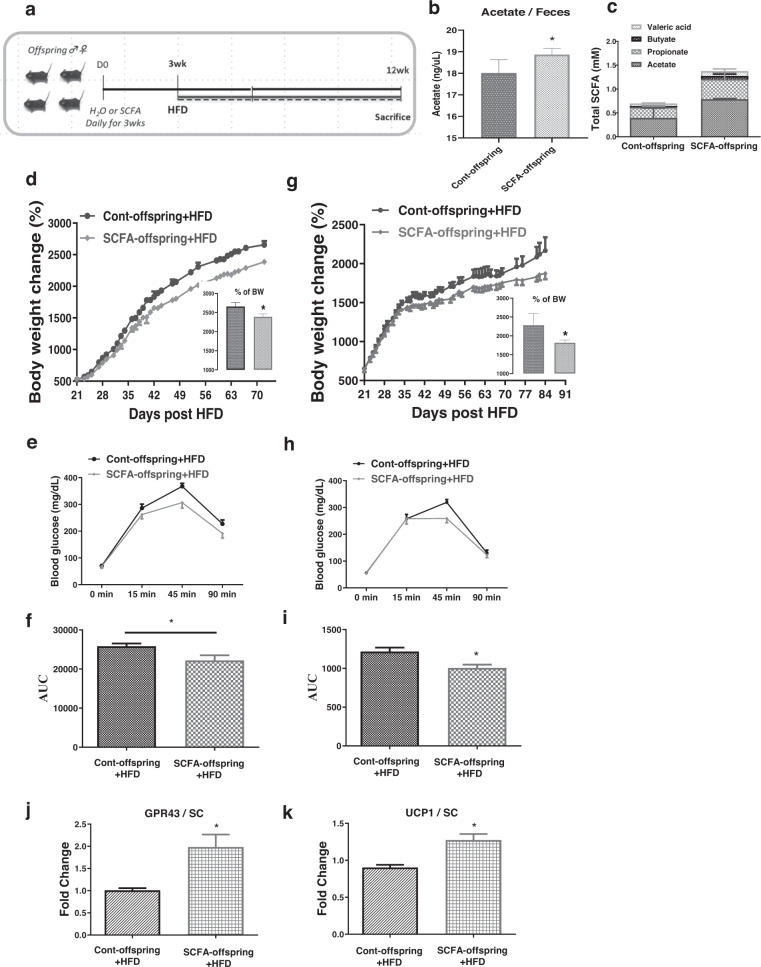
Feeding SCFAs results in attenuated obesity in HFD-fed offspring. The scheme of feeding SCFAs to pups affects bacterial colonization during the starting lifetime (a). The levels of acetate in the feces and serum of both SCFA-fed offspring and offspring from control WT mothers demonstrated effective absorption of SCFAs by the epithelial layer (b, c). The weight gain and blood glucose from SCFA-fed offspring and without SCFA-fed male (df) and female (gi) offspring on the HFD diet. The expression of GPR43 (j) and UCP1 (k) in the adipose tissue of offspring fed SCFAs was significantly increased compared to control offspring not fed SCFAs. Data are shown as the mean ± SEM (n = 3–5) from 1 of 2 experiments performed, showing similar results. * p < 0.05; two-tailed Student’s t test
Fig. 8
Fig. 8
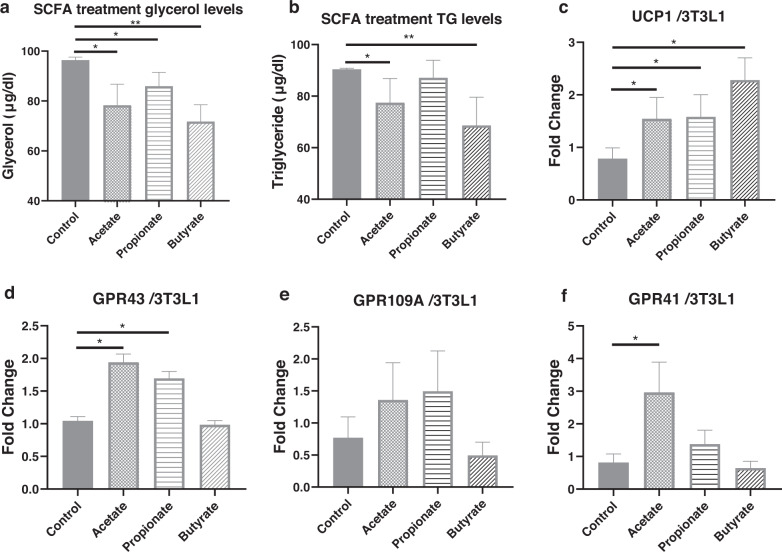
Analysis of the effects of SCFAs on 3T3L1 adipose cell lines. SCFA treatment resulted in decreased cell differentiation and lipid accumulation in 3T3L1 adipose cell lines. The results showed that adipocytes treated with SCFAs decreased the amount of glycerol and triglycerides compared to untreated control cells (a, b). RT‒PCR analysis of UCP1 expression revealed that SCFA treatment resulted in the upregulation of UCP1 expression (c). The expression levels of GPR genes (GPR43, GPR109a, and GPR41) in 3T3L1 cells treated with SCFAs are presented in (df). Data are shown as the mean ± SEM (n = 5–6) from 1 of 2 experiments performed, showing similar results. *p < 0.05, **p < 0.01; two-tailed Student’s t test or ANOVA

References

    1. Vahratian A. Prevalence of overweight and obesity among women of childbearing age: results from the 2002 National Survey of Family Growth. Matern Child Health J. 2009;13:268–73. doi: 10.1007/s10995-008-0340-6. - DOI - PMC - PubMed
    1. Hillier TA, Pedula KL, Schmidt MM, Mullen JA, Charles MA, Pettitt DJ. Childhood obesity and metabolic imprinting: the ongoing effects of maternal hyperglycemia. Diabetes Care. 2007;30:2287–92. doi: 10.2337/dc06-2361. - DOI - PubMed
    1. Winer S, Chan Y, Paltser G, Truong D, Tsui H, Bahrami J, et al. Normalization of obesity-associated insulin resistance through immunotherapy. Nat Med. 2009;15:921–9. doi: 10.1038/nm.2001. - DOI - PMC - PubMed
    1. Zaccone P, Fehérvári Z, Jones FM, Sidobre S, Kronenberg M, Dunne DW, et al. Schistosoma mansoni antigens modulate the activity of the innate immune response and prevent onset of type 1 diabetes. Eur J Immunol. 2003;33:1439–49. doi: 10.1002/eji.200323910. - DOI - PubMed
    1. Weng M, Huntley D, Huang I-F, Foye-Jackson O, Wang L, Sarkissian A, et al. Alternatively activated macrophages in intestinal helminth infection: effects on concurrent bacterial colitis. J Immunol. 2007;179:4721–31. doi: 10.4049/jimmunol.179.7.4721. - DOI - PMC - PubMed

Publication types

Substances