This is a preprint.
Feasibility of a virtual reality intervention targeting distress and anxiety symptoms in patients with primary brain tumors: Interim analysis of a phase 2 clinical trial
- PMID: 36789426
- PMCID: PMC9928043
- DOI: 10.21203/rs.3.rs-2522094/v1
Feasibility of a virtual reality intervention targeting distress and anxiety symptoms in patients with primary brain tumors: Interim analysis of a phase 2 clinical trial
Update in
-
Feasibility of a virtual reality intervention targeting distress and anxiety symptoms in patients with primary brain tumors: Interim analysis of a phase 2 clinical trial.J Neurooncol. 2023 Mar;162(1):137-145. doi: 10.1007/s11060-023-04271-0. Epub 2023 Mar 8. J Neurooncol. 2023. PMID: 36884201 Free PMC article. Clinical Trial.
Abstract
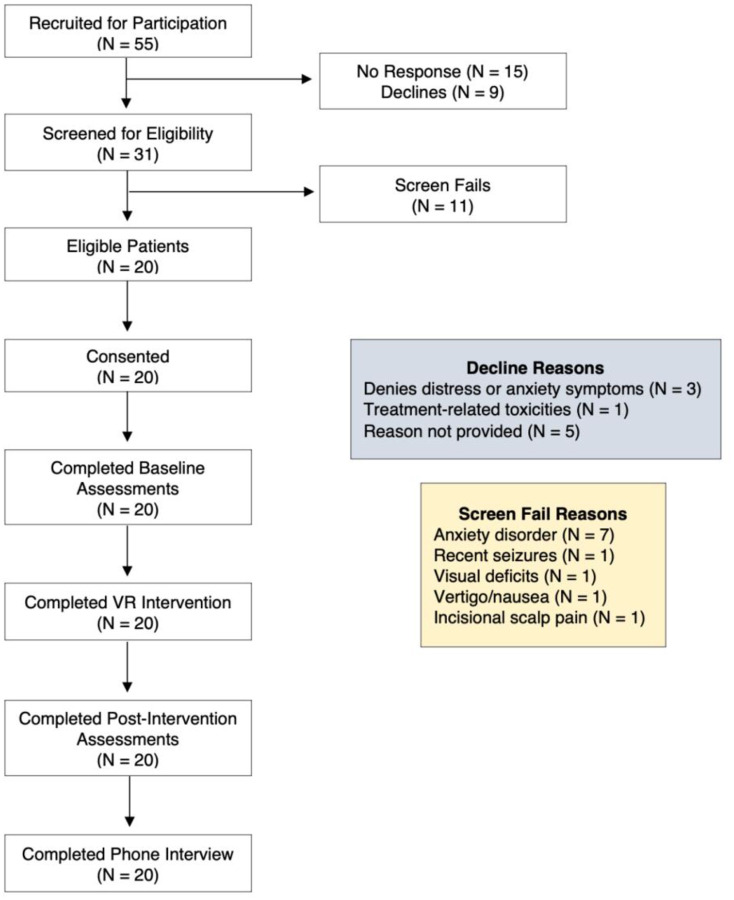
Purpose: Cancer patients experience distress and anxiety when undergoing imaging studies to monitor disease status, yet these symptoms are not always appropriately identified or well-managed. This interim analysis of a phase 2 clinical trial explored feasibility and acceptability of a virtual reality relaxation (VR) intervention for primary brain tumor (PBT) patients at the time of clinical evaluation. Methods: English speaking, adult PBT patients with previous reports of distress and upcoming neuroimaging were recruited between March of 2021 and March 2022. A brief VR session was done within 2 weeks prior to neuroimaging with patient-reported outcomes (PROs) collected before and immediately post-intervention. Self-directed VR use over the next 1 month was encouraged with additional PROs assessments at 1 and 4 weeks. Feasibility metrics included enrollment, eligibility, attrition, and device-related adverse effects with satisfaction measured with qualitative phone interviews. Results: 55 patients were approached via email, 40 (73%) responded and 20 (50%) enrolled (9 declines, 11 screen fails). 65% of participants were ≤ 50 years, 50% were male, 90% were White/non-Hispanic, 85% had good KPS (≥ 90), and most were on active treatment. All patients completed the VR intervention, PROs questionnaires, weekly check-ins, and qualitative interview. Most (90%) reported frequent VR use and high satisfaction and only 7 mild AEs were recorded (headache, dizziness, nausea, neck pain). Conclusion: This interim analysis confirmed feasibility and acceptability of a novel VR intervention to target psychological symptoms for PBT patients. Trial enrollment will continue to assess for intervention efficacy. Trial Registration: NCT04301089 registered on 3/9/2020.
Conflict of interest statement
Figures
References
-
- National Comprehensive Cancer Network (NCCN). Distress management. Practice Guidelines in Oncology. Fort Washington, PA: NCCN, 2002.
Publication types
Associated data
LinkOut - more resources
Full Text Sources
Medical
Miscellaneous