Health and nutrition claims for infant formula: international cross sectional survey
- PMID: 36792145
- PMCID: PMC9930154
- DOI: 10.1136/bmj-2022-071075
Health and nutrition claims for infant formula: international cross sectional survey
Abstract
Objectives: To review available health and nutrition claims for infant formula products in multiple countries and to evaluate the validity of the evidence used for substantiation of claims.
Design: International cross sectional survey.
Setting: Public facing and healthcare professional facing company owned or company managed formula industry websites providing information about products marketed for healthy infants delivered at full term in 15 countries: Australia, Canada, Germany, India, Italy, Japan, Nigeria, Norway, Pakistan, Russia, Saudi Arabia, South Africa, Spain, the United Kingdom, and the United States in 2020-22.
Main outcome measures: Number and type of claims made for each product and ingredient. References cited were reviewed and risk of bias was assessed for registered clinical trials using the Cochrane risk of bias tool, and for systematic reviews using the Risk Of Bias in Systematic reviews tool.
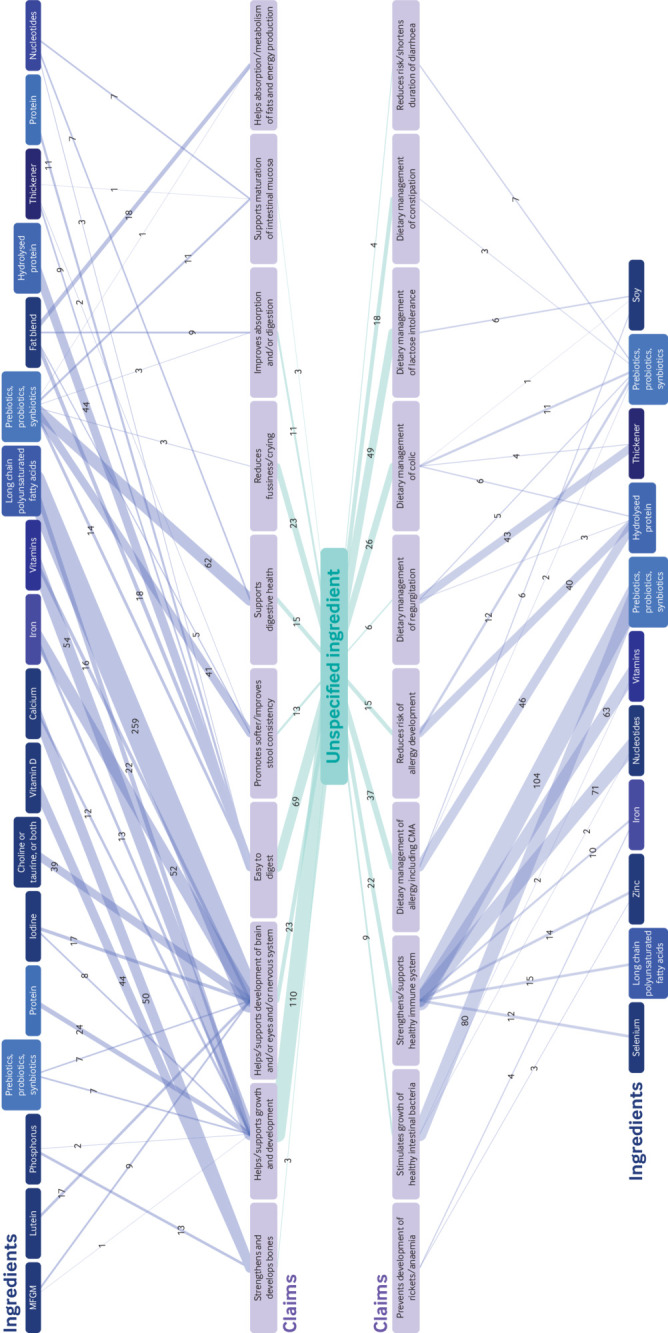
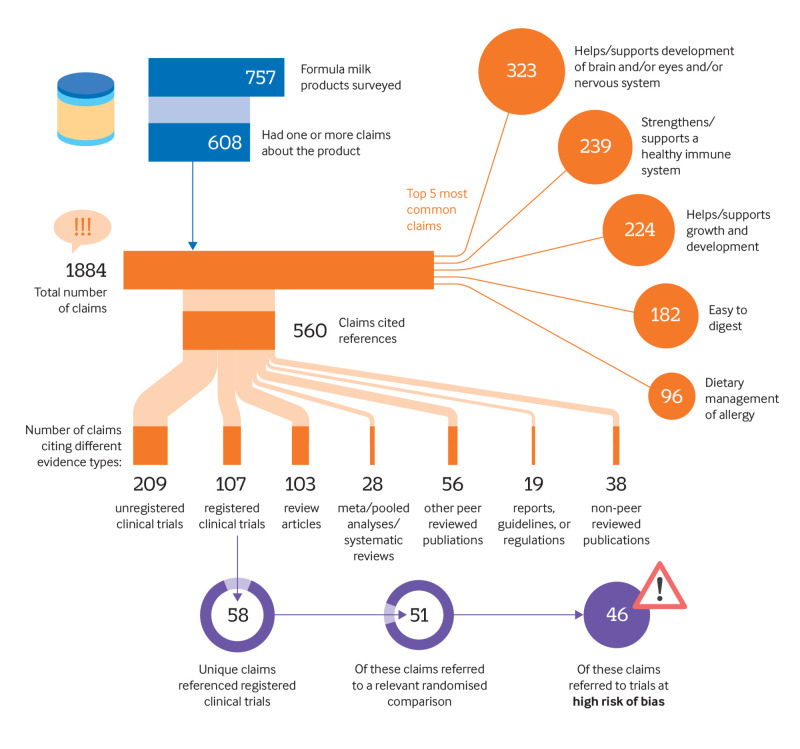
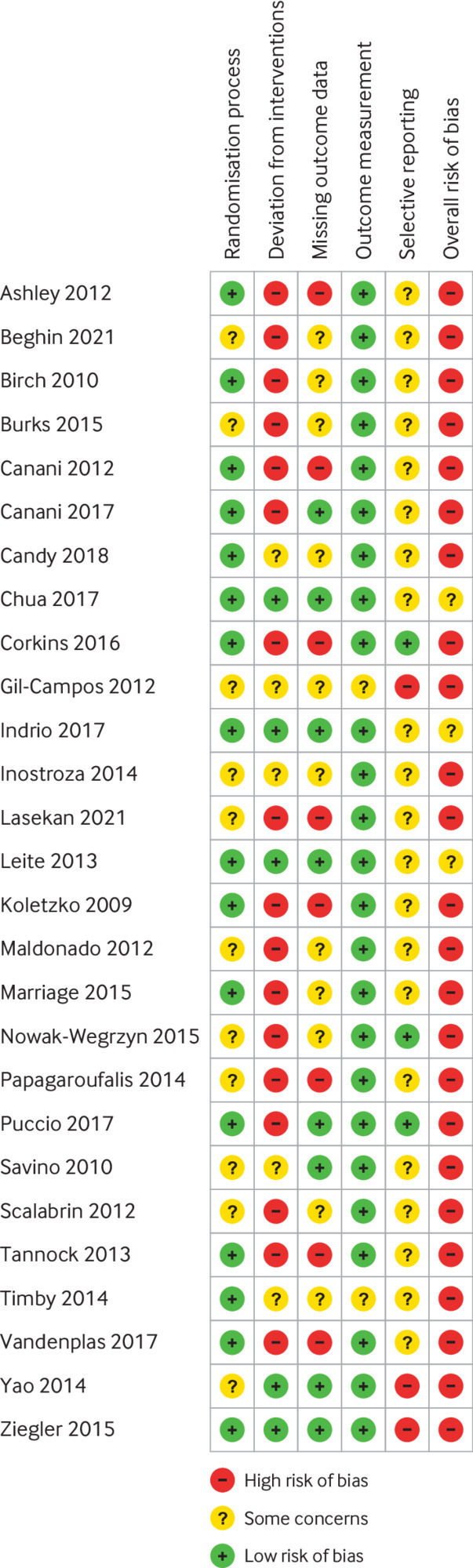
Results: 757 infant formula products were identified, each with a median of two claims (range from 1 (Australia) to 4 (US)), and 31 types of claims across all products. Of 608 products with ≥1 claims, the most common claim types were "helps/supports development of brain and/or eyes and/or nervous system" (323 (53%) products, 13 ingredients), "strengthens/supports a healthy immune system" (239 (39%) products, 12 ingredients), and "helps/supports growth and development" (224 (37%) products, 20 ingredients). 41 groups of ingredients were associated with ≥1claims, but many claims were made without reference to a specific ingredient (307 (50%) products). The most common groups of ingredients cited in claims were long chain polyunsaturated fatty acids (278 (46%) products, 9 different claims); prebiotics, probiotics, or synbiotics (225 (37%) products, 19 claims); and hydrolysed protein (120 (20%) products, 9 claims). 161/608 (26%) products with ≥1 claims provided a scientific reference to support the claim-266 unique references were cited for 24 different claim types for 161 products. The reference types most frequently cited were clinical trials (50%, 134/266) and reviews (20%, 52/266). 28% (38/134) of referenced clinical trials were registered, 14% (19/134) prospectively. 58 claims referred to 32 registered clinical trials, of which 51 claims (27 trials) related to a randomised comparison. 46 of 51 claims (90%) referenced registered clinical trial outcomes at high risk of bias, and all cited systematic reviews and pooled analyses, carried a high risk of bias.
Conclusions: Most infant formula products had at least one health and nutrition claim. Multiple ingredients were claimed to achieve similar health or nutrition effects, multiple claims were made for the same ingredient type, most products did not provide scientific references to support claims, and referenced claims were not supported by robust clinical trial evidence.
© Author(s) (or their employer(s)) 2019. Re-use permitted under CC BY-NC. No commercial re-use. See rights and permissions. Published by BMJ.
Conflict of interest statement
Competing interests: All authors have completed the ICMJE uniform disclosure form at www.icmje.org/disclosure-of-interest/ and declare: no support from any organisation for the submitted work. Outside of the submitted work: JG and LPS benefit from unrestricted research grants from Danone Nutricia Research to Leipzig University for research into human milk composition within the Ulm Birth Cohort Studies. This work is not related to the present publication. RJB declares consultancy payment from Cochrane, Wiley and the British Society for Allergy and Clinical Immunology for editorial work, and payment for expert witness work in cases involving food anaphylaxis and a disputed infant formula health claim. BEY owns Feed Baby Love, which provides educational resources to parents and providers regarding infant feeding.
Figures
Comment in
-
Poorly substantiated health claims on infant formula.BMJ. 2023 Feb 15;380:310. doi: 10.1136/bmj.p310. BMJ. 2023. PMID: 36792116 No abstract available.
References
MeSH terms
Substances
LinkOut - more resources
Full Text Sources
Medical