


Psychological, behavioural and biological factors associated with gastrointestinal symptoms in autistic adults and adults with autistic traits
- PMID: 36794469
- PMCID: PMC10504819
- DOI: 10.1177/13623613231155324
Psychological, behavioural and biological factors associated with gastrointestinal symptoms in autistic adults and adults with autistic traits
Abstract
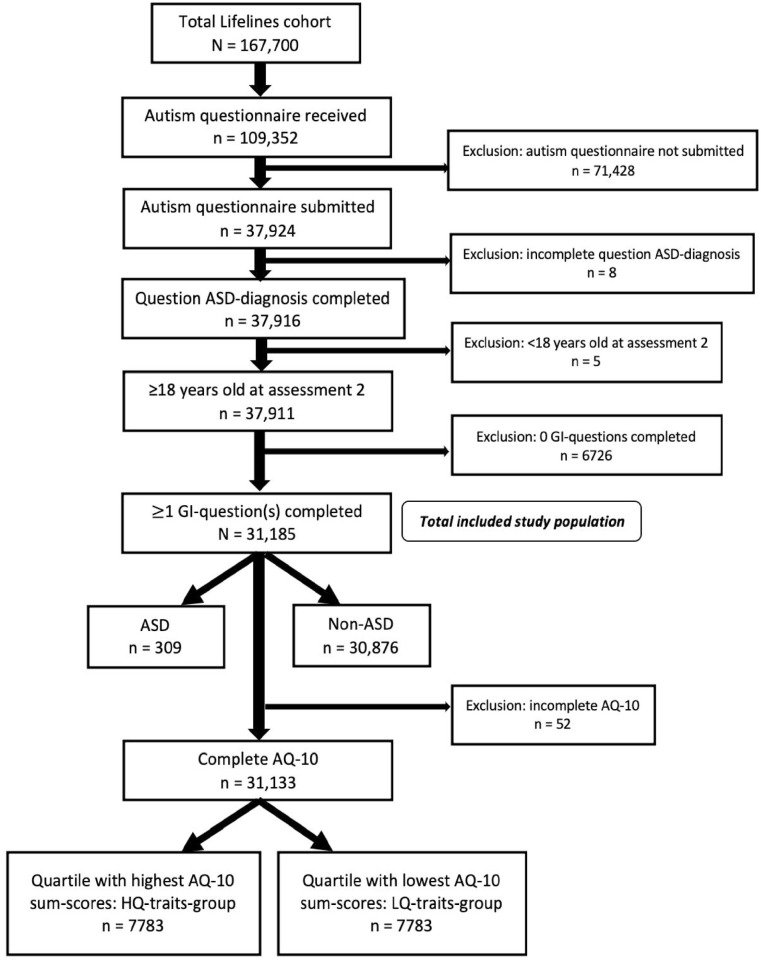
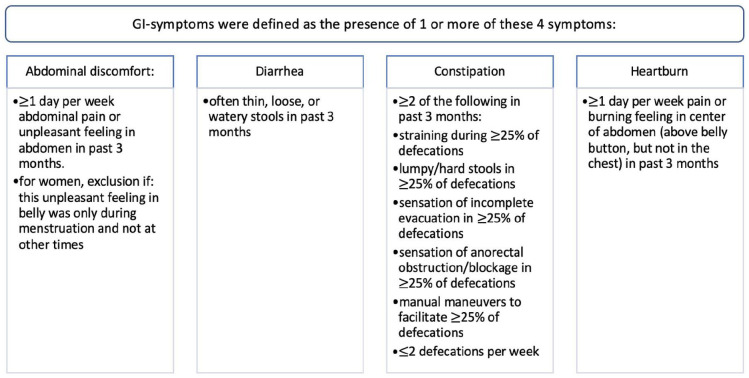
Little is known about factors related to the increased risk for gastrointestinal symptoms in adults with an autism spectrum disorder (ASD), while the negative impact of gastrointestinal symptoms is evident. Especially, the relationship between gastrointestinal symptoms and psychological, behavioural, and biological risk factors in adults with ASD (traits) is unclear. Autistic peer support workers and autism-advocates also emphasised the importance of identifying risk factors, because of the high prevalence of gastrointestinal problems in people with ASD. Therefore, our study investigated which psychological, behavioural, and biological factors are associated with gastrointestinal symptoms in adults with ASD or with autistic traits. We analysed data from 31,185 adults in the Dutch Lifelines Study. Questionnaires were used to evaluate the presence of an autism spectrum disorder diagnosis, autistic traits, gastrointestinal symptoms, psychological and behavioural factors. Biological factors were examined with body measurements. We found that not only adults with ASD but also adults with higher levels of autistic traits were at increased risk for gastrointestinal symptoms. Adults with ASD who experienced psychological problems (psychiatric problems, worse perceived health, chronic stress) had a higher risk for gastrointestinal symptoms than adults with ASD without these psychological problems. Moreover, adults with higher levels of autistic traits were less physically active, which was also associated with gastrointestinal symptoms. In conclusion, our study highlights the relevance of identifying psychological problems and evaluating physical activity when trying to help adults with ASD or autistic traits and gastrointestinal symptoms. This suggests that healthcare professionals should be more aware of behavioural and psychological risk factors when evaluating gastrointestinal symptoms in adults with ASD (traits).
Keywords: adults; autism spectrum disorders; autistic traits; gastrointestinal; psychosomatic.
Conflict of interest statement
The author(s) declared no potential conflicts of interest with respect to the research, authorship and/or publication of this article.
Figures
References
-
- Allison C., Auyeung B., Baron-Cohen S. (2012). Toward brief ‘Red Flags’ for autism screening: The Short Autism Spectrum Quotient and the Short Quantitative Checklist for autism in toddlers in 1,000 cases and 3,000 controls [corrected]. Journal of the American Academy of Child and Adolescent Psychiatry, 51(2), 202–212.e7. 10.1016/j.jaac.2011.11.003 - DOI - PubMed
-
- Ashwood K. L., Gillan N., Horder J., Hayward H., Woodhouse E., McEwen F. S., Findon J., Eklund H., Spain D., Wilson C. E., Cadman T., Young S., Stoencheva V., Murphy C. M., Robertson D., Charman T., Bolton P., Glaser K., Asherson P., Murphy D. G. (2016). Predicting the diagnosis of autism in adults using the Autism-Spectrum Quotient (AQ) Questionnaire. Psychological Medicine, 46(12), 2595–2604. 10.1017/S0033291716001082 - DOI - PMC - PubMed
-
- Baio J., Wiggins L., Christensen D. L., Maenner M. J., Daniels J., Warren Z., Kurzius-Spencer M., Zahorodny W., Robinson Rosenberg C., White T., Durkin M. S., Imm P., Nikolaou L., Yeargin-Allsopp M., Lee L. C., Harrington R., Lopez M., Fitzgerald R. T., Hewitt A., . . .Dowling N. F. (2018). Prevalence of autism spectrum disorder among children aged 8 years - autism and developmental disabilities monitoring network, 11 sites, United States, 2014. Morbidity and Mortality Weekly Report, 67(6), 1–23. 10.15585/mmwr.ss6706a1 - DOI - PMC - PubMed
Publication types
MeSH terms
Substances
LinkOut - more resources
Full Text Sources
Medical
