


Hollow-fibre system model of tuberculosis reproducibility and performance specifications for best practice in drug and combination therapy development
- PMID: 36794692
- PMCID: PMC10068422
- DOI: 10.1093/jac/dkad029
Hollow-fibre system model of tuberculosis reproducibility and performance specifications for best practice in drug and combination therapy development
Abstract
Background: The hollow-fibre system model of tuberculosis (HFS-TB) has been endorsed by regulators; however, application of HFS-TB requires a thorough understanding of intra- and inter-team variability, statistical power and quality controls.
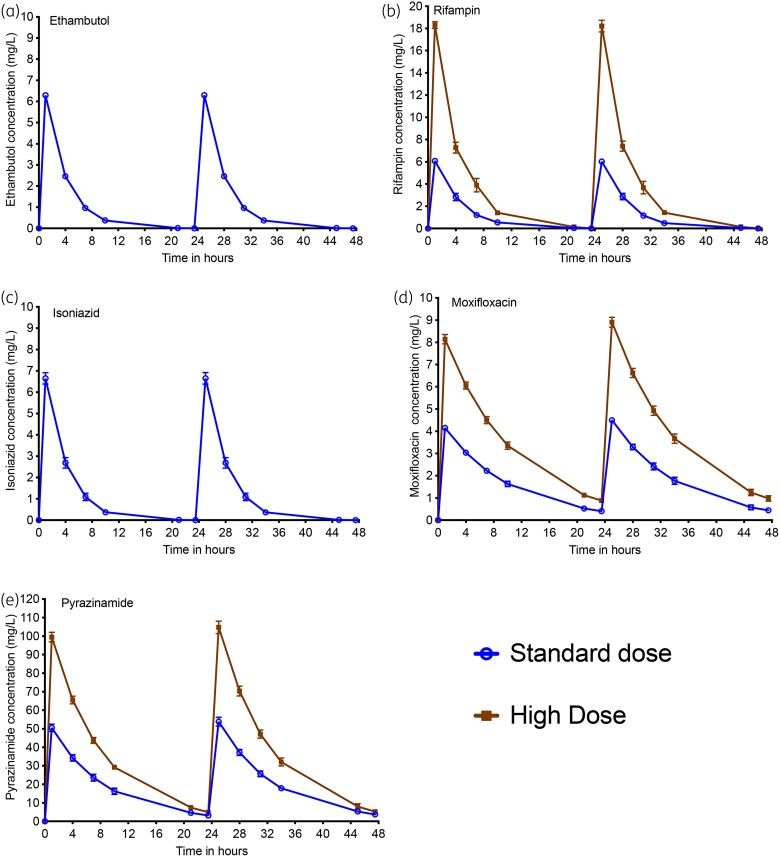
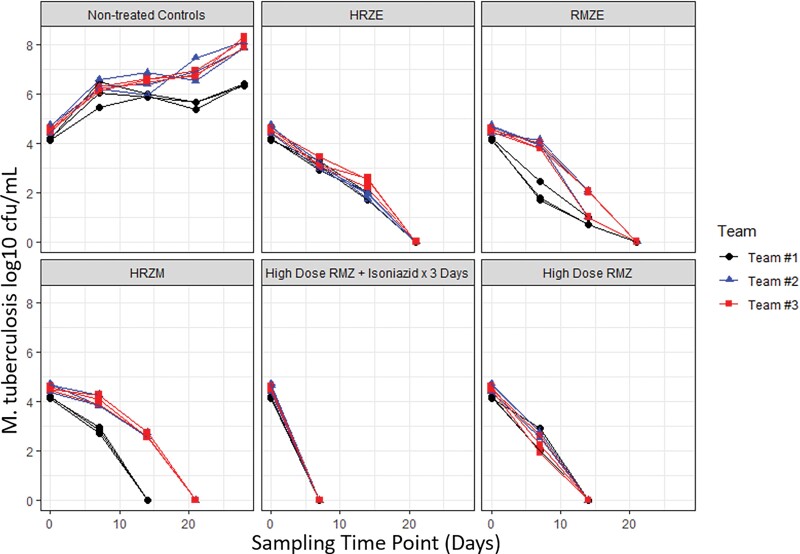
Methods: Three teams evaluated regimens matching those in the Rapid Evaluation of Moxifloxacin in Tuberculosis (REMoxTB) study, plus two high-dose rifampicin/pyrazinamide/moxifloxacin regimens, administered daily for up to 28 or 56 days against Mycobacterium tuberculosis (Mtb) under log-phase growth, intracellular growth or semidormant growth under acidic conditions. Target inoculum and pharmacokinetic parameters were pre-specified, and the accuracy and bias at achieving these calculated using percent coefficient of variation (%CV) at each sampling point and two-way analysis of variance (ANOVA).
Results: A total of 10 530 individual drug concentrations, and 1026 individual cfu counts were measured. The accuracy in achieving intended inoculum was >98%, and >88% for pharmacokinetic exposures. The 95% CI for the bias crossed zero in all cases. ANOVA revealed that the team effect accounted for <1% of variation in log10 cfu/mL at each timepoint. The %CV in kill slopes for each regimen and different Mtb metabolic populations was 5.10% (95% CI: 3.36%-6.85%). All REMoxTB arms exhibited nearly identical kill slopes whereas high dose regimens were 33% faster. Sample size analysis revealed that at least three replicate HFS-TB units are needed to identify >20% difference in slope, with a power of >99%.
Conclusions: HFS-TB is a highly tractable tool for choosing combination regimens with little variability between teams, and between replicates.
© The Author(s) 2023. Published by Oxford University Press on behalf of British Society for Antimicrobial Chemotherapy.
Figures



References
Publication types
MeSH terms
Substances
LinkOut - more resources
Full Text Sources
Medical
Molecular Biology Databases
