


Protease allergens as initiators-regulators of allergic inflammation
- PMID: 36794967
- PMCID: PMC10159943
- DOI: 10.1111/all.15678
Protease allergens as initiators-regulators of allergic inflammation
Abstract
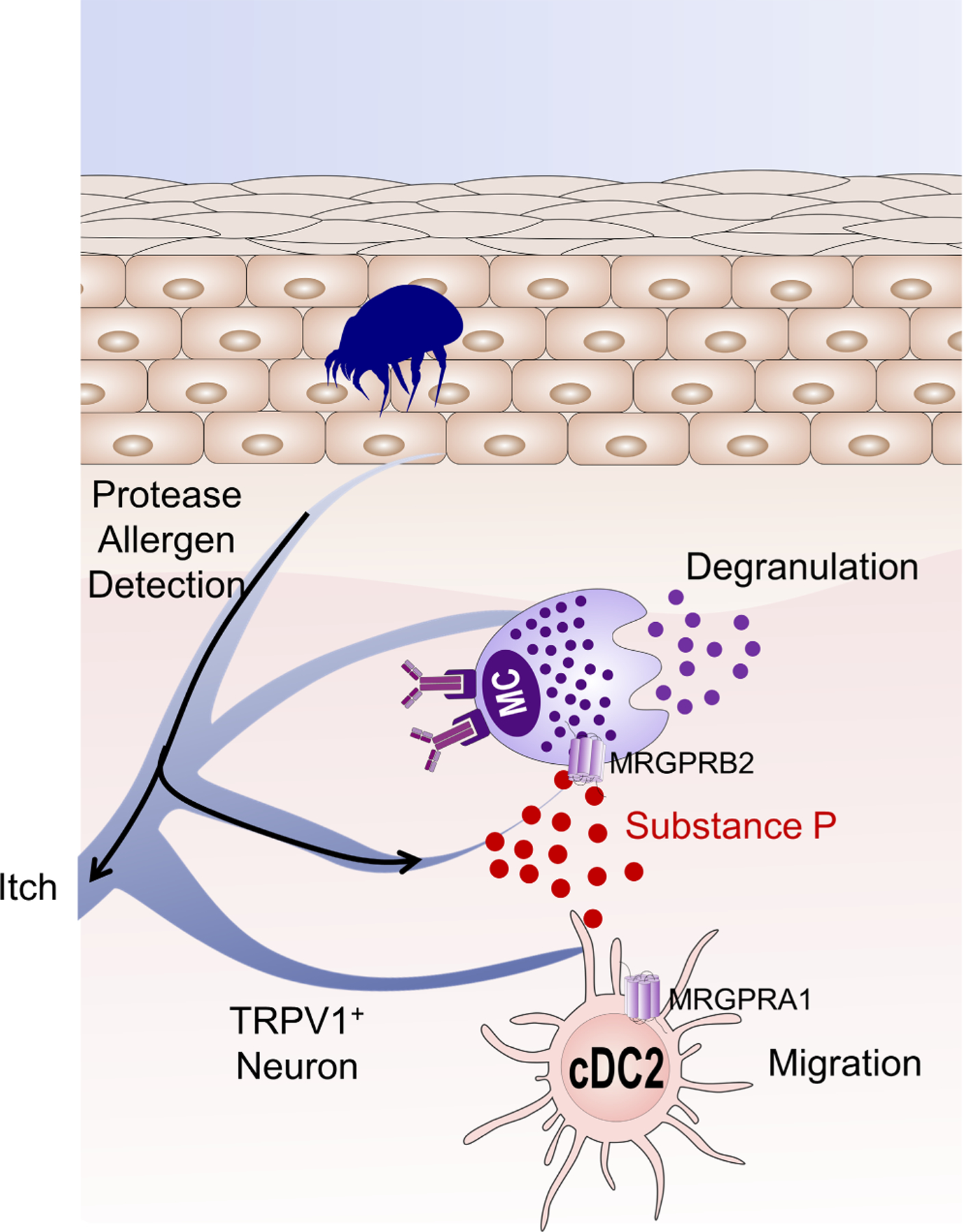
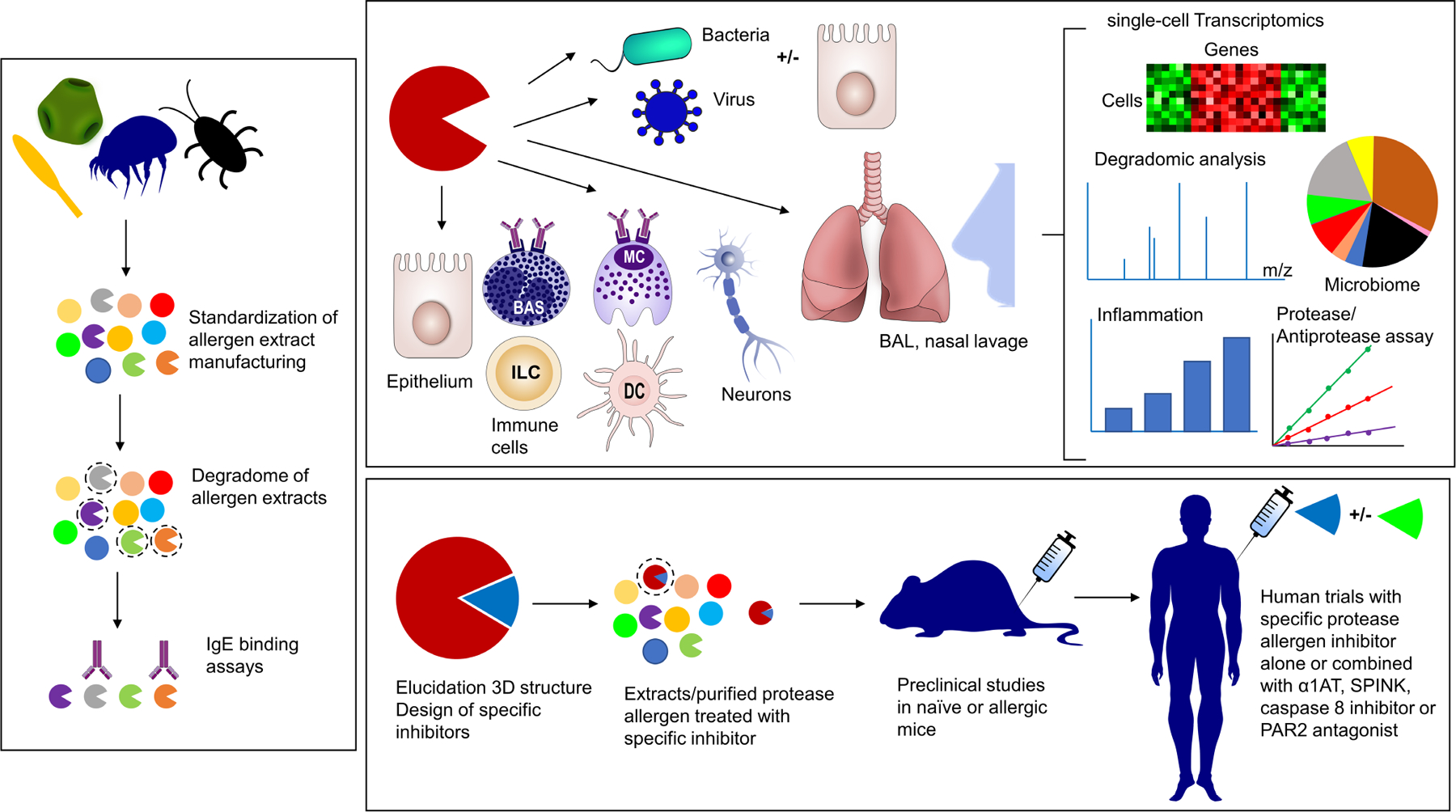
Tremendous progress in the last few years has been made to explain how seemingly harmless environmental proteins from different origins can induce potent Th2-biased inflammatory responses. Convergent findings have shown the key roles of allergens displaying proteolytic activity in the initiation and progression of the allergic response. Through their propensity to activate IgE-independent inflammatory pathways, certain allergenic proteases are now considered as initiators for sensitization to themselves and to non-protease allergens. The protease allergens degrade junctional proteins of keratinocytes or airway epithelium to facilitate allergen delivery across the epithelial barrier and their subsequent uptake by antigen-presenting cells. Epithelial injuries mediated by these proteases together with their sensing by protease-activated receptors (PARs) elicit potent inflammatory responses resulting in the release of pro-Th2 cytokines (IL-6, IL-25, IL-1β, TSLP) and danger-associated molecular patterns (DAMPs; IL-33, ATP, uric acid). Recently, protease allergens were shown to cleave the protease sensor domain of IL-33 to produce a super-active form of the alarmin. At the same time, proteolytic cleavage of fibrinogen can trigger TLR4 signaling, and cleavage of various cell surface receptors further shape the Th2 polarization. Remarkably, the sensing of protease allergens by nociceptive neurons can represent a primary step in the development of the allergic response. The goal of this review is to highlight the multiple innate immune mechanisms triggered by protease allergens that converge to initiate the allergic response.
Keywords: IL-33; protease allergen; epithelial cell; protease-activated receptor; sensory neuron.
© 2023 European Academy of Allergy and Clinical Immunology and John Wiley & Sons Ltd.
Conflict of interest statement
C.L.S is a paid consultant (expert witness) for Bayer and Merck. C.R. and J.Z. are inventors on patents granted in multiple territories concerning allergens, protease inhibitor design and composition of matter, and medical uses thereof. St George’s, University of London is beneficial owner of this patent estate. C.R. is co-founder and holds equity in Aldezon Ltd. M.E.R. is a consultant for Pulm One, Spoon Guru, ClostraBio, Serpin Pharm, Allakos, Celldex, Nextstone One, Bristol Myers Squibb, Astra Zeneca, Ellodi Pharma, GlaxoSmith Kline, Regeneron/Sanofi, Revolo Biotherapeutics, and Guidepoint and has an equity interest in the first seven listed, and royalties from reslizumab (Teva Pharmaceuticals), PEESSv2 (Mapi Research Trust) and UpToDate. M.E.R. is an inventor of patents owned by Cincinnati Children’s Hospital. The remaining authors declare that they have no conflicts of interest.
Figures


References
Publication types
MeSH terms
Substances
Grants and funding
LinkOut - more resources
Full Text Sources
Medical
Miscellaneous
