


Neurocognitive Model of Schema-Congruent and -Incongruent Learning in Clinical Disorders: Application to Social Anxiety and Beyond
- PMID: 36795637
- PMCID: PMC10623626
- DOI: 10.1177/17456916221141351
Neurocognitive Model of Schema-Congruent and -Incongruent Learning in Clinical Disorders: Application to Social Anxiety and Beyond
Abstract
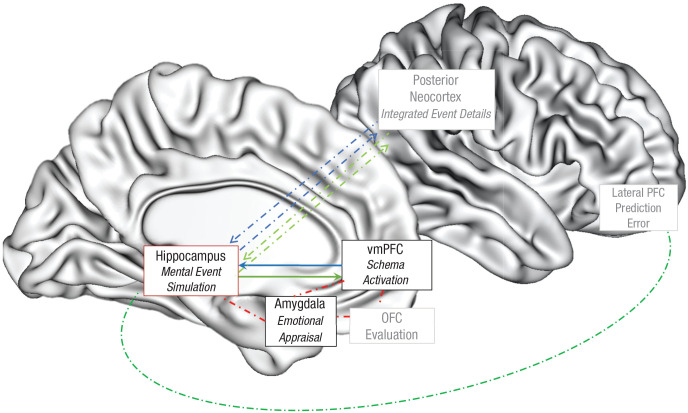
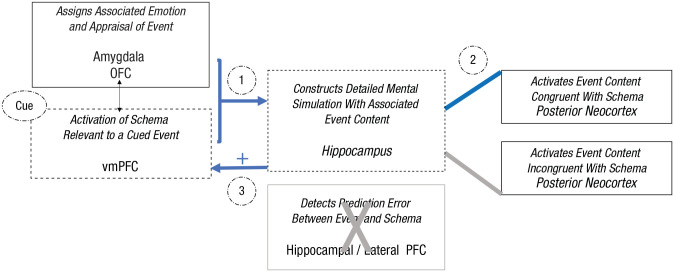
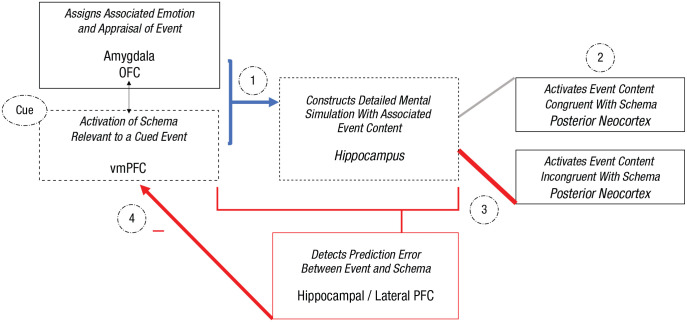
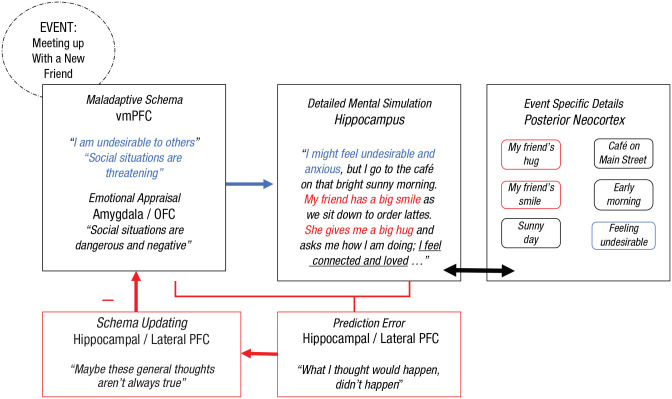
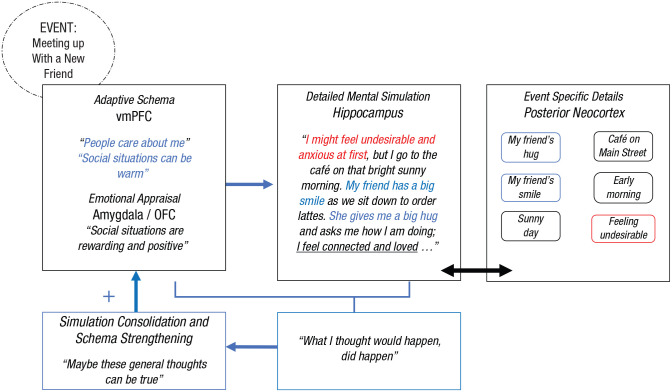
Negative schemas lie at the core of many common and debilitating mental disorders. Thus, intervention scientists and clinicians have long recognized the importance of designing effective interventions that target schema change. Here, we suggest that the optimal development and administration of such interventions can benefit from a framework outlining how schema change occurs in the brain. Guided by basic neuroscientific findings, we provide a memory-based neurocognitive framework for conceptualizing how schemas emerge and change over time and how they can be modified during psychological treatment of clinical disorders. We highlight the critical roles of the hippocampus, ventromedial prefrontal cortex, amygdala, and posterior neocortex in directing schema-congruent and -incongruent learning (SCIL) in the interactive neural network that comprises the autobiographical memory system. We then use this framework, which we call the SCIL model, to derive new insights about the optimal design features of clinical interventions that aim to strengthen or weaken schema-based knowledge through the core processes of episodic mental simulation and prediction error. Finally, we examine clinical applications of the SCIL model to schema-change interventions in psychotherapy and provide cognitive-behavior therapy for social anxiety disorder as an illustrative example.
Keywords: anxiety/stress disorders; memory; mental simulation; neuroscience; social cognition; treatment.
Conflict of interest statement
The author(s) declared that there were no conflicts of interest with respect to the authorship or the publication of this article.
Figures
References
-
- Addis D. R. (2020). Mental time travel? A neurocognitive model of event simulation. Review of Philosophy and Psychology, 11(2), 233–259. 10.1007/s13164-020-00470-0 - DOI
-
- American Psychiatric Association. (2013). Diagnostic and statistical manual of mental disorders (5th ed.). 10.1176/appi.books.9780890425596 - DOI
Publication types
MeSH terms
LinkOut - more resources
Full Text Sources
Medical
Miscellaneous
