


Sex differences in diabetic foot ulcer severity and outcome in Belgium
- PMID: 36795662
- PMCID: PMC9934352
- DOI: 10.1371/journal.pone.0281886
Sex differences in diabetic foot ulcer severity and outcome in Belgium
Abstract
Background: Sex differences are increasingly recognized to play an important role in the epidemiology, treatment and outcomes of many diseases. This study aims to describe differences between sexes in patient characteristics, ulcer severity and outcome after 6 months in individuals with a diabetic foot ulcer (DFU).
Methods: A total of 1,771 patients with moderate to severe DFU participated in a national prospective, multicenter cohort study. Data were collected on demographics, medical history, current DFU and outcome. For data analysis, a Generalized Estimating Equation model and an adjusted Cox proportional hazards regression were used.
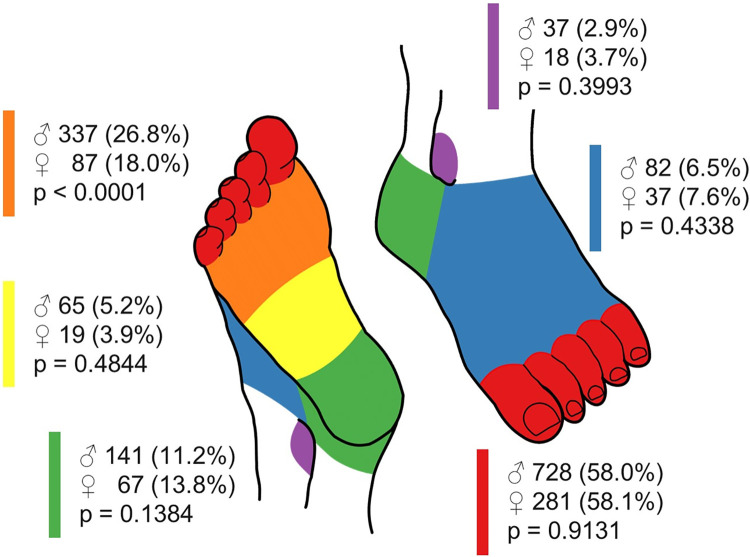
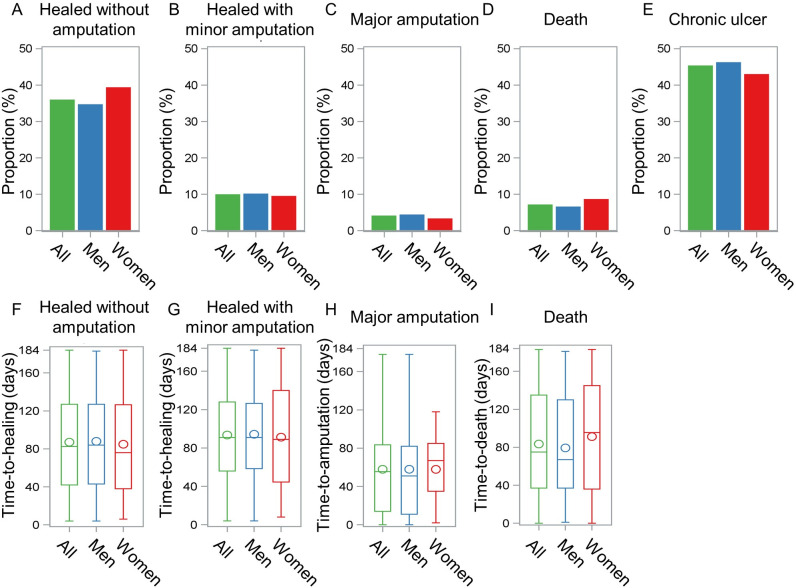
Results: The vast majority of patients included were male (72%). Ulcers in men were deeper, more frequently displaying probe to bone, and more frequently deeply infected. Twice as many men presented with systemic infection as women. Men demonstrated a higher prevalence of previous lower limb revascularization, while women presented more frequently with renal insufficiency. Smoking was more common in men than in women. No differences in presentation delay were observed. In the Cox regression analysis, women had a 26% higher chance of healing without major amputation as a first event (hazard ratio 1.258 (95% confidence interval 1.048-1.509)).
Conclusions: Men presented with more severe DFU than women, although no increase in presentation delay was observed. Moreover, female sex was significantly associated with a higher probability of ulcer healing as a first event. Among many possible contributing factors, a worse vascular state associated with a higher rate of (previous) smoking in men stands out.
Copyright: © 2023 Vanherwegen et al. This is an open access article distributed under the terms of the Creative Commons Attribution License, which permits unrestricted use, distribution, and reproduction in any medium, provided the original author and source are credited.
Conflict of interest statement
The authors have declared that no competing interests exist.
Figures
References
Publication types
MeSH terms
LinkOut - more resources
Full Text Sources
Medical
