


Gadolinium-enhanced MRI visualizing backflow at increasing intra-renal pressure in a porcine model
- PMID: 36795705
- PMCID: PMC9934347
- DOI: 10.1371/journal.pone.0281676
Gadolinium-enhanced MRI visualizing backflow at increasing intra-renal pressure in a porcine model
Abstract
Introduction: Intrarenal backflow (IRB) is known to occur at increased intrarenal pressure (IRP). Irrigation during ureteroscopy increases IRP. Complications such as sepsis is more frequent after prolonged high-pressure ureteroscopy. We evaluated a new method to document and visualize intrarenal backflow as a function of IRP and time in a pig model.
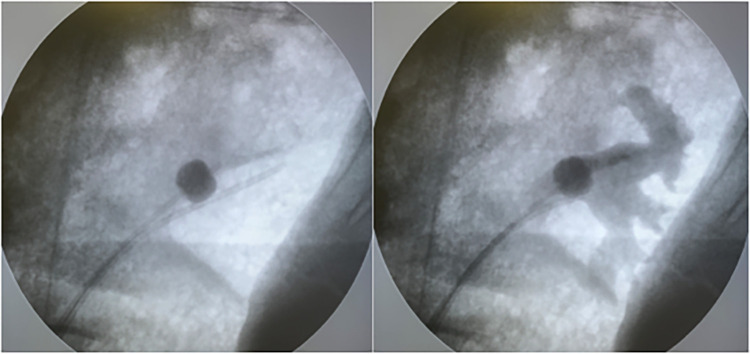
Methods: Studies were performed on five female pigs. A ureteral catheter was placed in the renal pelvis and connected to a Gadolinium/ saline solution 3 ml/L for irrigation. An occlusion balloon-catheter was left inflated at the uretero-pelvic junction and connected to a pressure monitor. Irrigation was successively regulated to maintain steady IRP levels at 10, 20, 30, 40 and 50 mmHg. MRI of the kidneys was performed at 5-minute intervals. PCR and immunoassay analyses were executed on the harvested kidneys to detect potential changes in inflammatory markers.
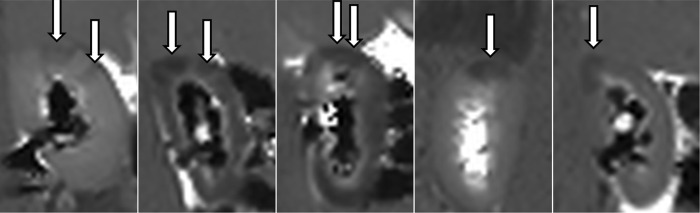
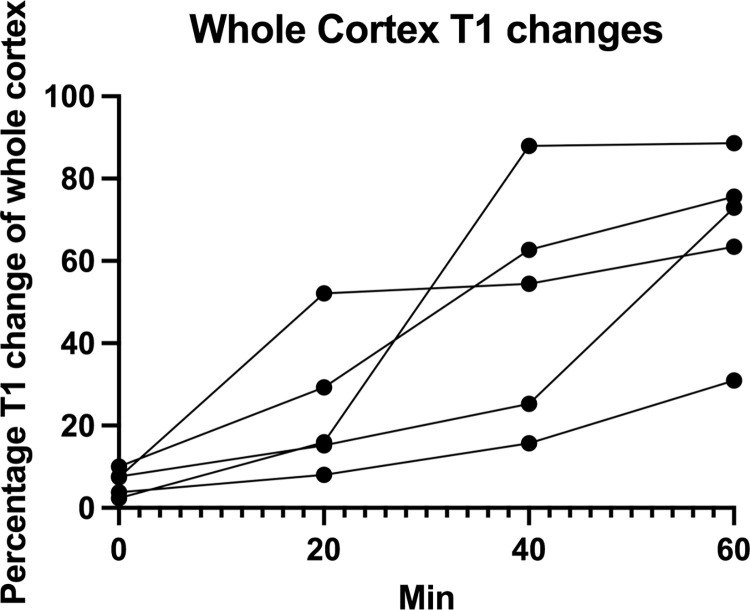
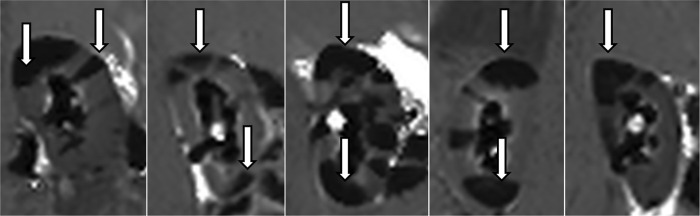
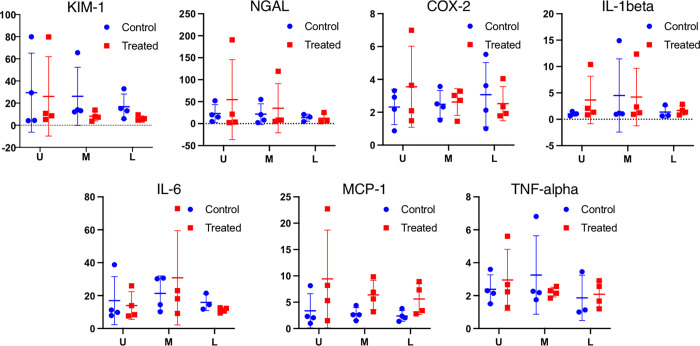
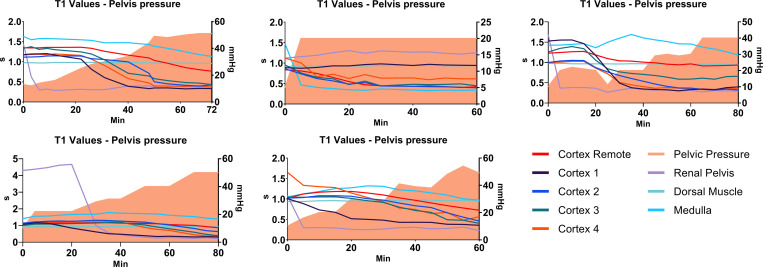
Results: MRI showed backflow of Gadolinium into the kidney cortex in all cases. The mean time to first visual damage was 15 minutes and the mean registered pressure at first visual damage was 21 mmHg. On the final MRI the mean percentage of IRB affected kidney was 66% after irrigation with a mean maximum pressure of 43 mmHg for a mean duration of 70 minutes. Immunoassay analyses showed increased MCP-1 mRNA expression in the treated kidneys compared to contralateral control kidneys.
Conclusions: Gadolinium enhanced MRI provided detailed information about IRB that has not previously been documented. IRB occurs at even very low pressures, and these findings are in conflict with the general consensus that keeping IRP below 30-35 mmHg eliminates the risk of post-operative infection and sepsis. Moreover, the level of IRB was documented to be a function of both IRP and time. The results of this study emphasize the importance of keeping IRP and OR time low during ureteroscopy.
Copyright: © 2023 Lildal et al. This is an open access article distributed under the terms of the Creative Commons Attribution License, which permits unrestricted use, distribution, and reproduction in any medium, provided the original author and source are credited.
Conflict of interest statement
The authors have declared that no competing interests exist.
Figures


References
-
- JC D (1980) Aspects of Renal Pelvic Function. University of Copenhagen, Copenhagen
-
- Wilson WT PG (1990) Intrarenal pressures generated during flexible deflectable ureterorenoscopy. Journal of endourology / Endourological Society 4:135–142
MeSH terms
Substances
LinkOut - more resources
Full Text Sources
Medical
Miscellaneous
