


ARMS-NF-κB signaling regulates intracellular ROS to induce autophagy-associated cell death upon oxidative stress
- PMID: 36798436
- PMCID: PMC9926119
- DOI: 10.1016/j.isci.2023.106005
ARMS-NF-κB signaling regulates intracellular ROS to induce autophagy-associated cell death upon oxidative stress
Abstract
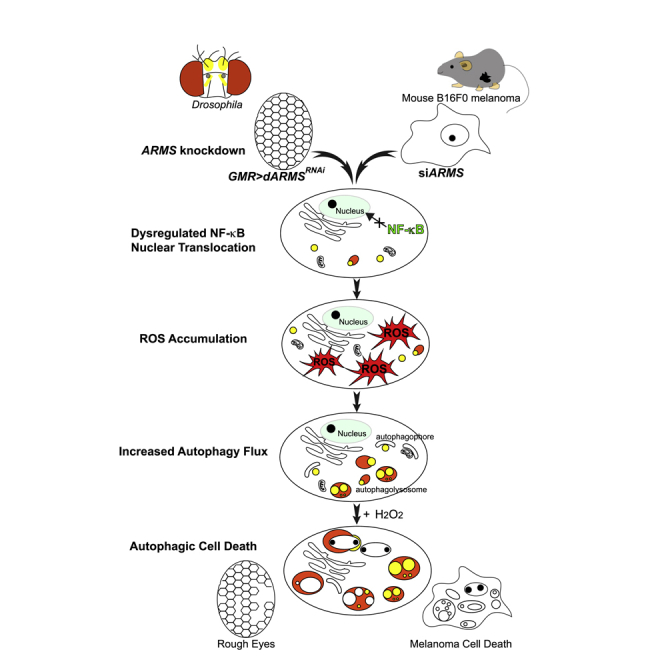
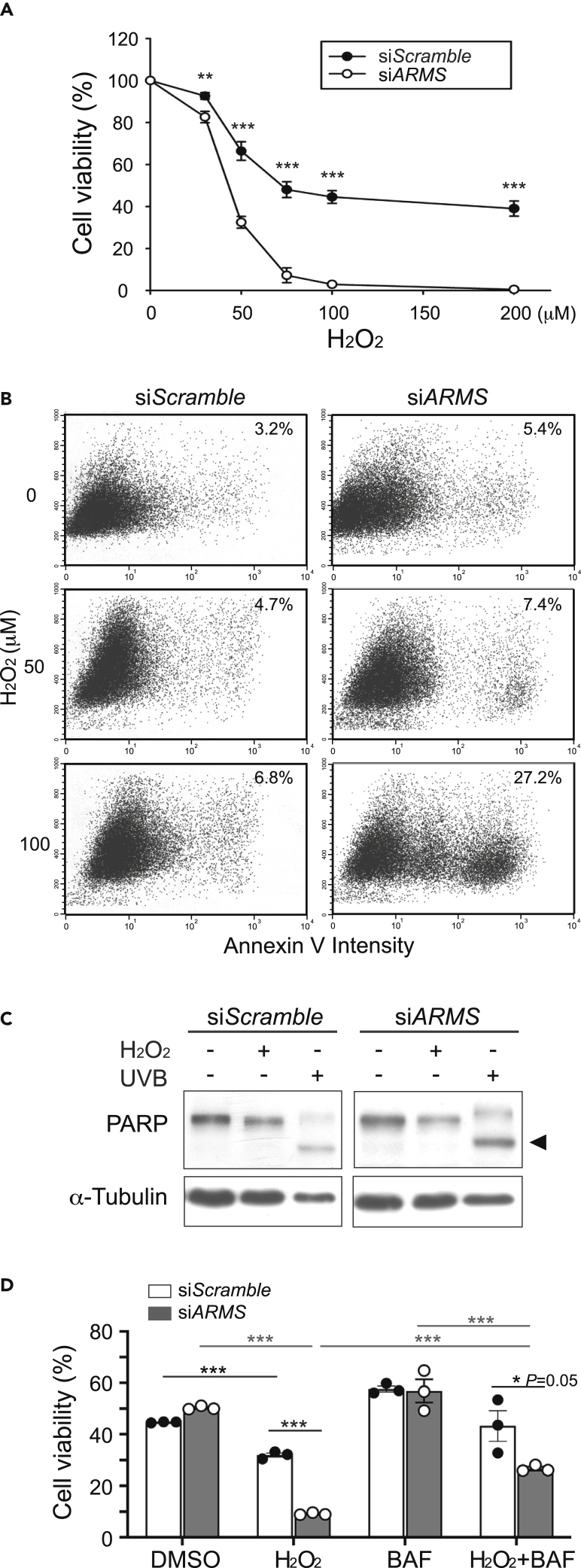
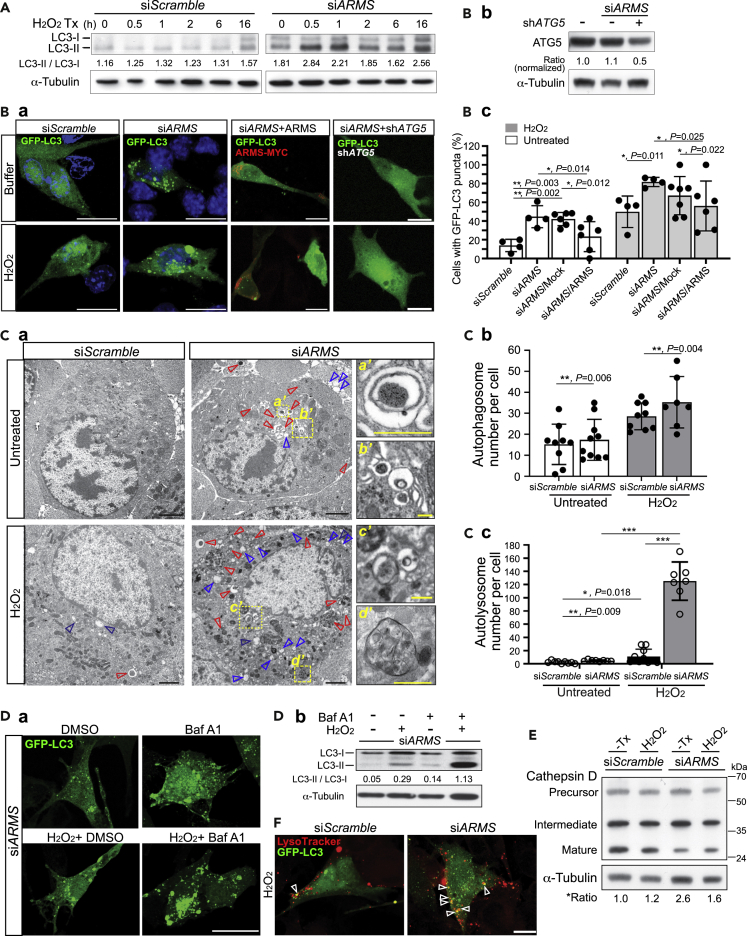
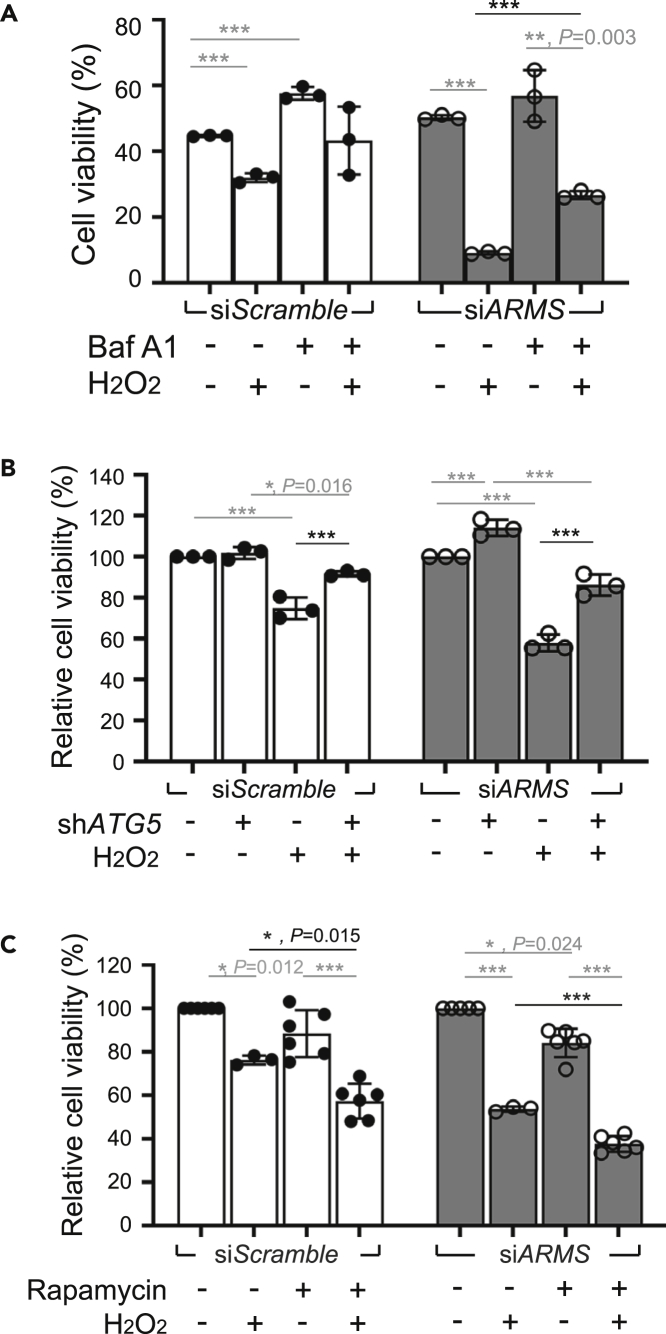
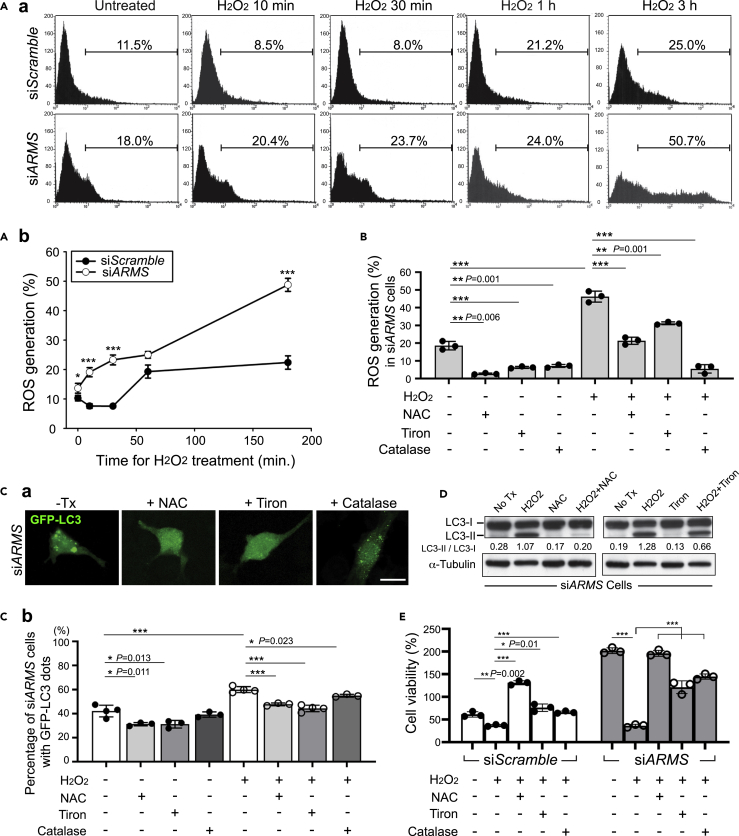
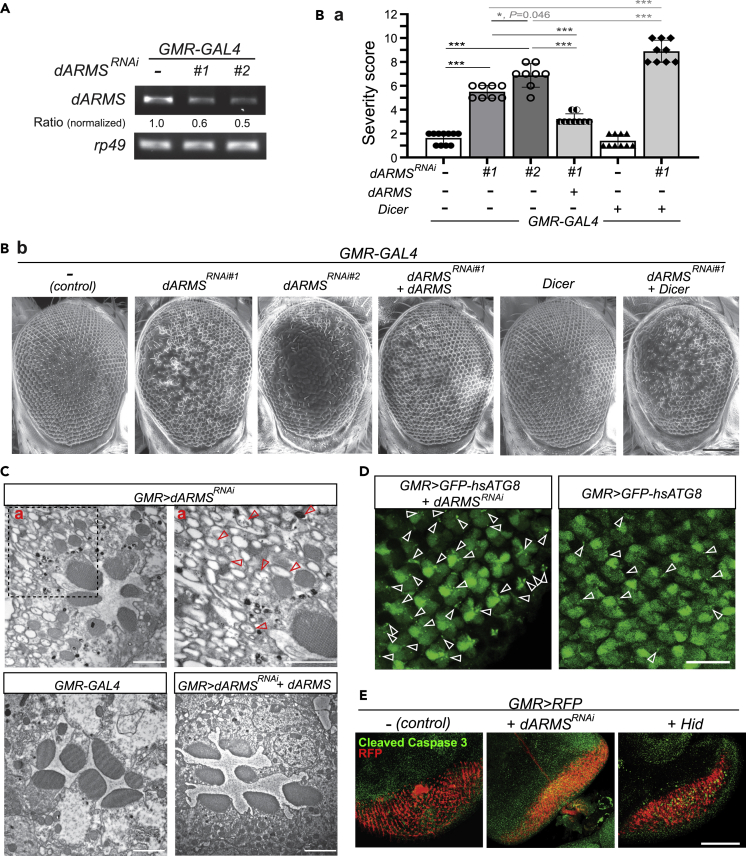
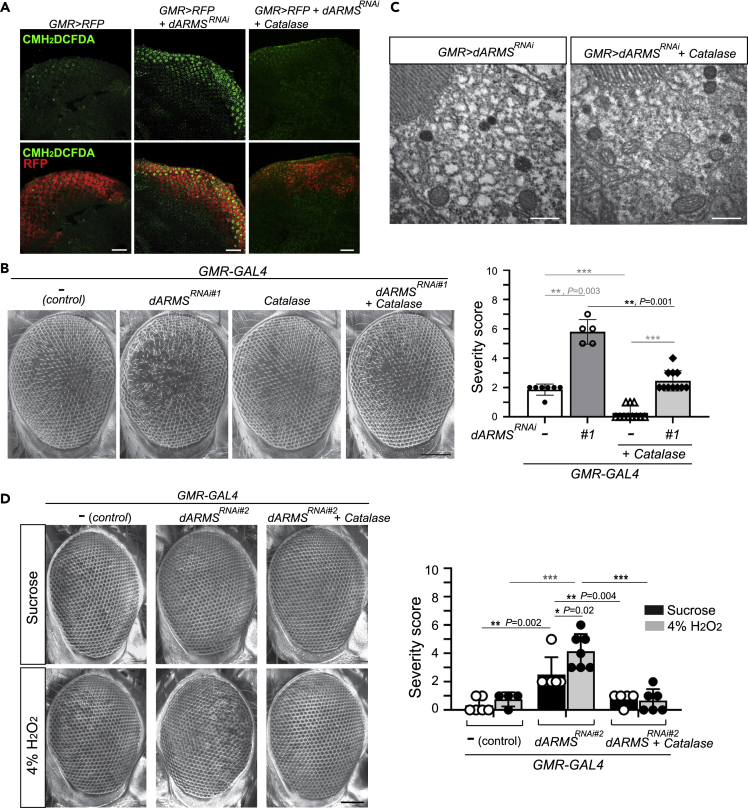
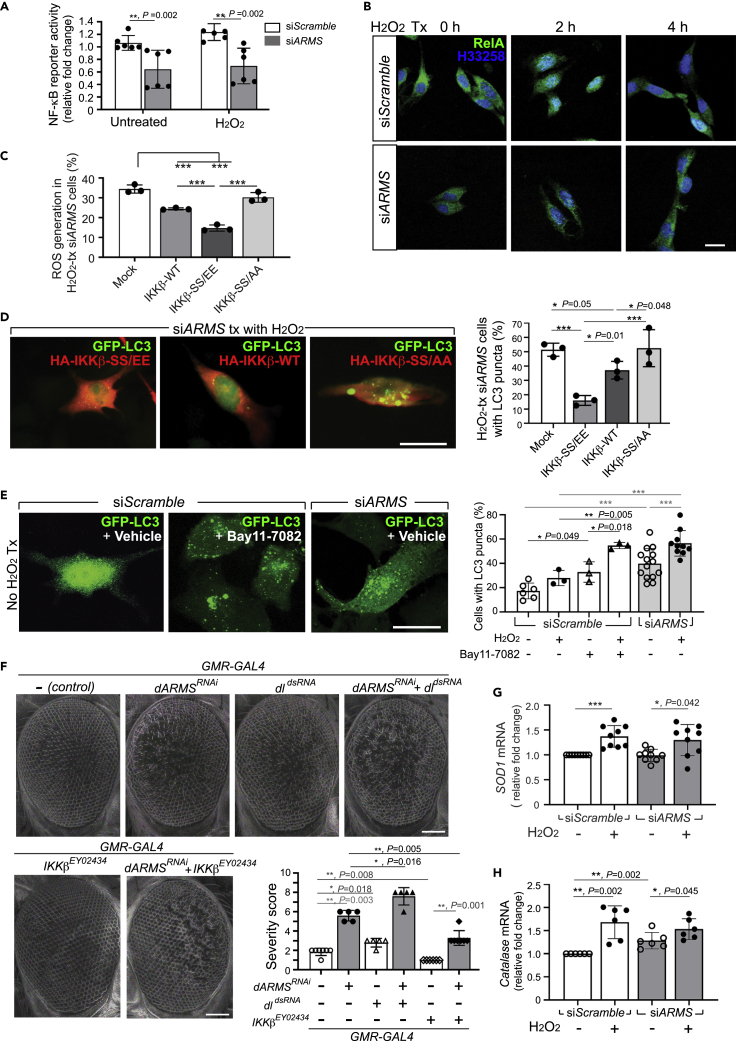
Ankyrin repeat-rich membrane spanning (ARMS) plays roles in neural development, neuropathies, and tumor formation. Such pleiotropic function of ARMS is often attributed to diverse ARMS-interacting molecules in different cell context. However, it might be achieved by ARMS' effect on global biological mediator like reactive oxygen species (ROS). We established ARMS-knockdown in melanoma cells (siARMS) and in Drosophila eyes (GMR>dARMS RNAi ) and challenged them with H2O2. Decreased ARMS in both systems compromises nuclear translocation of NF-κB and induces ROS, which in turn augments autophagy flux and confers susceptibility to H2O2-triggered autophagic cell death. Resuming NF-κB activity or reducing ROS by antioxidants in siARMS cells and GMR>dARMS RNAi fly decreases intracellular peroxides level concurrent with reduced autophagy and attenuated cell death. Conversely, blocking NF-κB activity in wild-type flies/melanoma enhances ROS and induces autophagy with cell death. We thus uncover intracellular ROS modulated by ARMS-NFκB signaling primes autophagy for autophagic cell death upon oxidative stress.
Keywords: Biological sciences; Cell biology; Molecular biology.
© 2023 The Author(s).
Conflict of interest statement
We report no potential conflict of interest.
Figures
References
LinkOut - more resources
Full Text Sources
Molecular Biology Databases
Research Materials
