


Characterizing difficulties with emotion regulation in toddlers with autism spectrum disorder
- PMID: 36798961
- PMCID: PMC9928168
- DOI: 10.1016/j.rasd.2022.101992
Characterizing difficulties with emotion regulation in toddlers with autism spectrum disorder
Abstract
Background: Difficulties with emotion regulation (ER) underlie emotional/behavioral challenges and co-occurring psychiatric symptoms in autism spectrum disorder (ASD), yet very little is known about the early development of emotion dysregulation. The present study aimed to identify differences in positive and negative emotional reactivity and regulation strategies in toddlers with and without ASD.
Method: Nine tasks from the Laboratory Temperament Assessment Battery (Lab-TAB) were completed with 37 toddlers with and without ASD (22-28 months). Video-recordings of these tasks were coded by research assistants using a behavioral coding scheme tapping facial, bodily, and vocal affect and the frequency of ER strategies. Mixed model analyses were performed to examine the mean affect and total regulation strategies across each task and t-tests were conducted to assess the types of ER strategies utilized.
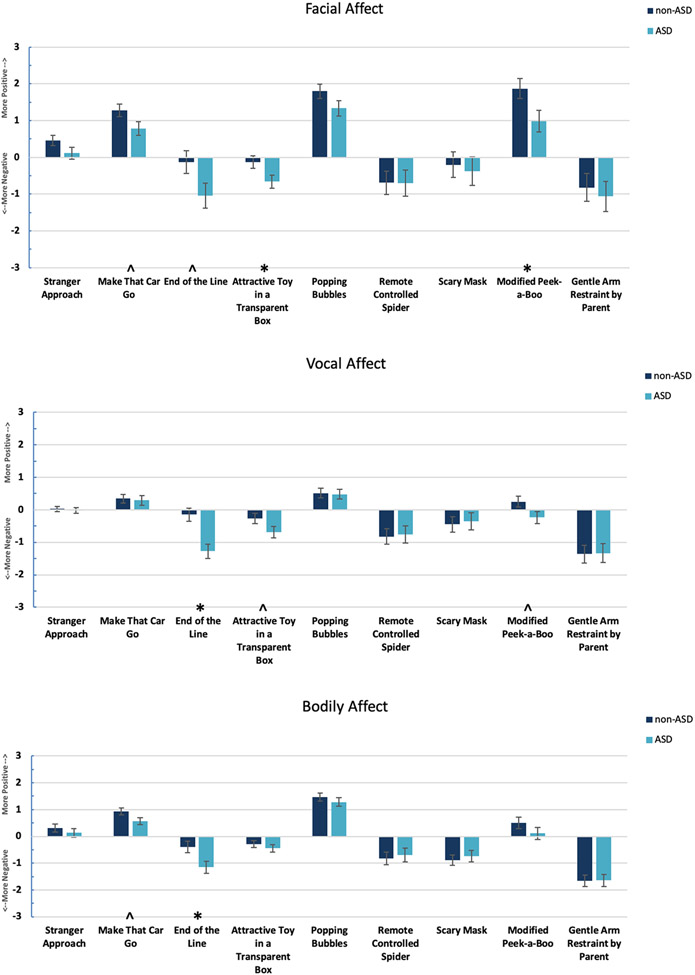
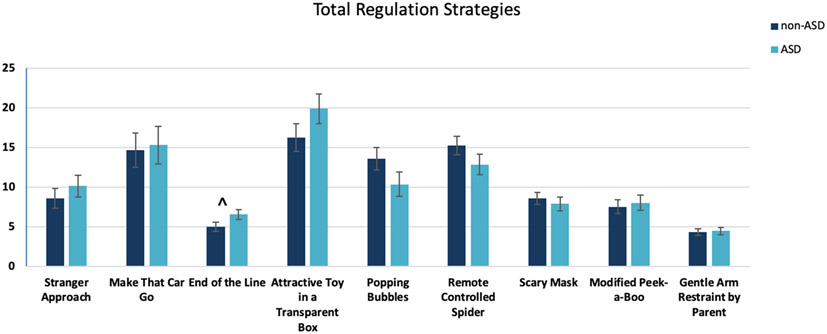
Results: Toddlers with ASD showed significantly less positive affect and greater frustration compared to non-ASD toddlers; reactivity was comparable between the groups for fear. Both groups used ER strategies in a similar pattern across tasks, with the exception that toddlers with ASD more often engaged in distraction to regulate. Effects of age and developmental level are discussed.
Conclusions: Toddlers with ASD were robustly characterized by greater frustration and lower joy despite frequent and age appropriate attempts to regulate their emotions. This study provides preliminary evidence that observable indicators of emotion dysregulation are present by two years of age. Clinical implications and future research directions are discussed.
Keywords: ASD; Autism spectrum disorder; Early childhood; Emotion regulation; Emotional reactivity; Toddlers.
Conflict of interest statement
Conflicts of Interest The authors declare that they have no conflict of interest.
Figures
References
-
- American Psychiatric Association. (2013). The diagnostic and statistical manual of mental disorders, fifth edition: DSM-5. American Psychiatric Association.
-
- Beck KB, Conner CM, Breitenfeldt KE, Northrup JB, White SW, & Mazefsky CA (2020). Assessment and treatment of emotion regulation impairment in autism spectrum disorder across the life span: Current state of the science and future directions. Child and Adolescent Psychiatric Clinics of North America, 29, 527–542. 10.1016/j.chc.2020.02.003 - DOI - PMC - PubMed
-
- Benjamini Y, & Hochberg Y (1995). Controlling the false discovery rate: A practical and powerful approach to multiple testing. Journal of the Royal Statistical Society: Series B (Methodological), 57(1), 289–300.
Grants and funding
LinkOut - more resources
Full Text Sources
Miscellaneous