


Barriers and facilitators to oral PrEP uptake among high-risk men after HIV testing at workplaces in Uganda: a qualitative study
- PMID: 36805698
- PMCID: PMC9940677
- DOI: 10.1186/s12889-023-15260-3
Barriers and facilitators to oral PrEP uptake among high-risk men after HIV testing at workplaces in Uganda: a qualitative study
Abstract
Background: Men in Uganda contribute significantly to new HIV infections annually yet PrEP uptake among them is low and those initiated are likely to discontinue usage. We explored the barriers and facilitators to PrEP uptake among high-risk men employed in private security services with negative HIV results after testing at workplaces in Uganda.
Methods: An explorative qualitative study comprising in-depth participant interviews. Data were collected via telephone calls and manually analyzed by inductive content analysis.
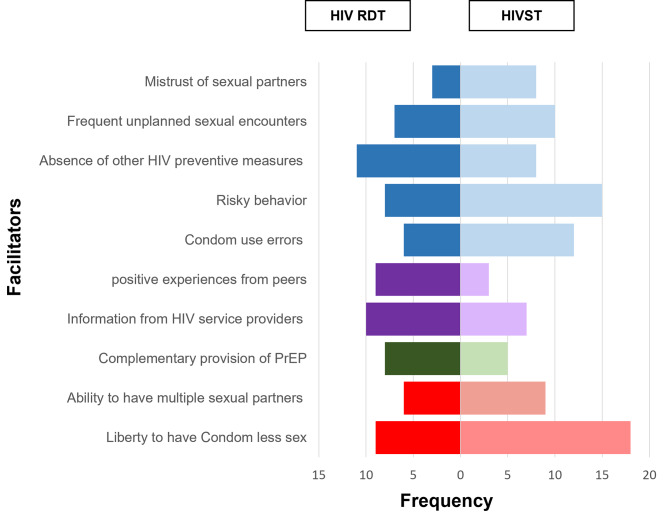
Results: Fifty-six (56) men participated, 27(48.21%) had heard about PrEP, and 29(51.79%) were willing to initiate it. Four categories emerged for the facilitators of PrEP uptake including the perceived need for HIV prevention, awareness creation, availability, and sexual freedom. Six categories emerged for the barriers to PrEP uptake. These were: Inaccessibility of PrEP services, Misinformation, Knowledge deficit, Medication-related barriers, Potential for increased risky sexual behavior, and Perceptions about PrEP use.
Conclusion: The findings suggest the need for healthcare providers to offer information regarding PrEP and HIV prevention services and mass sensitization campaigns to facilitate uptake. Participants recommend mass roll-out of PrEP to lower-level facilities and accessible pick-up points for men such as workplaces. The men also suggested the use of longer-acting PrEP modalities such as an injectable option or an option that is utilized specifically by the female partner. Finally, the stigma surrounding PrEP use could be reduced by the separation of PrEP and ART services at health facilities, or special pick-up days to reduce waiting times.
Keywords: High risk: men; PrEP; Qualitative research; Workplace HIV testing.
© 2023. The Author(s).
Conflict of interest statement
The authors declare that they have no competing interests.
Figures

References
-
- WHO. : HIV/AIDS. 2020.
-
- Organization WH. Updated recommendations on first-line and second-line antiretroviral regimens and post-exposure prophylaxis and recommendations on early infant diagnosis of HIV: interim guidelines: supplement to the 2016 consolidated guidelines on the use of antiretroviral drugs for treating and preventing HIV infection. In.: World Health Organization; 2018.
-
- CDC. : HIV Risk and Prevention.
-
- NIH. : HIV Prevention. 2021.
-
- MOH. : Consolidated guidelines for the prevention and treatment of HIV and AIDS in Uganda. In.; 2020.
Publication types
MeSH terms
Grants and funding
LinkOut - more resources
Full Text Sources
Medical
Miscellaneous
