


Modulation of Biofilm Formation and Permeability in Streptococcus mutans during Exposure To Zinc Acetate
- PMID: 36809043
- PMCID: PMC10100724
- DOI: 10.1128/spectrum.02527-22
Modulation of Biofilm Formation and Permeability in Streptococcus mutans during Exposure To Zinc Acetate
Abstract
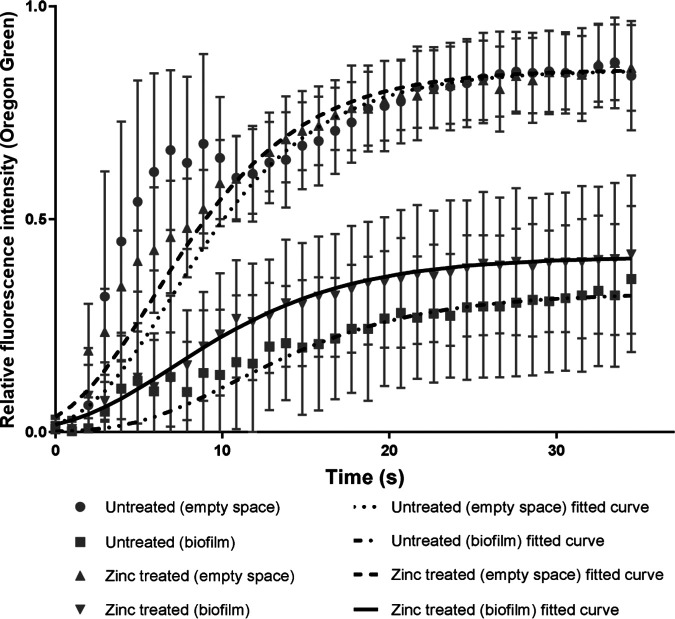
The penetration of biofilms by antimicrobials is a potential limiting factor in biofilm control. This is relevant to oral health, as compounds that are used to control microbial growth and activities could also affect the permeability of dental plaque biofilm with secondary effects on biofilm tolerance. We investigated the effects of zinc salts on the permeability of Streptococcus mutans biofilms. Biofilms were grown with low concentrations of zinc acetate (ZA), and a transwell transportation assay was applied to test biofilm permeability in an apical-basolateral direction. Crystal violet assays and total viable counts were used to quantify the biofilm formation and viability, respectively, and short time frame diffusion rates within microcolonies were determined using spatial intensity distribution analysis (SpIDA). While the diffusion rates within biofilm microcolonies were not significantly altered, exposure to ZA significantly increased the overall permeability of S. mutans biofilms (P < 0.05) through decreased biofilm formation, particularly at concentrations above 0.3 mg/mL. Transport was significantly lower through biofilms grown in high sucrose conditions. IMPORTANCE Zinc salts are added to dentifrices to improve oral hygiene through the control of dental plaque. We describe a method for determining biofilm permeability and show a moderate inhibitory effect of zinc acetate on biofilm formation, and that this inhibitory effect is associated with increases in overall biofilm permeability.
Keywords: S. mutans; antimicrobial; biofilm; dental; oral; permeability; plaque; toothpaste; zinc.
Conflict of interest statement
The authors declare a conflict of interest. This work was funded by Colgate-Palmolive (USA). P.K.S. was an employee of Colgate-Palmolive when this project was conceived and conducted. A.J.M. conducts research and advises companies in the areas of antimicrobials, biofilms, microbiome, and microbial control. K.M.B., A.P., and R.G.L. declare no competing interests.
Figures




References
LinkOut - more resources
Full Text Sources
Molecular Biology Databases
