


Nuclear envelope budding and its cellular functions
- PMID: 36814098
- PMCID: PMC9980700
- DOI: 10.1080/19491034.2023.2178184
Nuclear envelope budding and its cellular functions
Abstract
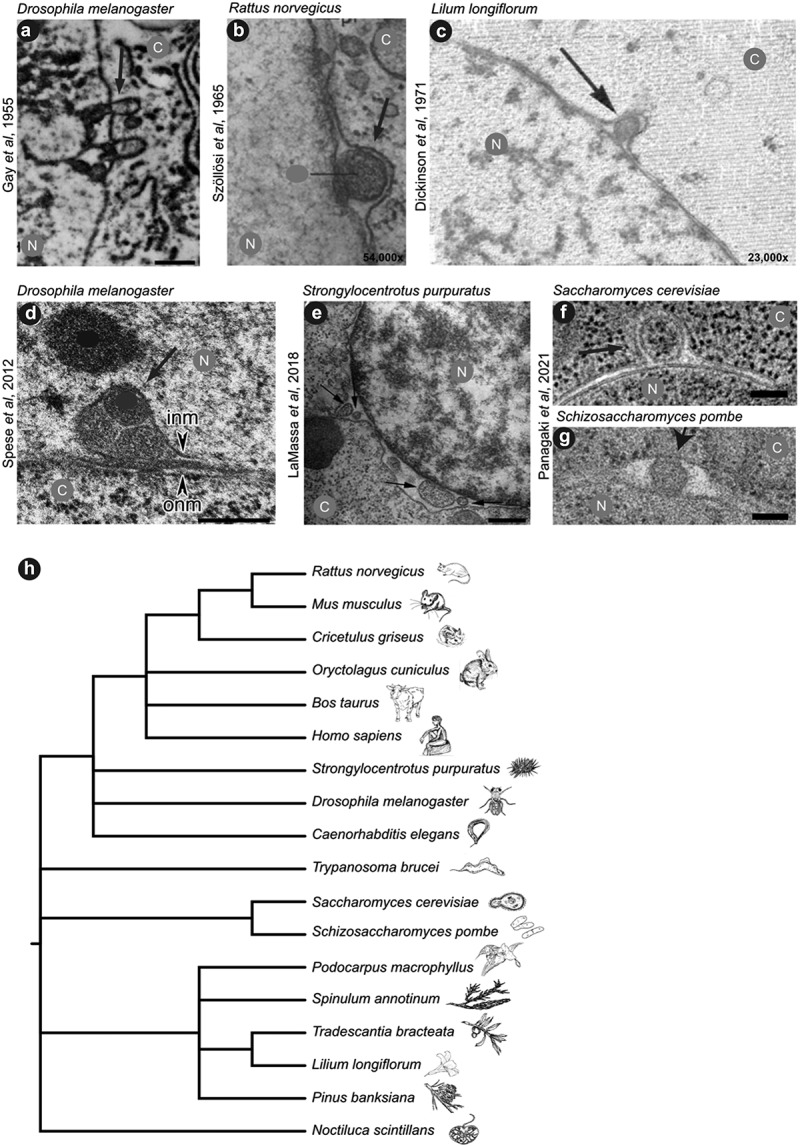
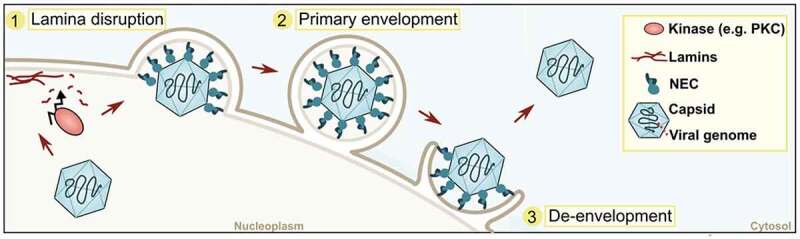
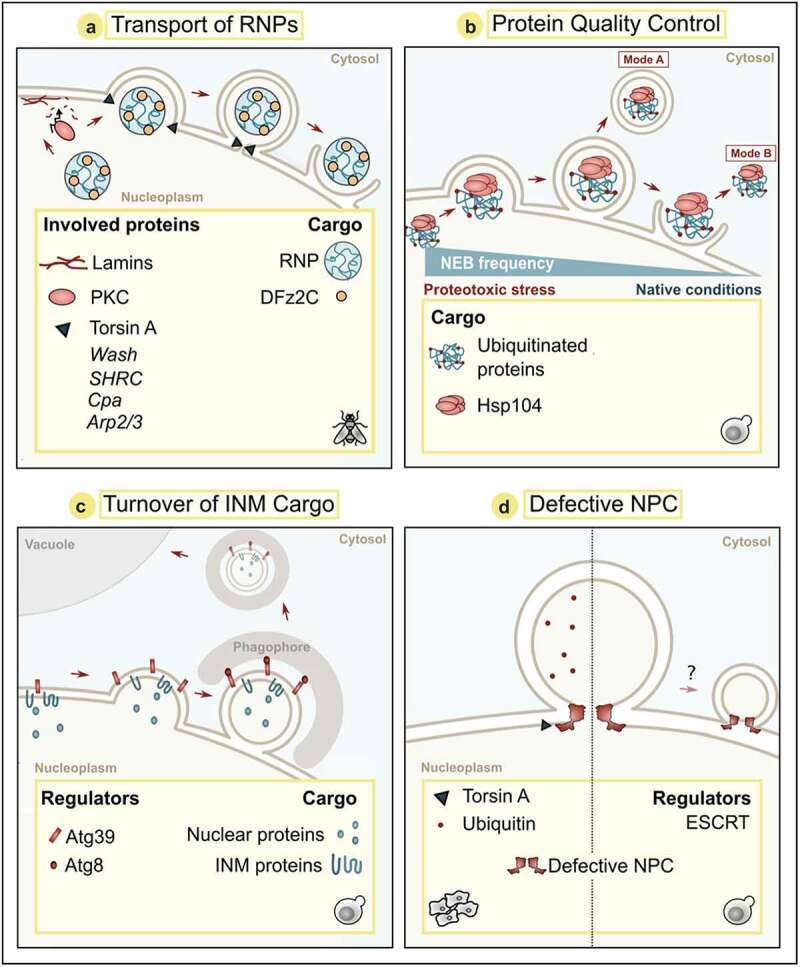
The nuclear pore complex (NPC) has long been assumed to be the sole route across the nuclear envelope, and under normal homeostatic conditions it is indeed the main mechanism of nucleo-cytoplasmic transport. However, it has also been known that e.g. herpesviruses cross the nuclear envelope utilizing a pathway entitled nuclear egress or envelopment/de-envelopment. Despite this, a thread of observations suggests that mechanisms similar to viral egress may be transiently used also in healthy cells. It has since been proposed that mechanisms like nuclear envelope budding (NEB) can facilitate the transport of RNA granules, aggregated proteins, inner nuclear membrane proteins, and mis-assembled NPCs. Herein, we will summarize the known roles of NEB as a physiological and intrinsic cellular feature and highlight the many unanswered questions surrounding these intriguing nuclear events.
Keywords: Nuclear import; nuclear envelope budding; nuclear export.
Conflict of interest statement
No potential conflict of interest was reported by the author(s).
Figures
References
-
- Austin CR, Braden AWH.. Observations on nuclear size and form in living rat and mouse eggs. Exp Cell Res. 1955;8(1):163–172. - PubMed
-
- Wilson EB. The Cell in Development and Heredity. 3rd ed. New York: The Macmillan Company; 1925.
Publication types
MeSH terms
Grants and funding
LinkOut - more resources
Full Text Sources
