


A non-randomized controlled trial to assess the protective effect of SMC in the context of high parasite resistance in Uganda
- PMID: 36814301
- PMCID: PMC9945593
- DOI: 10.1186/s12936-023-04488-4
A non-randomized controlled trial to assess the protective effect of SMC in the context of high parasite resistance in Uganda
Abstract
Background: Until recently, due to widespread prevalence of molecular markers associated with sulfadoxine-pyrimethamine (SP) and amodiaquine (AQ) resistance in east and southern Africa, seasonal malaria chemoprevention (SMC) has not been used at scale in this region. This study assessed the protective effectiveness of monthly administration of SP + AQ (SPAQ) to children aged 3-59 months in Karamoja sub-region, Uganda, where parasite resistance is assumed to be high and malaria transmission is seasonal.
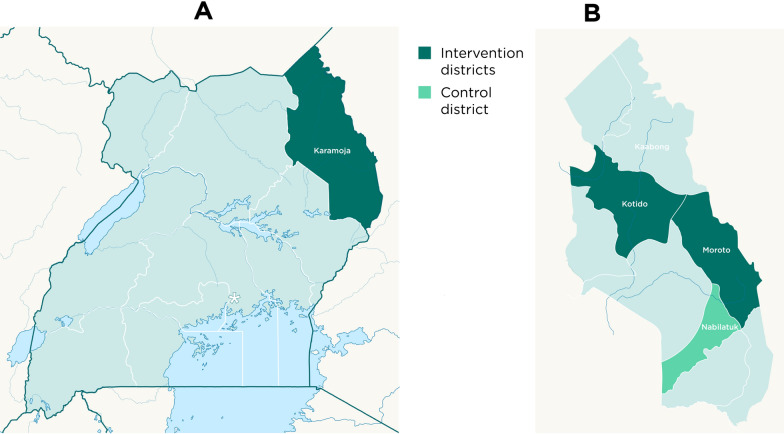
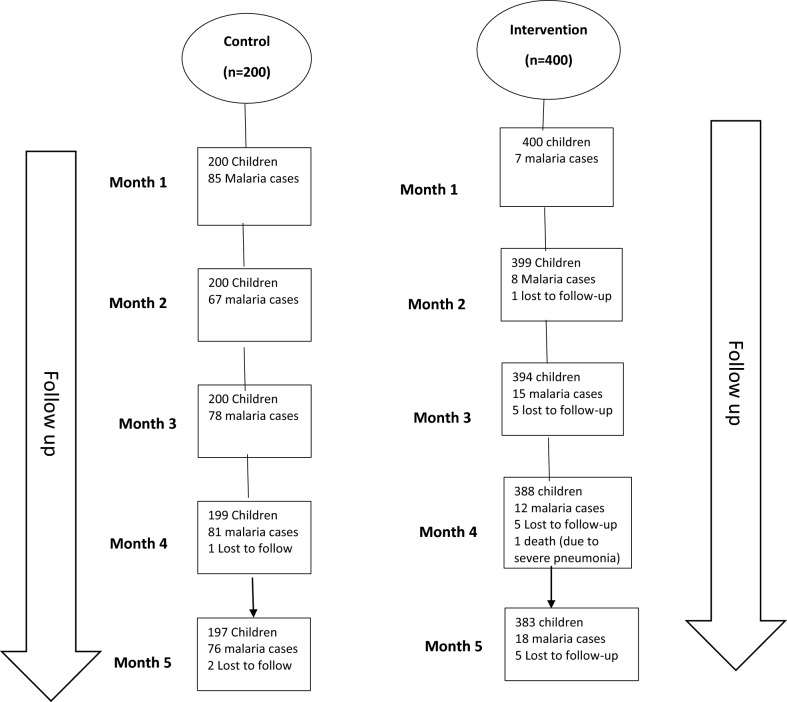
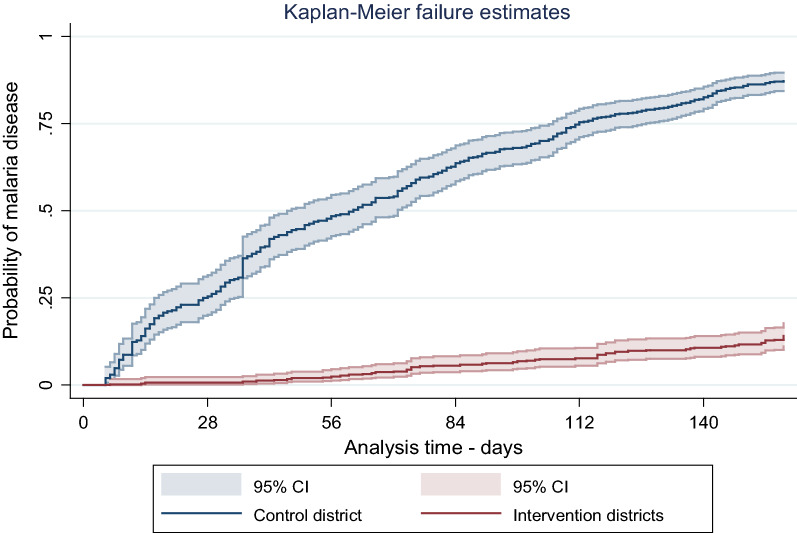
Methods: A two-arm quasi-experimental, open-label prospective non-randomized control trial (nRCT) was conducted in three districts. In two intervention districts, 85,000 children aged 3-59 months were targeted to receive monthly courses of SMC using SPAQ during the peak transmission season (May to September) 2021. A third district served as a control, where SMC was not implemented. Communities with comparable malaria attack rates were selected from the three districts, and households with at least one SMC-eligible child were purposively selected. A total cohort of 600 children (200 children per district) were selected and followed using passive surveillance for breakthrough confirmed malaria episodes during the five-month peak transmission season. Malaria incidence rate per person-months and number of malaria episodes among children in the two arms were compared. Kaplan-Meier failure estimates were used to compare the probability of a positive malaria test. Other factors that may influence malaria transmission and infection among children in the two arms were also assessed using multivariable cox proportional hazards regression model.
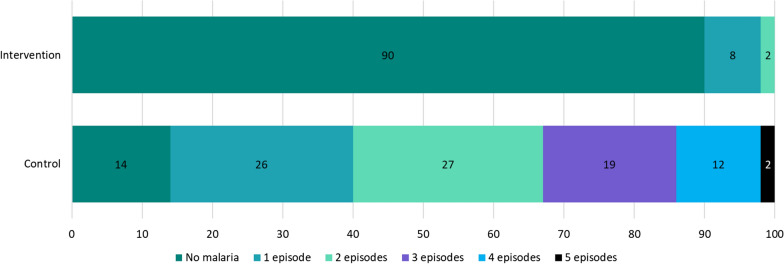
Results: The malaria incidence rate was 3.0 and 38.8 per 100 person-months in the intervention and control groups, respectively. In the intervention areas 90.0% (361/400) of children did not experience any malaria episodes during the study period, compared to 15% (29/200) in the control area. The incidence rate ratio was 0.078 (95% CI 0.063-0.096), which corresponds to a protective effectiveness of 92% (95% CI 90.0-94.0) among children in the intervention area.
Conclusion: SMC using SPAQ provided high protective effect against malaria during the peak transmission season in children aged 3-59 months in the Karamoja sub-region of Uganda.
Keywords: Malaria case; Malaria episode; Protective efficacy; Resistance markers; Season malaria chemoprevention.
© 2023. The Author(s).
Conflict of interest statement
The authors declare that they have no competing interests.
Figures
References
-
- WHO. World Malaria report. Geneva, World Health Organization. 2021.
-
- WHO. World malaria report 2019. Geneva: World Health Organization. 2019.
-
- Uganda National Malaria Control Division (NMCD), Uganda Bureau of Statistics (UBOS) and I. Uganda Malaria Indicator Survey 2018–19. Kampala, Uganda, 2020.
-
- Uganda Ministry of Health. The Uganda Health Management information system. Kampala. Uganda, 2019.
Publication types
MeSH terms
Substances
LinkOut - more resources
Full Text Sources
Medical
