


Effects of Two Different Doses of Ursodeoxycholic Acid on Indirect Hyperbilirubinemia in Neonates with Glucose-6-phosphate Dehydrogenase Deficiency Treated with Phototherapy: A Randomized Controlled Trial
- PMID: 36814535
- PMCID: PMC9940175
- DOI: 10.1177/2333794X231156055
Effects of Two Different Doses of Ursodeoxycholic Acid on Indirect Hyperbilirubinemia in Neonates with Glucose-6-phosphate Dehydrogenase Deficiency Treated with Phototherapy: A Randomized Controlled Trial
Abstract
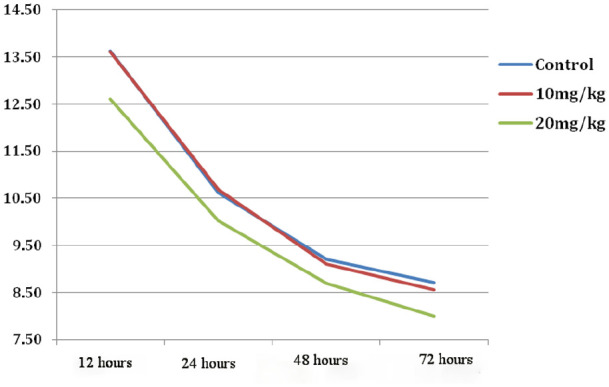
Glucose-6-phosphate dehydrogenase (G6PD) deficiency is one of the causes of severe hyperbilirubinemia, prolonged jaundice, and bilirubin-induced encephalopathy in neonates. In a randomized controlled trial, we evaluated the effect of oral ursodeoxycholic acid (UDCA) on indirect hyperbilirubinemia in G6PD-deficient neonates requiring phototherapy. Intervention group I (N = 45; received phototherapy and 10 mg/kg/day UDCA), Intervention group II (N = 40; received phototherapy and 20 mg/kg/day UDCA), and a control group (N = 49; received phototherapy and placebo). Levels of total serum bilirubin (TSB) in all 3 groups decreased significantly over time (P = .001) but the level of TSB at different hours after admission and the duration of phototherapy did not differ significantly between the 3 groups. After discharge, the 2 intervention groups had a significantly lower rate of readmission than the control group (P = .001). No significant difference was observed between the 10 and 20 mg/kg/day groups. Further evaluation is recommended, especially in terms of the pharmacokinetics of UDCA in neonates. Trial registration number: IRCT20091201002801N4, prospectively registered on 2019-06-1.
Keywords: glucose-6-phosphate dehydrogenase deficiency; hyperbilirubinemia; jaundice; newborn; ursodeoxycholic acid.
© The Author(s) 2023.
Conflict of interest statement
The author(s) declared no potential conflicts of interest with respect to the research, authorship, and/or publication of this article.
Figures

References
-
- Watchko JF, Tiribelli C. Bilirubin-induced neurologic damage–mechanisms and management approaches. New Engl J Med. 2013;369(21):2021-2030. - PubMed
-
- Khodashenas E, Kalani-Moghaddam F, Araghi Z, Khodaparast M, Yazdani Z. Glucose-6-phosphate dehydrogenase deficiency and neonatal hyperbilirubinemia. Iran J Neonatol. 2015;6(3):28-31.
LinkOut - more resources
Full Text Sources
Miscellaneous
