


The clinical relevance of anti-glutamic acid decarboxylase antibodies in children with encephalitis/encephalopathy
- PMID: 36817097
- PMCID: PMC9932768
- DOI: 10.3389/fnins.2022.1081580
The clinical relevance of anti-glutamic acid decarboxylase antibodies in children with encephalitis/encephalopathy
Abstract
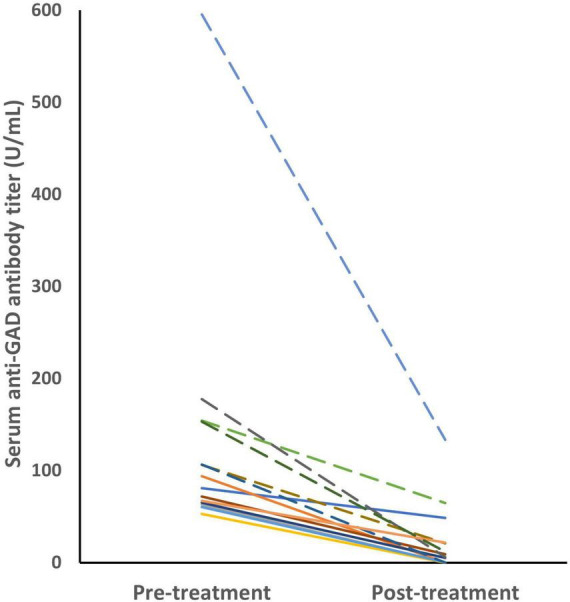
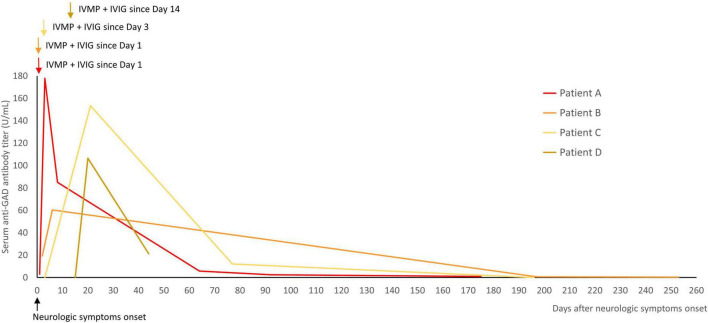
Anti-glutamic acid decarboxylase (anti-GAD) antibodies are associated with different types of syndromes. However, few studies have investigated the correlation between anti-GAD antibody titers with clinical severity and outcomes in children with encephalitis/encephalopathy. In this single-center retrospective cohort study, we consecutively enrolled hospitalized children who had encephalitis and/or encephalopathy with positive anti-GAD antibodies in serum and/or cerebrospinal fluid (CSF) from February 2010 to October 2021. Thirty-seven patients were included and divided into high-titer and low-titer groups. The patients with high anti-GAD antibody titers were associated with initial symptoms of language difficulty and ataxia. The level of titers was not associated with severity or outcomes. Anti-GAD antibody titers decreased after immunotherapy, however, the clinical response to immunotherapy was variable. A transient elevation in anti-GAD antibody titers during immunotherapy was noted. Further studies are warranted to investigate the role of anti-GAD antibodies in the pathogenesis and immune mechanisms of encephalitis/encephalopathy.
Keywords: GAD; anti-glutamic acid decarboxylase antibody; antineuronal antibodies; ataxia; encephalitis; encephalopathy; immunotherapy.
Copyright © 2023 Hou, Liu, Kuo, Liu, Lin, Hsieh, Hung, Cheng, Su, Wang, Chou and Lin.
Conflict of interest statement
The authors declare that the research was conducted in the absence of any commercial or financial relationships that could be construed as a potential conflict of interest.
Figures
References
LinkOut - more resources
Full Text Sources
