


Effects of motor-cognitive training on dual-task performance in people with Parkinson's disease: a systematic review and meta-analysis
- PMID: 36820916
- PMCID: PMC10188503
- DOI: 10.1007/s00415-023-11610-8
Effects of motor-cognitive training on dual-task performance in people with Parkinson's disease: a systematic review and meta-analysis
Abstract
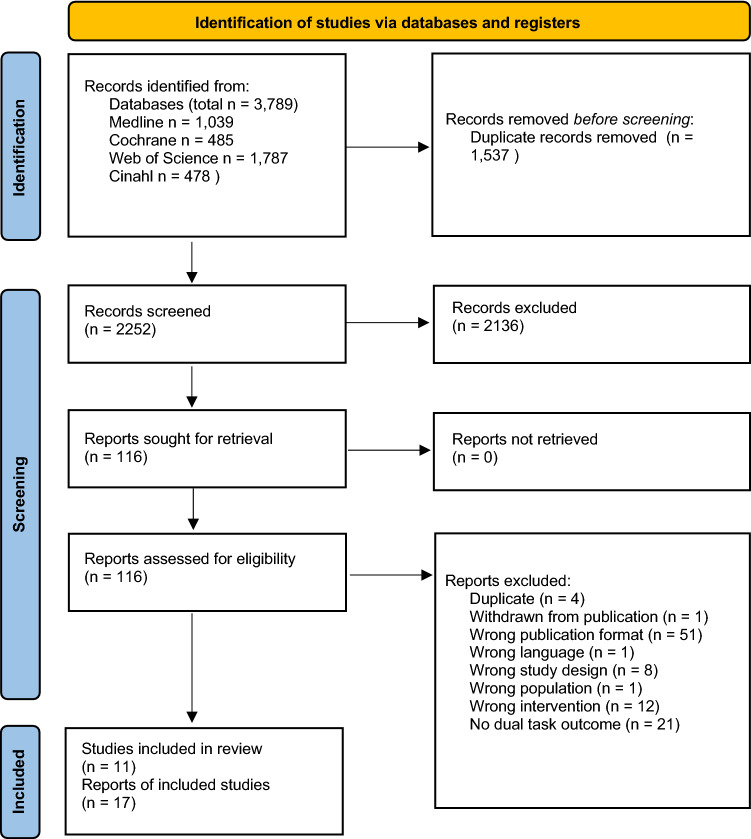
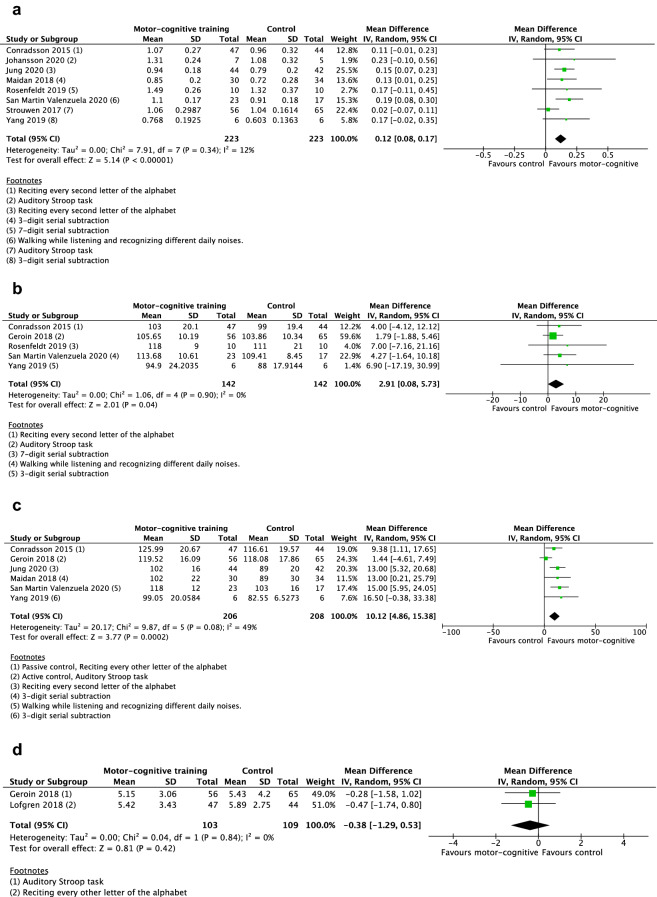
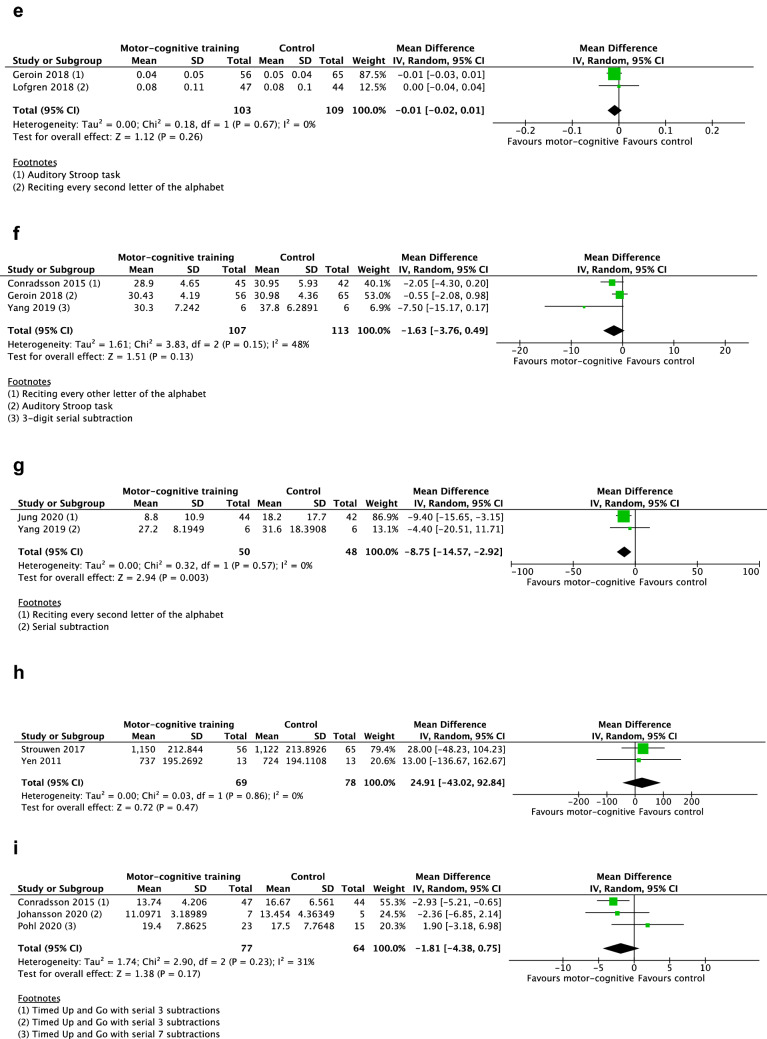
Motor-cognitive training in Parkinson's disease (PD) can positively affect gait and balance, but whether motor-cognitive (dual-task) performance improves is unknown. This meta-analysis, therefore, aimed to establish the current evidence on the effects of motor-cognitive training on dual-task performance in PD. Systematic searches were conducted in five databases and 11 studies with a total of 597 people (mean age: 68.9 years; mean PD duration: 6.8 years) were included. We found a mean difference in dual-task gait speed (0.12 m/s (95% CI 0.08, 0.17)), dual-task cadence (2.91 steps/min (95% CI 0.08, 5.73)), dual-task stride length (10.12 cm (95% CI 4.86, 15.38)) and dual-task cost on gait speed (- 8.75% (95% CI - 14.57, - 2.92)) in favor of motor-cognitive training compared to controls. The GRADE analysis revealed that the findings were based on high certainty evidence. Thus, we can for the first time systematically show that people with PD can improve their dual-task ability through motor-cognitive training.
Keywords: Dual-task performance; Meta-analysis; Motor–cognitive training; Parkinson’s disease; Systematic review.
© 2023. The Author(s).
Conflict of interest statement
Authors BL, HJ and IH: Declarations of interest: none. Author AKF has received grants from the German Parkinson Society and the German Alzheimer’s Society, as well as honoraria from Springer Medizin Verlag GmbH, Heidelberg, Germany; Springer-Verlag GmbH, Berlin; ProLog Wissen GmbH, Cologne, Germany; pro audito Switzerland, Zürich, Switzerland; Seminar- und Fortbildungszentrum Rheine, Germany; and LOGOMANIA, Fendt & Sax GbR, Munich, Germany. AFK is author of the cognitive intervention programs “NEUROvitalis” but receives no corresponding honoraria. Author EK has received grants from the German Ministry of Education and Research, ParkinsonFonds Deutschland gGmbH, the German Parkinson Society, and the German Alzheimer’s Society, and honoraria from Oticon GmbH, Hamburg, Germany; Lilly Pharma GmbH, Bad Homburg, Germany; Bernafon AG, Bern, Switzerland; and Desitin GmbH, Hamburg, Germany. EK is author of the cognitive intervention programs “NEUROvitalis” but receives no corresponding honoraria.
Figures
References
Publication types
MeSH terms
LinkOut - more resources
Full Text Sources
Medical
